Haloa japonica (Pilsbry, 1895)
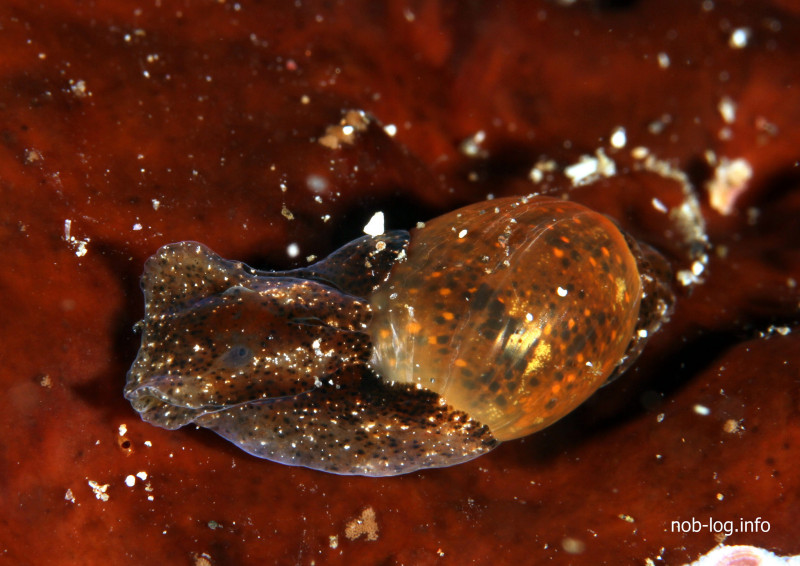
- Location
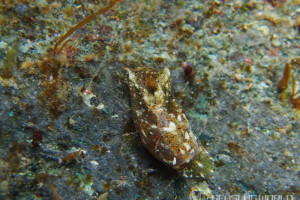
- Yaene, Hachijo Island, Tokyo, Japan
- Date
- 2015/06/20
- Length
- 15mm
- Depth
- 6.0m
- Water temperature
- 18.0℃
Description
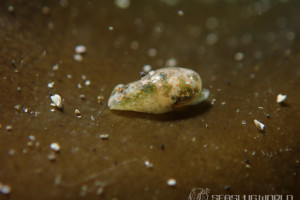
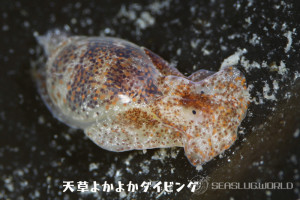
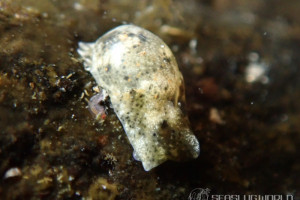
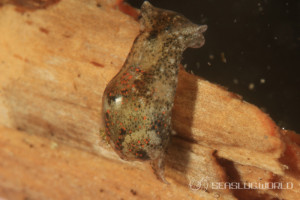
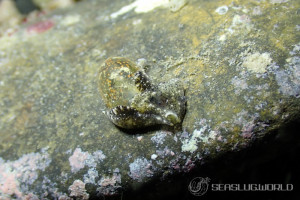
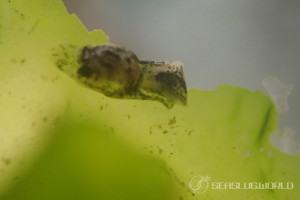
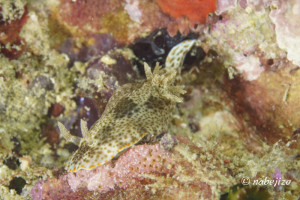
A small bubble snail reaching up to 20 mm in shell length. The thin, translucent shell does not fully enclose the soft body, which is partly draped over by the mantle. The body colour is pale brown to greenish brown. A deep, narrow notch on the posterior margin of the cephalic shield distinguishes this species from congeners.It inhabits sheltered intertidal and shallow subtidal habitats including soft sediments, tidepools, algal beds, and manmade structures. Development is poecilogonous: a single egg mass produces both direct-developing juveniles and planktonic lecithotrophic veligers that may remain pelagic for up to 20 days.
Distribution
Native to Japan and South Korea (coasts from north-eastern Japan through Kyushu, along the Tsushima and Kuroshio current systems). The type locality is Japan. Non-indigenous populations are established in France, Spain and Italy (recorded in the Mediterranean by 1993), along the US Pacific coast (Washington State and California, including San Francisco Bay and Tomales Bay), and in British Columbia, Canada (Boundary Bay).Etymology
The specific epithet japonica is Latin for 'of Japan,' referring to the type locality.Remarks
The taxonomic history is complex: originally described from shell morphology alone, with type material now indeterminable; a later redescription under Haloa rotundata based on Japanese radular morphology became the de facto modern reference. Northeast-Pacific specimens once described as Haminoea callidegenita are treated as a junior synonym. WoRMS currently lists Haloa japonica (Pilsbry, 1895) as the accepted name.The species has been transported worldwide in association with mariculture of the Pacific oyster (Crassostrea gigas) and Manila clam (Ruditapes philippinarum). Population-genetic data show that haplotypes in non-indigenous North American and European populations match those of north-eastern Japan (Hiraiso, Ibaraki Prefecture and Mangokuura, Miyagi Prefecture), the principal source region for oyster spat exported abroad — implicating shipments of bivalve spat rather than ballast water as the main vector.
The species has also been identified as the intermediate host for an unidentified schistosome that causes outbreaks of cercarial dermatitis (swimmer's itch) in humans exposed to the waters of San Francisco Bay.
Recent systematic revision confirms H. japonica as a valid lineage within Haloa sensu stricto, distinct from the related genera Lamprohaminoea, Bakawan and Papawera that were segregated from the former 'Haloa sensu lato'.
References
- Haminea binotata var. japonica, Pilsbry H.A. (1895). Catalogue of the marine shells of Japan with descriptions of new species and notes on others collected by Frederick Stearns. Detroit, F. Stearns. p. 185.
- Haloa rotundata, Habe T. (1952). Atyidae in Japan. In: Kuroda T. (ed.). Illustrated catalogue of Japanese shells. Vol. 1(20): 137-152, pls 20-21. Malacological Society of Japan, Tokyo.
- Haminoea callidegenita n.sp., Gibson G.D. & Chia F.-S. (1989). Description of a new species of Haminoea, Haminoea callidegenita (Mollusca: Opisthobranchia), with a comparison with two other Haminoea species found in the northeast Pacific. Canadian Journal of Zoology. 67: 914-922. https://doi.org/10.1139/z89-133
- Haminoea japonica Pilsbry, 1895, Gosliner T.M. & Behrens D.W. (2006). Anatomy of an invasion: systematics and distribution of the introduced opisthobranch snail, Haminoea japonica Pilsbry, 1895 (Gastropoda: Opisthobranchia: Haminoeidae). Proceedings of the California Academy of Sciences. 4(57): 1003-1010.
- Haminoea japonica, Brant S.V., Cohen A.N., James D., Hui L., Hom A. & Loker E.S. (2010). Cercarial Dermatitis Transmitted by Exotic Marine Snail. Emerging Infectious Diseases. 16(9): 1357-1365. https://doi.org/10.3201/eid1609.091664
- Haminoea (Haloa) japonica Pilsbry, 1895, Hanson D., Hirano Y. & Valdés A. (2013). Population genetics of Haminoea (Haloa) japonica Pilsbry, 1895, a widespread non-indigenous sea slug (Mollusca: Opisthobranchia) in North America and Europe. Biological Invasions. 15(2): 395-406.
- Haloa japonica, Oskars T.R. & Malaquias M.A.E. (2019). A molecular phylogeny of the Indo-West Pacific species of Haloa sensu lato gastropods (Cephalaspidea: Haminoeidae): Tethyan vicariance, generic diversity, and ecological specialization. Molecular Phylogenetics and Evolution. 139: 106557. https://doi.org/10.1016/j.ympev.2019.106557
- Haloa japonica, Oskars T.R., Too C.C., Rees D., Mikkelsen P.M., Willassen E. & Malaquias M.A.E. (2019). A molecular phylogeny of the gastropod family Haminoeidae sensu lato (Heterobranchia: Cephalaspidea): a generic revision. Invertebrate Systematics 33(3): 426-472.
- Haloa japonica, Oskars T.R. & Malaquias M.A.E. (2022). Systematic revision of the Indo-West Pacific bubble-snails of the genus Haloa (Pilsbry, 1921) (Cephalaspidea: Haminoeidae). Invertebrate Systematics. 36(5): 436-492. https://doi.org/10.1071/IS21011
A Kindle field guide by the site author
Kimoto N. (2026). Sea Slugs of Japan & the Indo-Pacific, 2nd Edition.
Kindle Edition
View on Amazon PR (Amazon Associates)Seasonality
Shooting Locations
Loading shooting locations...
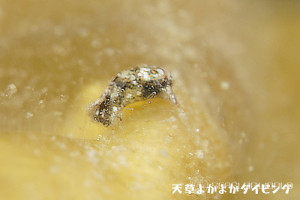
Photos of Haloa japonica

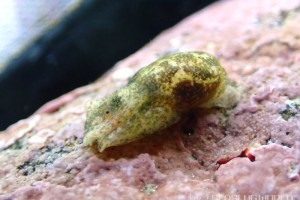
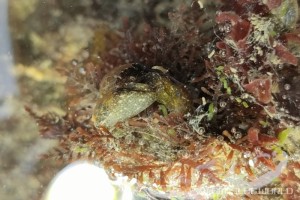

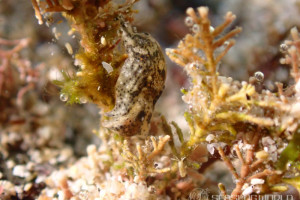

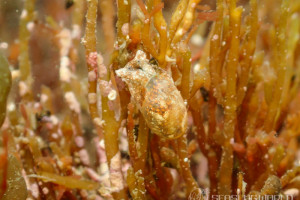




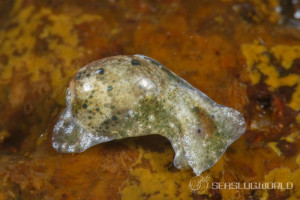

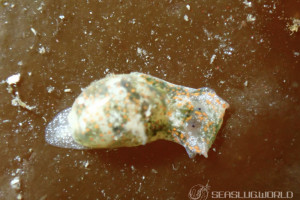

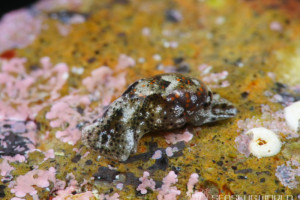
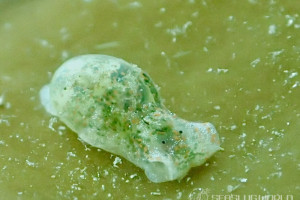

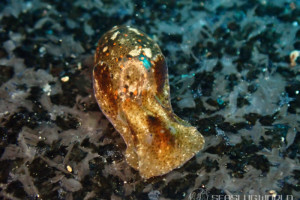

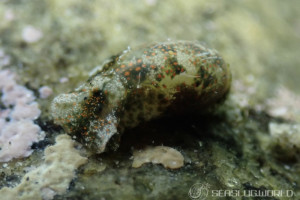
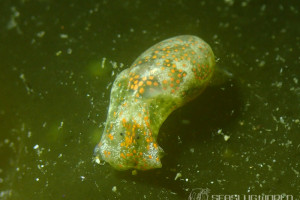

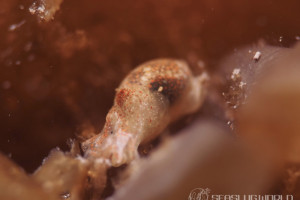

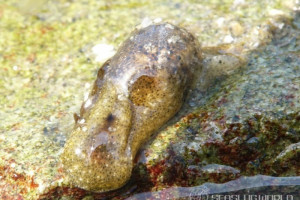

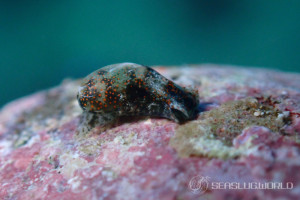

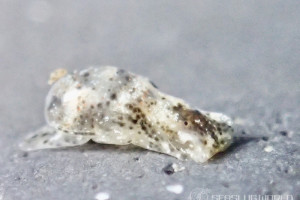

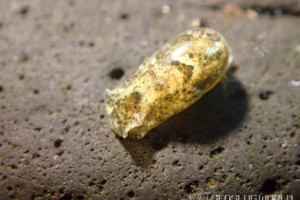





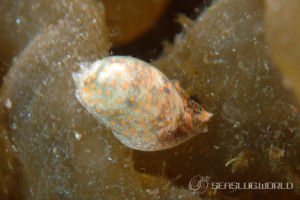

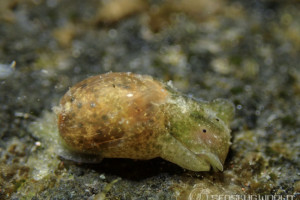
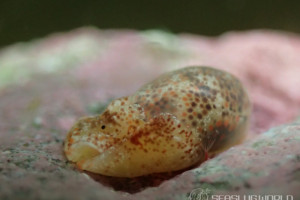
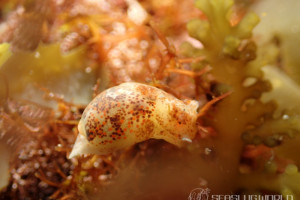
Similar Colors Nudibranchs

Academic Database
Sea slug observation data is available in international marine biodiversity databases.