Marianina rosea (Pruvot-Fol, 1930)
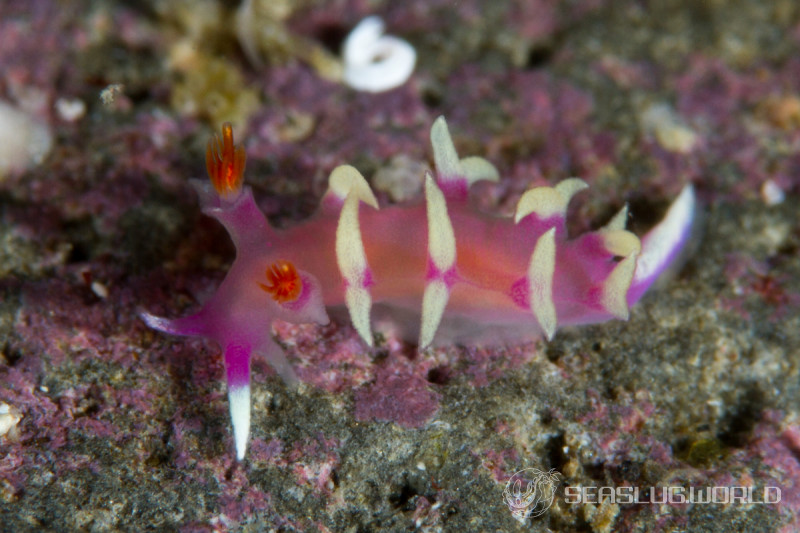
- Location
- Yaene, Hachijo Island, Tokyo, Japan
- Date
- 2016/07/13
- Length
- 8mm
- Depth
- 15.0m
- Water temperature
- 26.1℃
Description
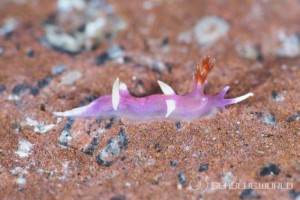
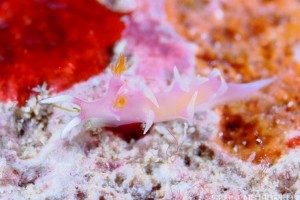
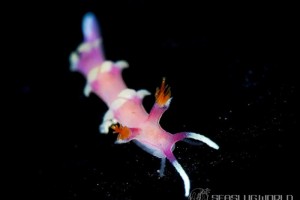
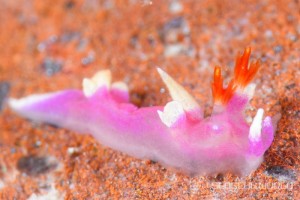
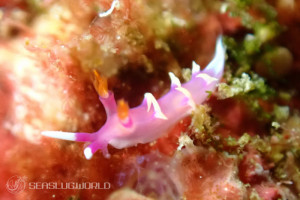
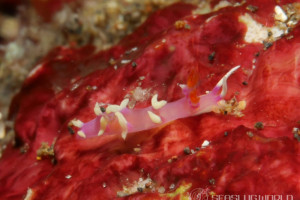
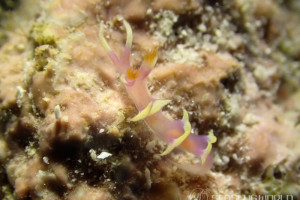
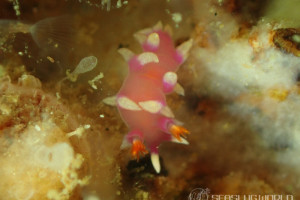
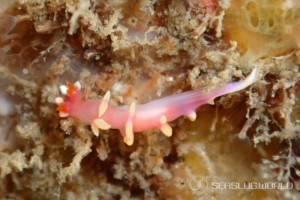
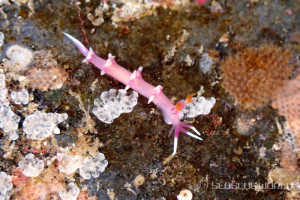
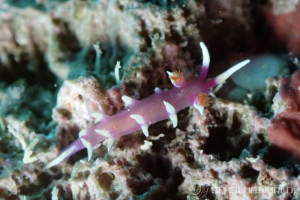
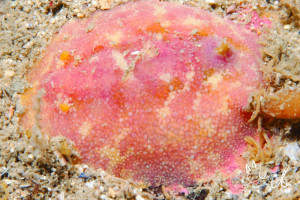
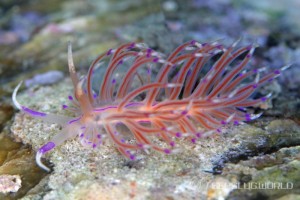
A very small tritoniid. According to the original description, the body shape resembles that of Duvaucelia Risso. The dorsal appendages are not branched as in typical tritoniids; instead, two small flattened, horizontal, divergent leaves are borne on a common stalk, with four such stalks arranged in pairs on each side of the back (a character also found in Duvaucelia). In life the body is rose-carmine. The lateral processes and the four digitations of the oral veil are pure white, as are the rhinophore sheath margins. The slightly branched apex of the rhinophores is pale yellow.Distribution
Type locality: Kuto Bay, Île des Pins, New Caledonia, based on specimens collected by Mme A. Pruvot-Fol in 1929. The species has subsequently been recorded across the Indo-West Pacific and South Atlantic, with reports from South Africa, Madagascar, Australia, New Caledonia, Papua New Guinea, the Philippines, the Mariana Islands, and Japan.Etymology
The original description (Pruvot-Fol, 1930) explicitly states for the genus: "Dédié à ma fille Marianne" (dedicated to my daughter Marianne). The genus name Mariana therefore honours the author's daughter. The specific epithet rosea is Latin for "rose-coloured, rosy", in reference to the carmine-rose ground colour ("rose carminé") of the body.Remarks
In the original description Pruvot-Fol erected the new genus Mariana in the family Tritoniidae. Mariana was preoccupied in zoological nomenclature, and Pruvot-Fol herself subsequently proposed the replacement name Marianina (the parentheses in the author citation reflect this replacement of the generic name). The Japanese vernacular name "ナンヨウウミウシ" ("Nanyō [South Sea] sea slug") refers to the species' South Pacific tropical-subtropical distribution including the New Caledonian type locality.References
- Mariana rosea n. sp. (genus Mariana n. g.), Pruvot-Fol A. (1930). Diagnoses provisoires (incomplètes) des espèces nouvelles et liste provisoire des Mollusques nudibranches recueillis par Mme A. Pruvot-Fol en Nouvelle-Calédonie (Île des Pins). Bulletin du Muséum National d'Histoire Naturelle, Paris. (2)2(2): 229-233.
- ナンヨウウミウシ(新称), 小野篤司. (2004). 沖縄のウミウシ. ラトルズ.
A Kindle field guide by the site author
Kimoto N. (2026). Sea Slugs of Japan & the Indo-Pacific, 2nd Edition.
Kindle Edition
View on Amazon PR (Amazon Associates)Seasonality
Shooting Locations
Loading shooting locations...
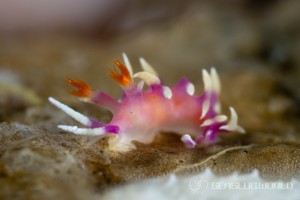
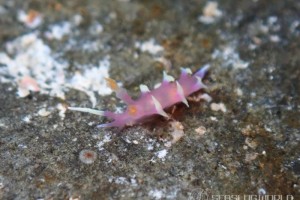
Photos of Marianina rosea





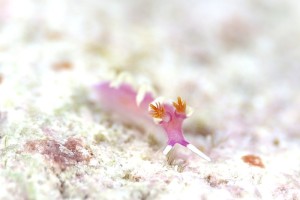

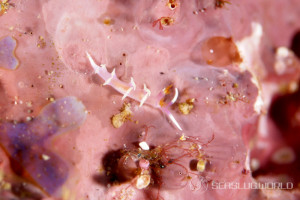

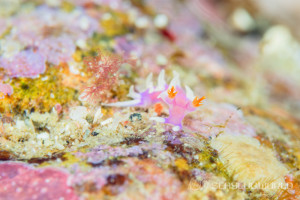
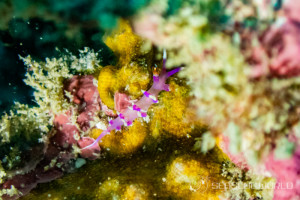



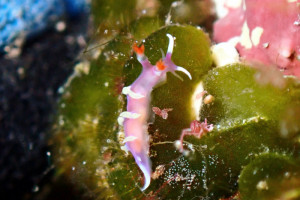
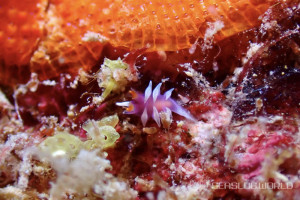

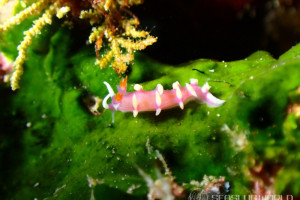

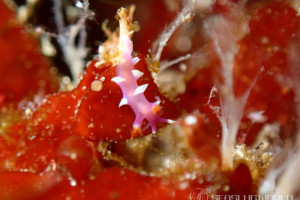

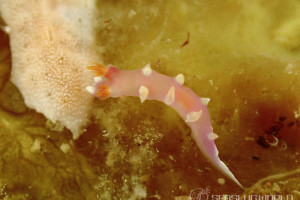

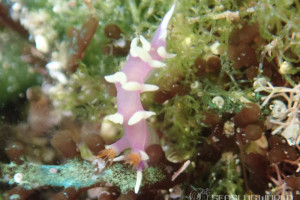

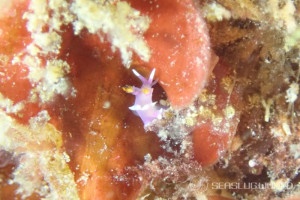

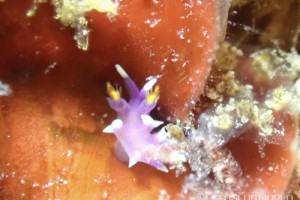





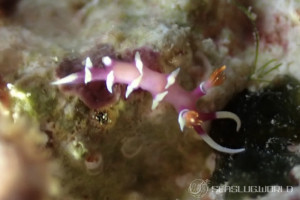
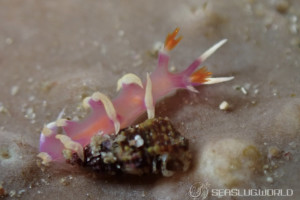
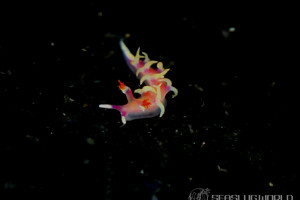

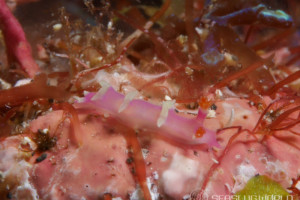
Similar Colors Nudibranchs

Academic Database
Sea slug observation data is available in international marine biodiversity databases.