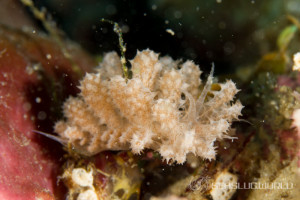
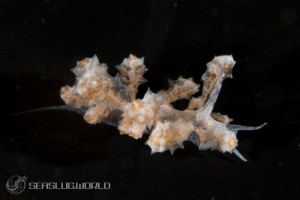
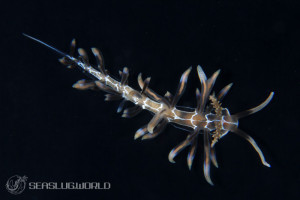
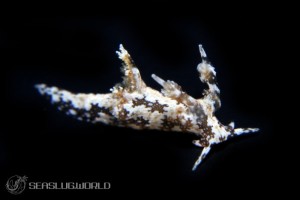
Phyllodesmium koehleri Burghardt, Schrödl & Wägele, 2008
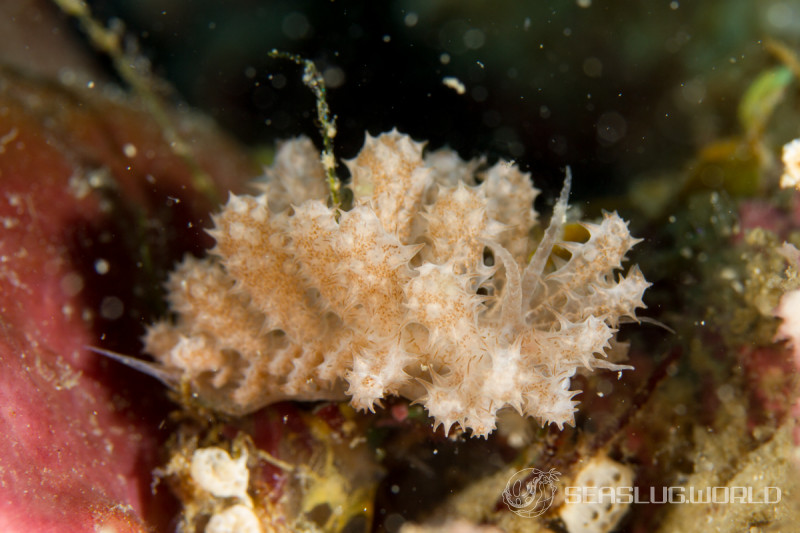
- Location
- Romblon Island, Philippines
- Date
- 2018/02/20
- Length
- 30mm
- Depth
- 16.0m
- Water temperature
- 28.0℃
Description
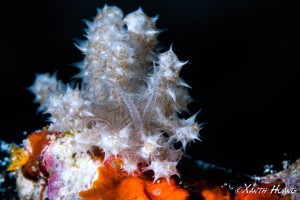
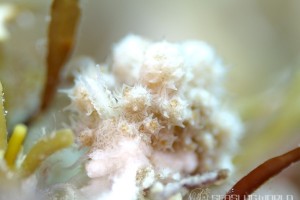
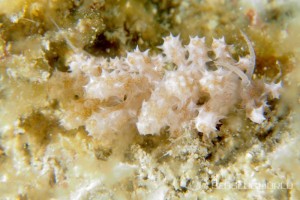
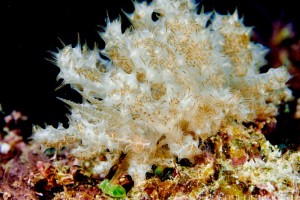
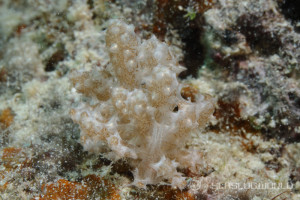
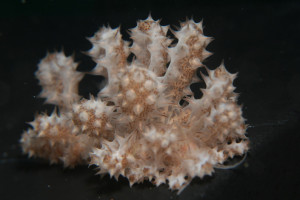
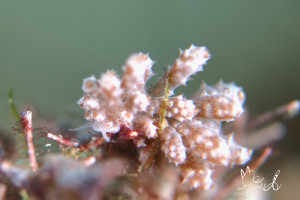
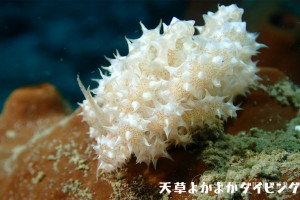
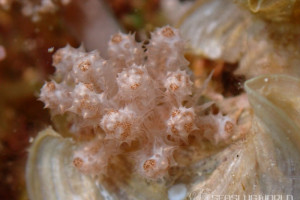
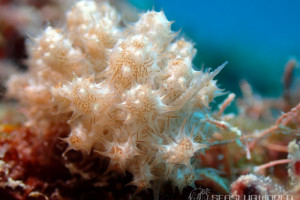
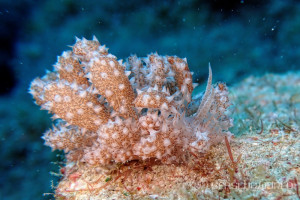
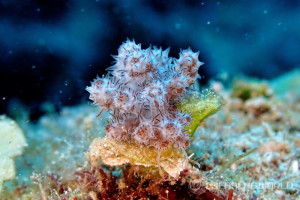
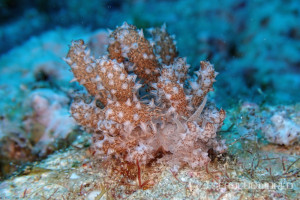
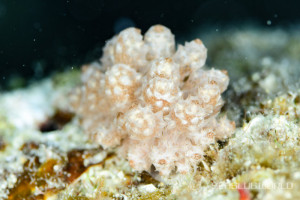
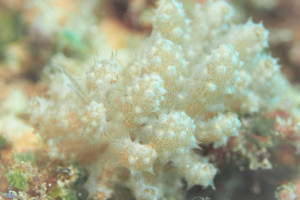
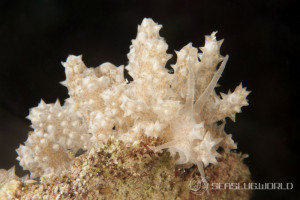
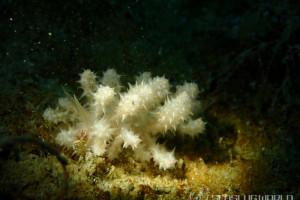
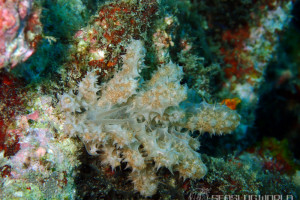
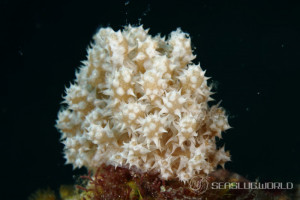
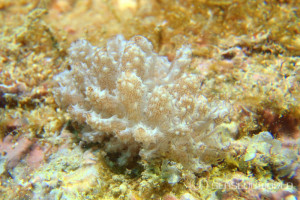
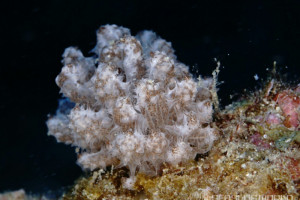
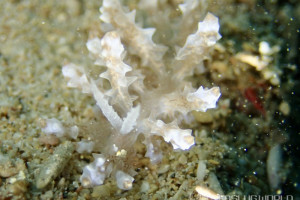
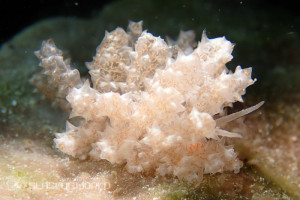
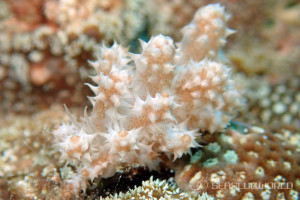
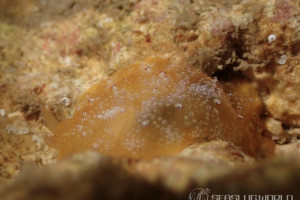
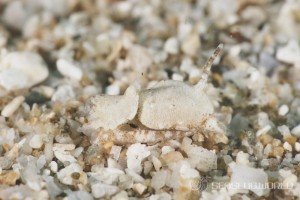
A medium- to large-sized Phyllodesmium, reaching about 56 mm in body length (excluding cerata). The body — including oral tentacles, rhinophores and foot — is translucent white, with the right digestive glandular branch showing through dark brown. The cerata are arranged in five clusters on each side of the body, with up to six cerata per cluster. Each cerata is spoon-like, flattened, with concave and convex sides, broadening in the upper half.Uniquely within the genus, the cerata of this species are densely covered with large, spiny tubercles — giving them a "cactus-like" appearance that closely mimics the branched polyps and spicules of the host nephtheid soft coral. Unlike many other Phyllodesmium, the cerata are never curled in their distal part.
Live zooxanthellae (Symbiodinium) are retained inside the digestive gland epithelium within the cerata, supporting a solar-powered (photosymbiotic) lifestyle.
Distribution
Type locality: Calangaman Island, North Cebu, Philippines (~12 m depth, March 2005). At the time of description the species was also known from Cabilao Island (Philippines), Mooloolaba (Queensland, Australia), Okinawa (Japan), Sulawesi (Indonesia), and New Britain (Papua New Guinea).Etymology
The specific epithet honours Erwin Köhler, a passionate German diver and underwater photographer, who supported the describers by collecting various Phyllodesmium material for the study.Remarks
A specialist on nephtheid soft corals (genera such as Lemnalia and Paralemnalia). Unlike most other Phyllodesmium, which feed on xeniid or tubiporid octocorals, P. koehleri is the only species in the genus known to feed on Nephtheidae — a distinctive ecological niche reflected in the cactus-like spiny morphology of its cerata.References
- Phyllodesmium koehleri sp. nov., Burghardt I., Schrödl M. & Wägele H. (2008). Three new solar-powered species of the genus Phyllodesmium Ehrenberg, 1831 (Mollusca: Nudibranchia: Aeolidoidea) from the tropical Indo-Pacific, with analysis of their photosynthetic activity and notes on biology. Journal of Molluscan Studies. 74(3): 277-292.
- Phyllodesmium koehleri, Terrence Gosliner, Ángel Valdés and David Behrens. (2015). Nudibranch and Sea Slug Identification Indo-Pacific. New World Pubns Inc.
- ケーラーミノウミウシ(新称), 中野理枝. (2018). 日本のウミウシ. 文一総合出版.
Featured in this book

Terrence Gosliner, Ángel Valdés and David Behrens. (2018). Nudibranch and Sea Slug Identification Indo-Pacific 2nd Edition. New World Pubns Inc.
New World Publications
This species, Phyllodesmium koehleri, is included in the book.
View on Amazon PR (Amazon Associates)Seasonality
Shooting Locations
Loading shooting locations...
Photos of Phyllodesmium koehleri



















Same Genus Nudibranchs

Similar Colors Nudibranchs

Academic Database
Sea slug observation data is available in international marine biodiversity databases.