Polybranchia jannae Medrano, Krug, Gosliner, Biju Kumar & Á. Valdés, 2018
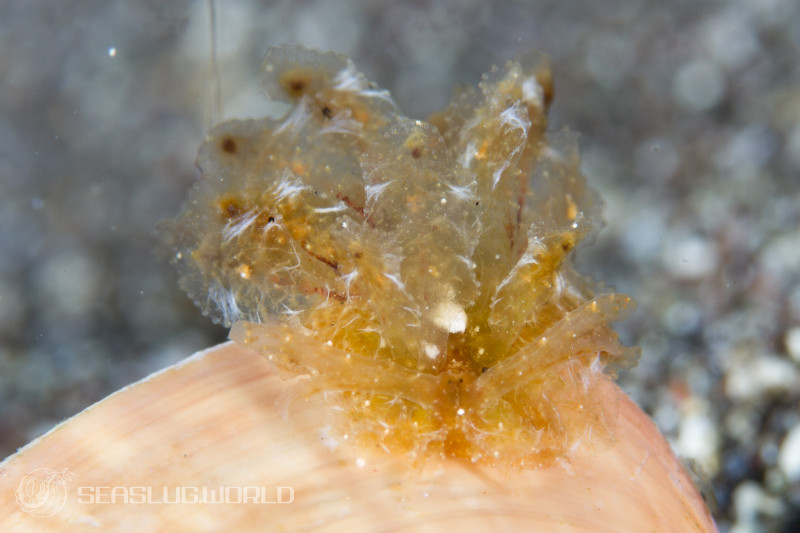
- Location
- Kawana Beach, Kawana, Shizuoka, Japan
- Date
- 2013/01/17
- Length
- 10mm
- Depth
- ??m
- Water temperature
- ??℃
Description
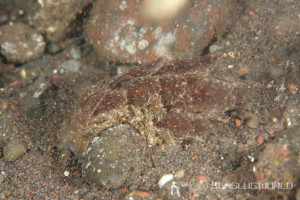
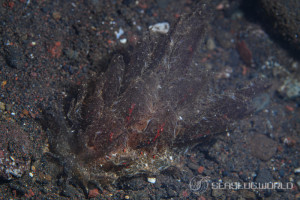
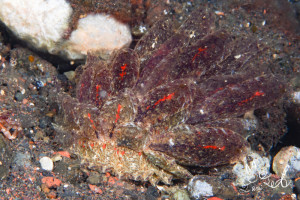
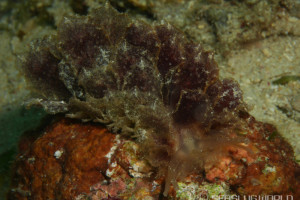
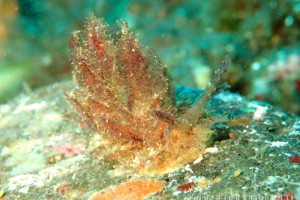
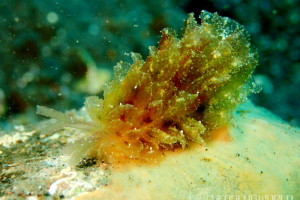
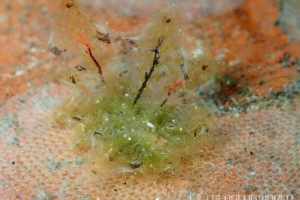
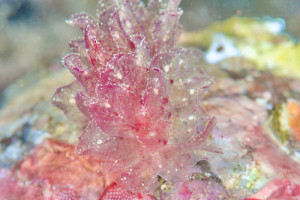
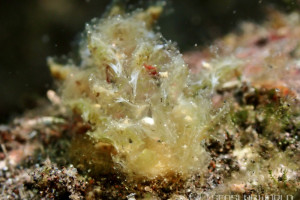
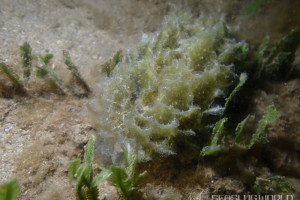
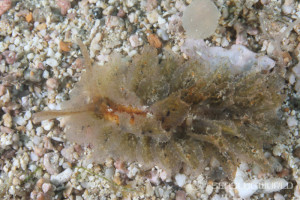
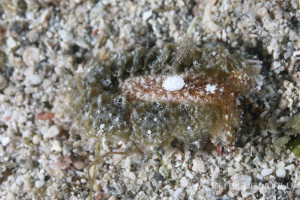
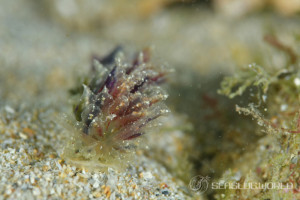
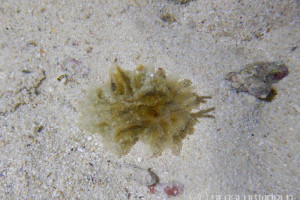
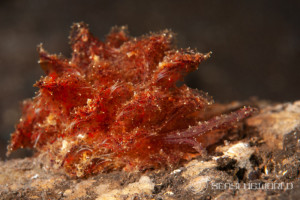
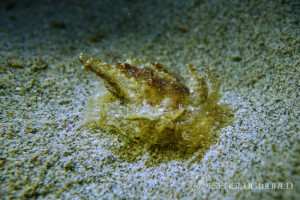
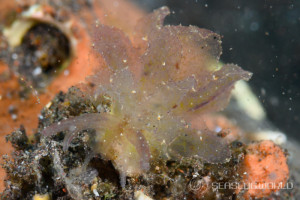
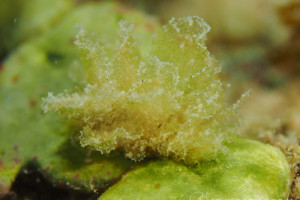
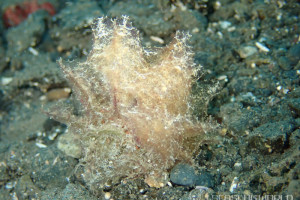
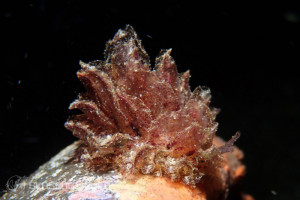
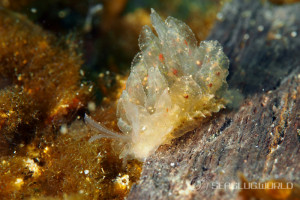
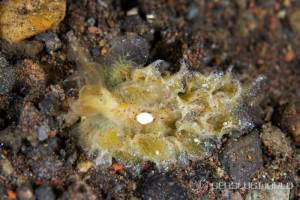
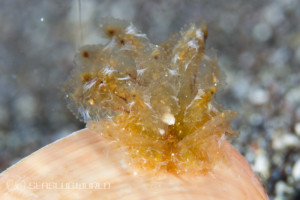
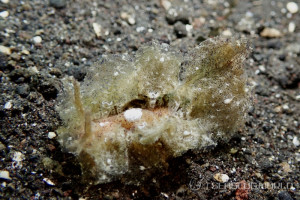
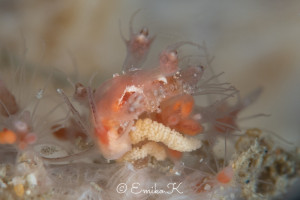
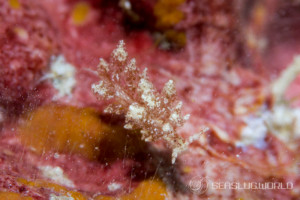
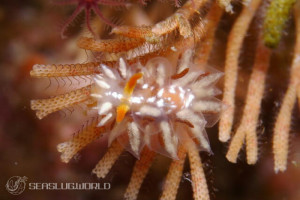
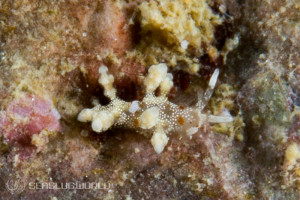
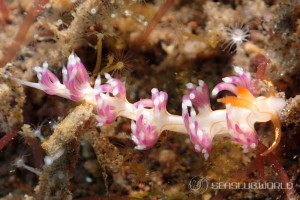
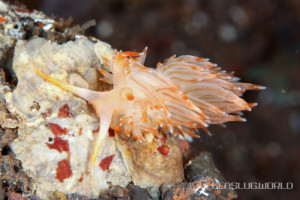
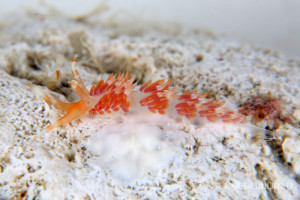
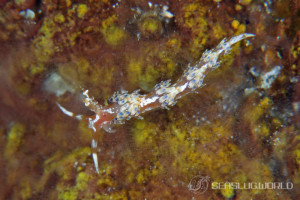
A small sacoglossan, holotype about 10 mm in length. The body is translucent golden yellow to light brown, with numerous small orange and purple spots scattered throughout the dorsum. These spots also extend onto the rhinophores, which are translucent and bear several white papillae. The pericardium is pigmented with snowy white.The fan-shaped cerata each carry a single, large white-to-yellow papilla on the dorso-medial surface, with smaller white-tipped papillae on both dorsal and ventral sides. Many orange and purple spots are scattered throughout each ceras. A deep purple line near the base of each ceras extends medially and vertically to about half the ceratal length and then abruptly turns red-orange, continuing toward the distal end without reaching the white-tipped margin. A distinctive white or yellow cobweb-like pattern of fine lines covers the inner surface of each ceras and conceals the branching digestive gland.
Distribution
Type locality: Yabob, Madang Province, Papua New Guinea. The species is currently known from Papua New Guinea, the Philippines (Batangas), Indonesia, and Japan (with Japanese records including observations from this website).Etymology
The specific epithet jannae honours Dr Jann E. Vendetti, Curator of Malacology at the Natural History Museum of Los Angeles County (LACM), described by the authors as "an inspiring malacologist and role model to all women in science".Remarks
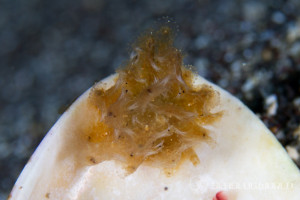
In the molecular phylogeny of Polybranchia, P. jannae occupies the most basal position, sister to the rest of the genus. Whereas other Polybranchia species are greenish to brownish and display conspicuous digestive branches in their cerata, the body of P. jannae is overall translucent golden yellow with bright orange and dark purple blotches, and the cobweb-like pigment pattern conceals the underlying ceratal glands. This is also the first species of Polybranchia reported to harbour parasitic copepods.References
- Polybranchia jannae sp. nov., Medrano S., Krug P.J., Gosliner T.M., Biju Kumar A. & Valdés Á. (2018). Systematics of Polybranchia Pease, 1860 (Mollusca: Gastropoda: Sacoglossa) based on molecular and morphological data. Zoological Journal of the Linnean Society. 186(1): 76-115. https://doi.org/10.1093/zoolinnean/zly050
- Polybranchia jannae, Terrence Gosliner, Ángel Valdés and David Behrens. (2018). Nudibranch and Sea Slug Identification Indo-Pacific 2nd Edition. New World Pubns Inc.
Featured in this book
Terrence Gosliner, Ángel Valdés and David Behrens. (2018). Nudibranch and Sea Slug Identification Indo-Pacific 2nd Edition. New World Pubns Inc.
New World Publications
This species, Polybranchia jannae, is included in the book.
View on Amazon PR (Amazon Associates)Seasonality
Shooting Locations
Loading shooting locations...
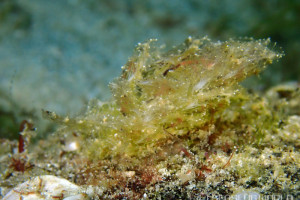
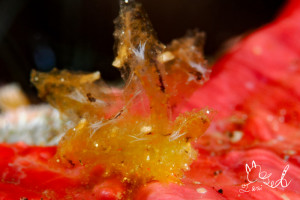
Photos of Polybranchia jannae


















Same Genus Nudibranchs

Similar Colors Nudibranchs

Academic Database
Sea slug observation data is available in international marine biodiversity databases.