Thecacera pennigera (Montagu, 1813)
Description
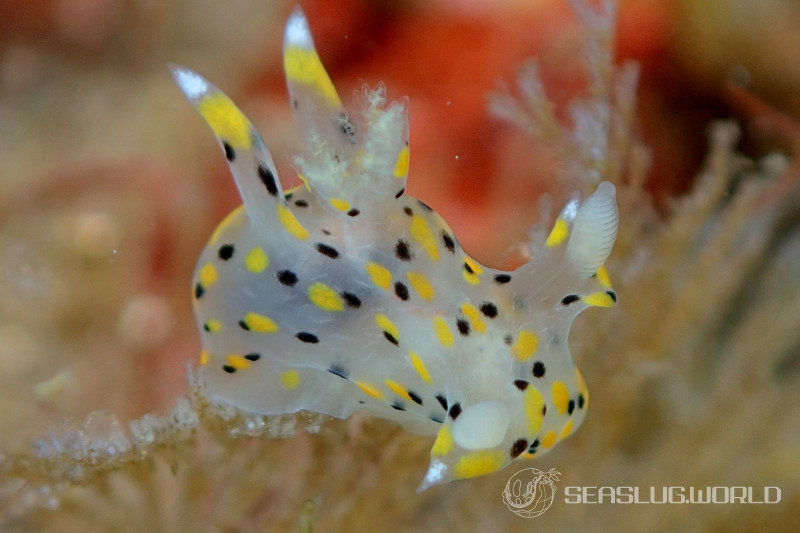
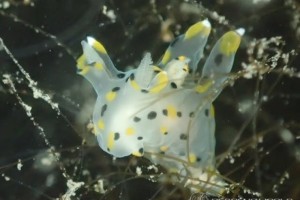
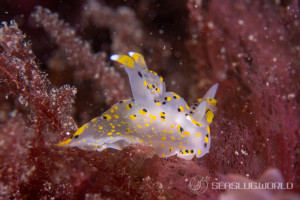
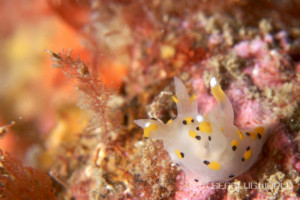
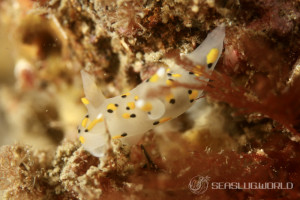
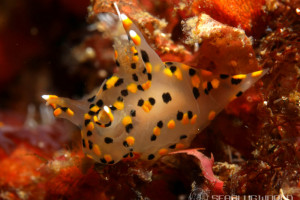
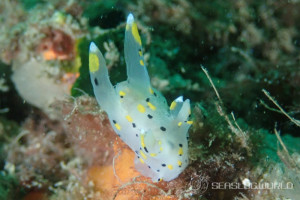
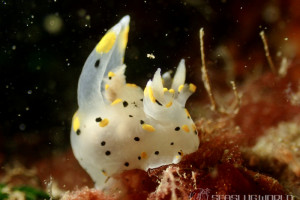
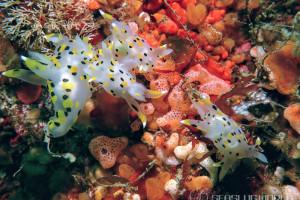
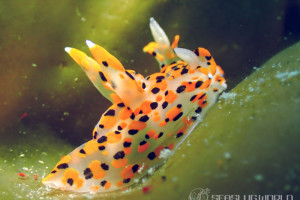
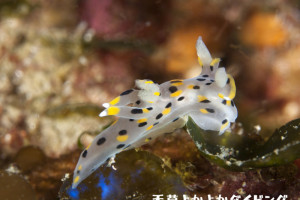
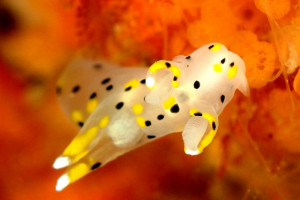
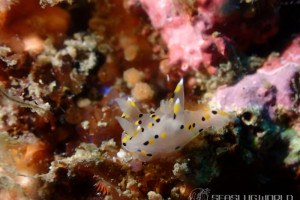
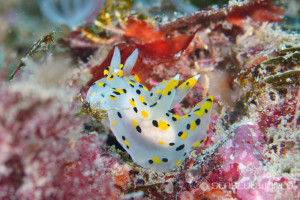
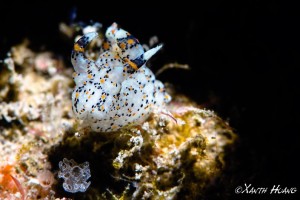
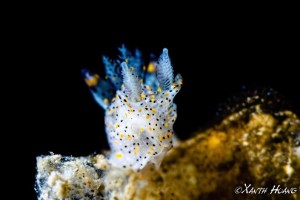
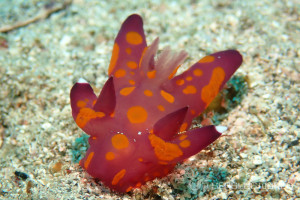
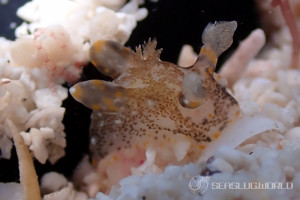
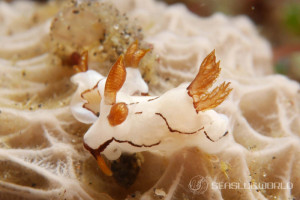
The body is translucent white, scattered all over with orange to yellow spots interspersed with smaller black spots. The dorsum is smooth and lacks tubercles. The rhinophores rise from elevated sheaths and the tips are tinged yellow. There are five bipinnate gills that do not retract. The most distinctive feature is a pair of long, conical post-branchial processes, one on each side just behind the gill. The anterior foot corners are produced into short horns. Body length reaches 12 to 30 mm.Distribution
The type locality is the English Channel off the south coast of Devonshire. Thecacera pennigera has a near-cosmopolitan distribution in temperate to subtropical seas, recorded from both sides of the Atlantic, the Mediterranean, South Africa, Brazil, Japan, Korea, Australia, and New Zealand. In Japan it is known from Toyama Bay, the Seto Inland Sea, Sagami Bay, and other localities along the main islands.Etymology
The specific epithet pennigera is Latin for "feather-bearing", from penna (feather) plus the suffix -ger (bearing, carrying). The name evidently refers to the pair of long appendages behind the gill and the bipinnate gill plumes themselves, which together resemble feathers.Remarks
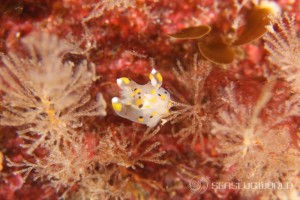
Thecacera pennigera feeds on bryozoans, particularly species of Bugula, and lays its egg masses on bryozoan colonies.The species is one of the most popular nudibranchs among photographers in Japan.
Junior subjective synonyms include Thecacera maculata Eliot, 1905 and Thecacera lamellata Barnard, 1933.
References
- Thecacera pennigera (MONTAGU, 1815) Mizutama-umiushi (n. n.), Baba K. (1960). THE GENERA POLYCERA, PALIO, GREILADA AND THECACERA FROM JAPAN (NUDIBRANCHIA-POLYCERIDAE). Publications of the Seto Marine Biological Laboratory. 8(1): 75-78. https://doi.org/10.5134/174699
- ミズタマウミウシ, 益田一. (1999). 海洋生物ガイドブック. 東海大学出版会.
- ミズタマウミウシ, 益田一. (1999). 海洋生物ガイドブック. 第2刷. 東海大学出版会.
- ミズタマウミウシ, 鈴木敬宇. (2000). ウミウシガイドブック〈2〉. TBSブリタニカ.
- 高岡生物研究会. (2002). 日本海のウミウシ. 第2版.
A Kindle field guide by the site author
Kimoto N. (2026). Sea Slugs of Japan & the Indo-Pacific, 2nd Edition.
Kindle Edition
View on Amazon PR (Amazon Associates)Seasonality
Shooting Locations
Loading shooting locations...
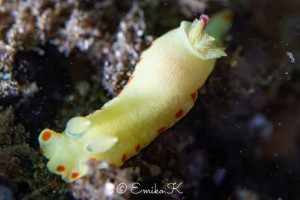
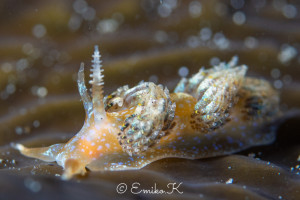
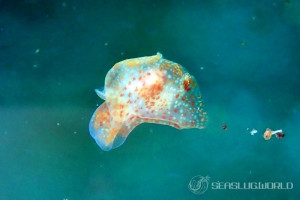
Photos of Thecacera pennigera


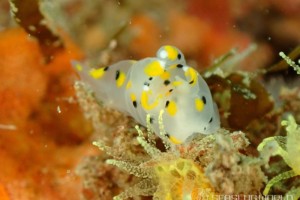
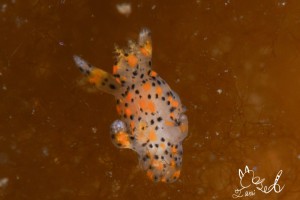

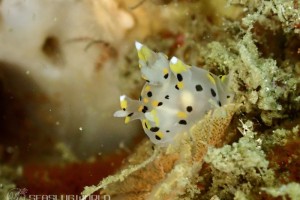

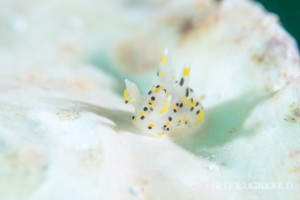
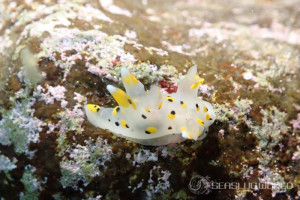

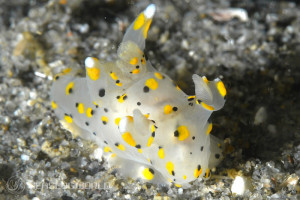

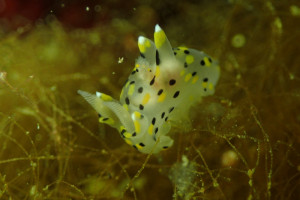

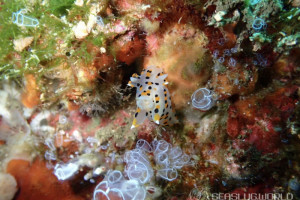








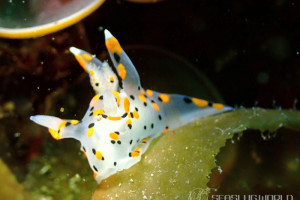
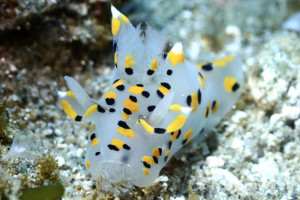

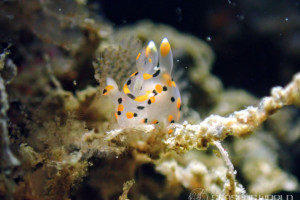
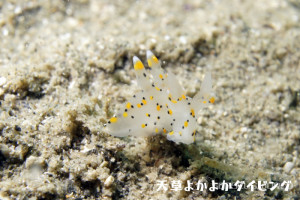



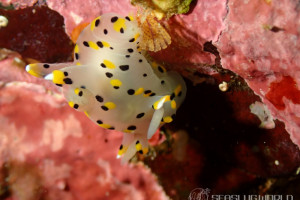
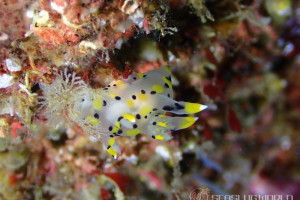

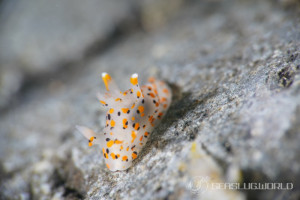

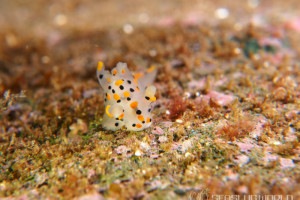
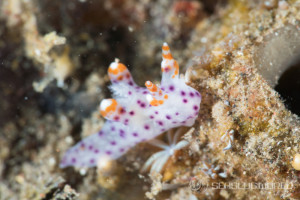
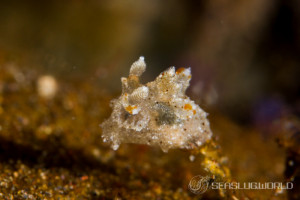
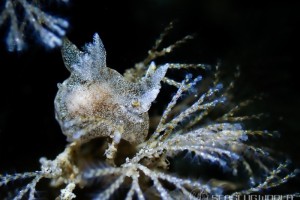
Same Genus Nudibranchs
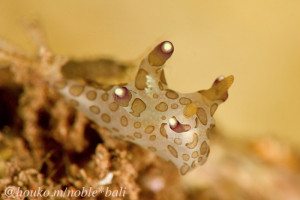
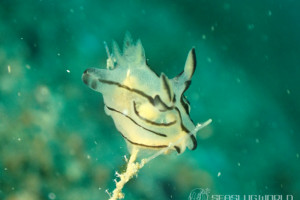

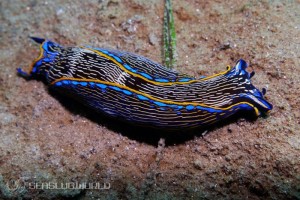
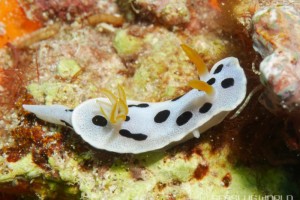
Similar Colors Nudibranchs

Academic Database
Sea slug observation data is available in international marine biodiversity databases.