Triopha modesta Bergh, 1880
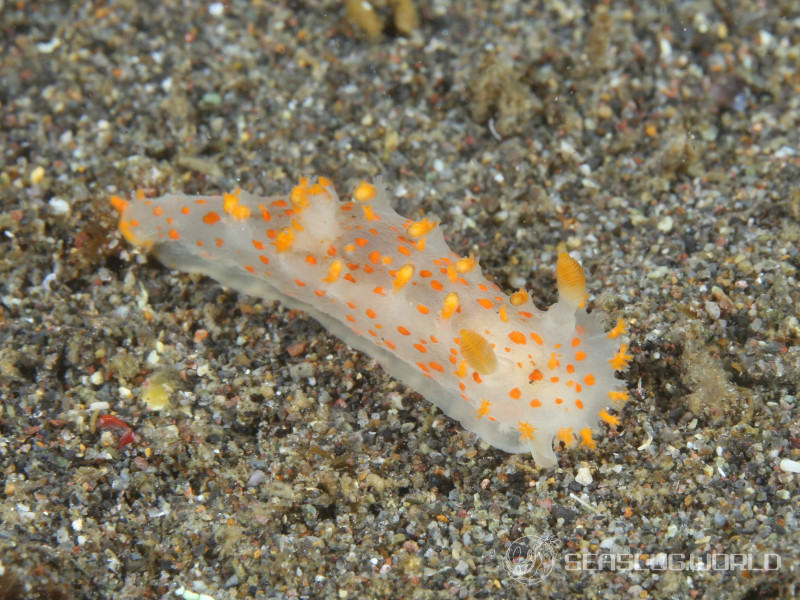
- Location
- Rousokuiwa, Rausu, Hokkaido, Japan
- Date
- 2015/05/30
- Length
- 12mm
- Depth
- 10.0m
- Water temperature
- 5.0℃
Description
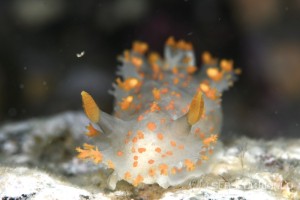
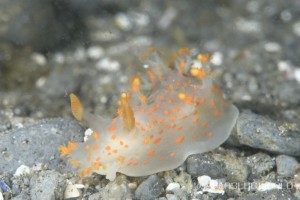
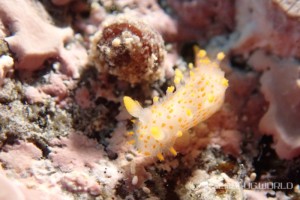
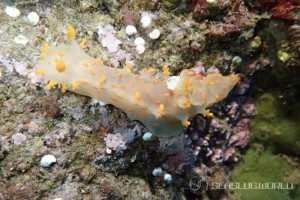
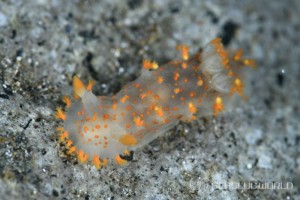
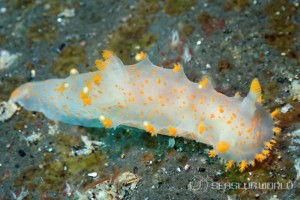
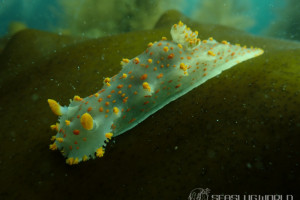
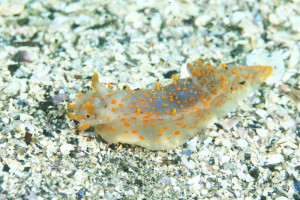
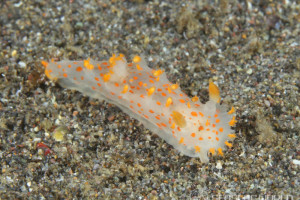
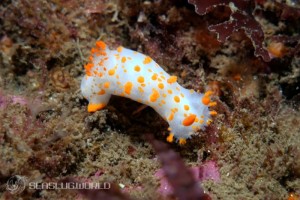
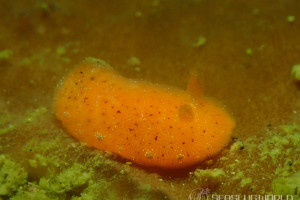
Ground colour translucent white, occasionally tinged with pale brown. The dorsum bears scattered tubercles of orange to orange-red, often forming a median series running between and behind the rhinophores. Branched papillae of the same translucent white as the body fringe the mantle margin, each tipped vividly with orange; similar branching papillae line the frontal veil. The rhinophores have a translucent white base and orange clavus, and the tripinnate gills are translucent white with orange tips. Northern Japanese specimens commonly reach 45-50 mm, with maximum size around 70 mm.Distribution
Widely distributed across the North Pacific. The type locality is the Shumagin Islands, Alaska. The species ranges along Hokkaido and northern Honshu, the Russian Far East, the eastern coast of the Korean Peninsula, and across to Alaska, British Columbia, Washington, Oregon, and California, predominantly in cold-current regions. the 1957 study first reported it from northern Japan (Shirikishinai and Hirota), and it has since been recorded along Hokkaido including the Shakotan Peninsula.Etymology
From the Latin modestus (modest, unassuming), reflecting the comparatively subdued appearance of Bergh's original Alaskan specimens relative to congeners described in the same work.Remarks
Triopha modesta was long treated as a junior synonym of the eastern Pacific Triopha catalinae (Cooper, 1863), and the North Pacific population was regarded as a single trans-Pacific species. Martynov et al. 2015 reinstated T. modesta as valid for Russian Far Eastern material, and Korshunova et al. 2020 confirmed the western and eastern Pacific lineages as distinct species using combined morphological and molecular evidence. Records published by the 1957 study under "Triopha carpenteri (Stearns)" from northern Japan are referable to T. modesta, and the Japanese name "Hanasaki-umiushi" was coined in the same work. Like other members of the genus, it is reported to feed on bryozoans.References
- Triopha carpenteri (Stearns) Hanasaki-umiushi (n. n.), Baba, K. 1957. A revised list of the species of Opisthobranchia from the northern part of Japan, with some additional descriptions. J. Fac. Sci., Hokkaido Univ.,ser. 6, Zool. 13(1-4):8-14.
- Triopha modesta, Jung D.-W., Gosliner T.M., Choi T.-J. & Kil H.-J. (2020). The return of the clown: pseudocryptic speciation in the North Pacific clown nudibranch, Triopha catalinae (Cooper, 1863) sensu lato identified by integrative taxonomic approaches. Marine Biodiversity. 50: 84.
- Triopha modesta, 柏尾翔 & 山崎友資. (2021). 北海道積丹半島沿岸のウミウシ. ちりぼたん. 51(1): 1-20.
- Triopha modesta, Behrens D.W., Hermosillo A., Fletcher K. & Jensen G.C. (2022). Nudibranchs & Sea Slugs of the Eastern Pacific. Molamarine.
Featured in this book
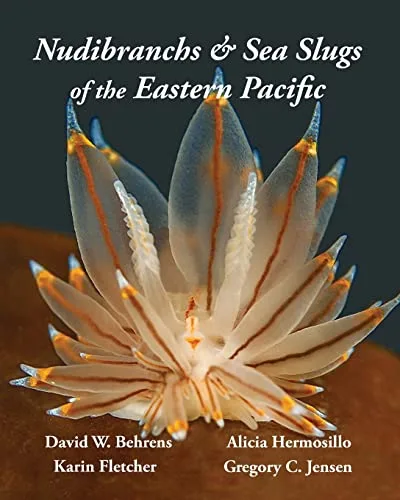
Behrens D.W., Hermosillo A., Fletcher K. & Jensen G.C. (2022). Nudibranchs & Sea Slugs of the Eastern Pacific. Molamarine.
Molamarine
This species, Triopha modesta, is included in the book.
View on Amazon PR (Amazon Associates)Seasonality
Shooting Locations
Loading shooting locations...
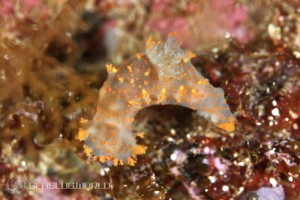
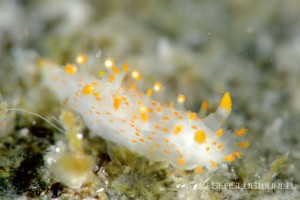
Photos of Triopha modesta




Same Genus Nudibranchs
Similar Colors Nudibranchs
Academic Database
Sea slug observation data is available in international marine biodiversity databases.