Rambling notes on pineapple-umiushi (Halgerda willeyi) and friends
A paper recently described several new species in Halgerda — including the pineapple-umiushi clade. Here are my notes specifically on pineapple-umiushi.
https://link.springer.com/article/10.1007/s12526-022-01334-9
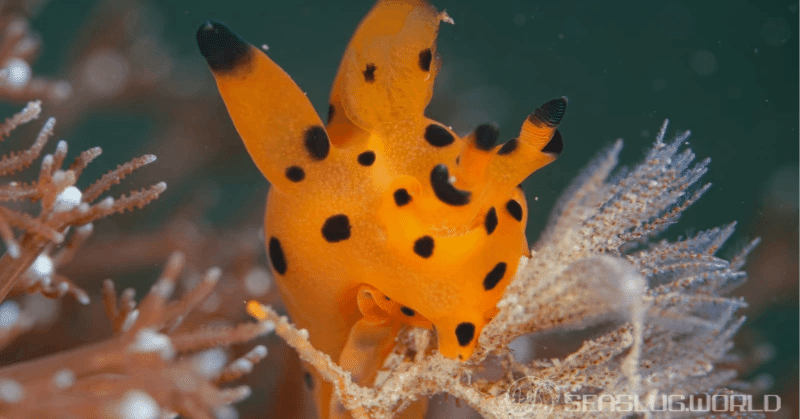
Halgerda willeyi Eliot, 1903
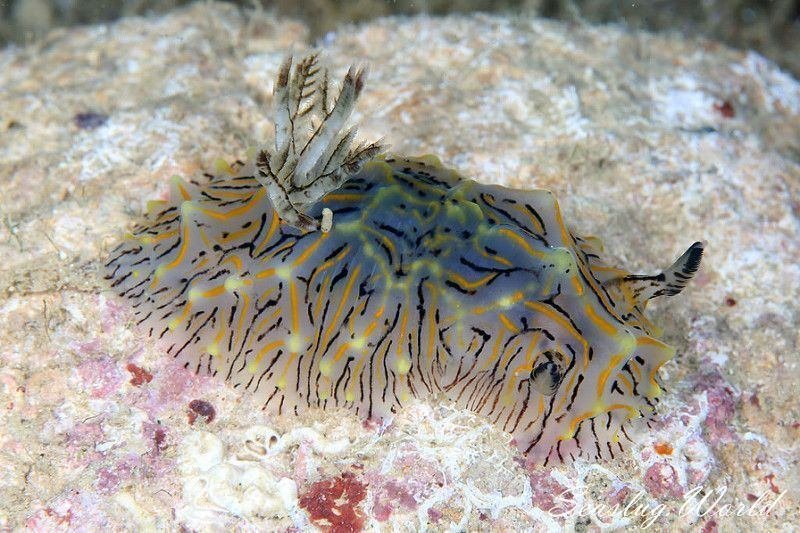
This is the classic "pineapple-umiushi". The scientific name stays as Halgerda willeyi. The Japanese vernacular is another story — see below.
Key characters: peaks on the dorsal ridges form yellow round caps; gills do not have dots.
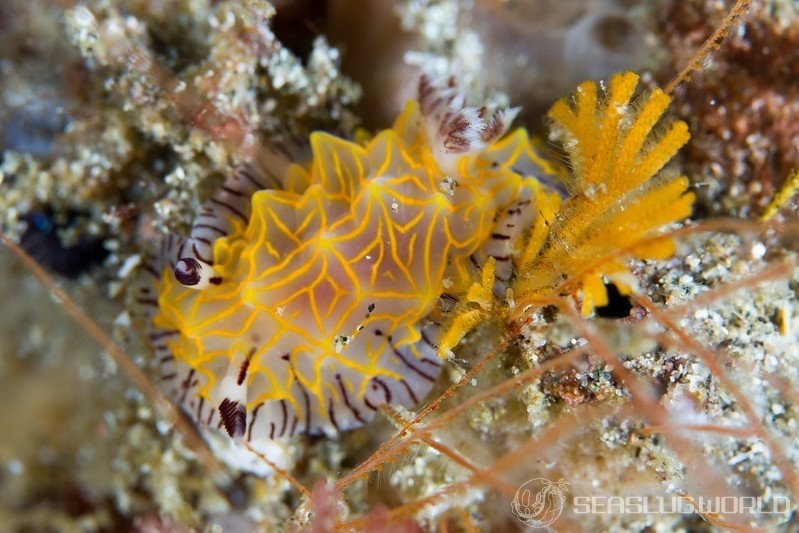
Going by those characters alone, an animal like this presumably also falls in H. willeyi. The paper itself doesn't show that variation, but it seems consistent with the diagnosis.
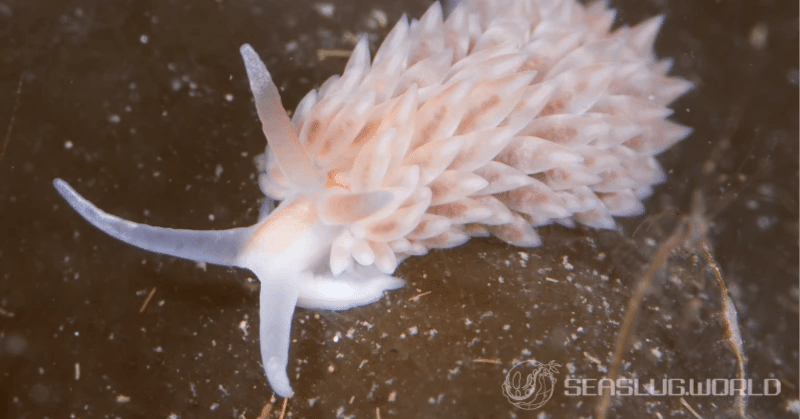
Halgerda elegans Bergh, 1905
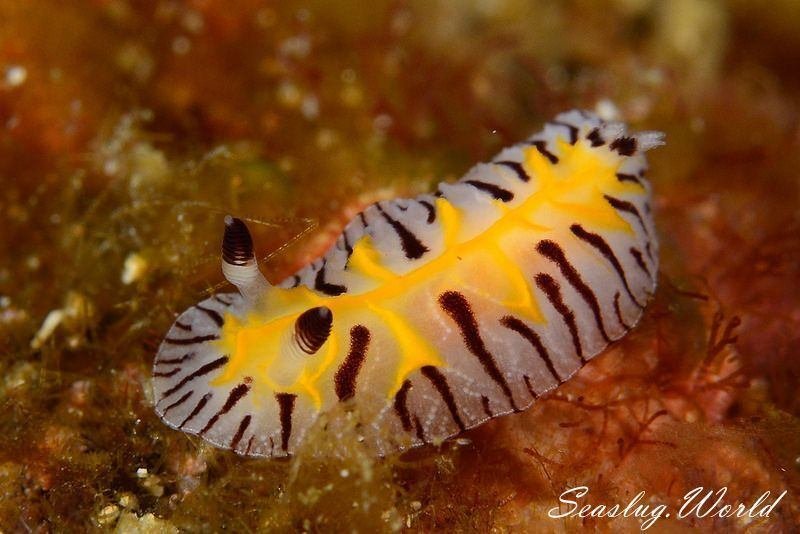
Halgerda elegans is declared to be a juvenile of H. willeyi, and is therefore an invalid synonym.
But the photo published as the H. elegans type matches what we'd casually call H. willeyi, not the animal in the photo above.
I find it hard to believe the Japanese animal we call "elegans-hiodoshi" is truly the juvenile of H. willeyi. This will need DNA to resolve.
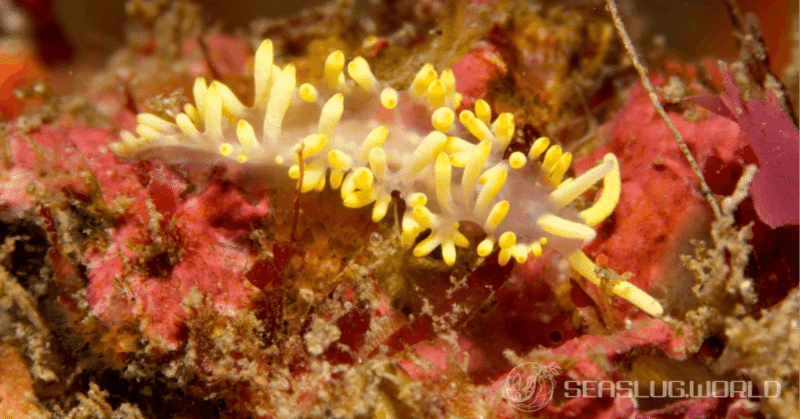
Halgerda labyrinthus Donohoo & Gosliner, 2023
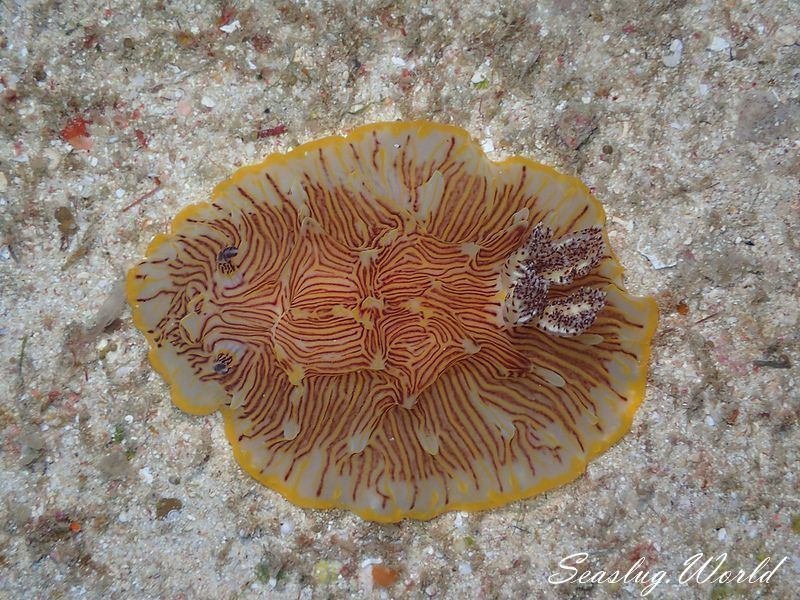
What we'd been calling "miyama-umiushi" on seaslug.world has been formally described, and the species epithet — labyrinthus — refers to the pattern.
Diagnostic: gills covered in black dots, and the mantle margin is yellow.
Honestly, this animal does not look much like pineapple-umiushi at all — so confusing them is not really an issue. It looks more similar to the "Izu-form internet-umiushi" types, but the paper does not compare against those at all, which is mildly disappointing.
Sea Slug Guide-book 2's "miyama-umiushi" matches this animal.
The rest of this article is for Premium members
To read the rest of this article, a Premium membership (USD 3.00/month) is required.
- Unlimited access to all members-only articles, including new species reports and paper introductions
- No ads (AdSense) across the entire site
- Priority handling of your observations (Premium uploads are identified and published first when the moderation queue is backed up)
- Priority access to the AI identification feature
Already a member? Please log in.
Enjoyed this post? You can tip the author directly —
Tip this post