Soft-sediment Fionidae get a major revision — and several Indo-Pacific "sp." finally get names
The "sp." animals that appeared in Gosliner's field guide Nudibranch & sea slug identification: Indo-Pacific (2015) have finally been given formal names. There is presumably more data behind the scenes for additional taxa too, so I expect a steady trickle of further descriptions if someone keeps writing them up.
https://peerj.com/articles/18517/#aff-1
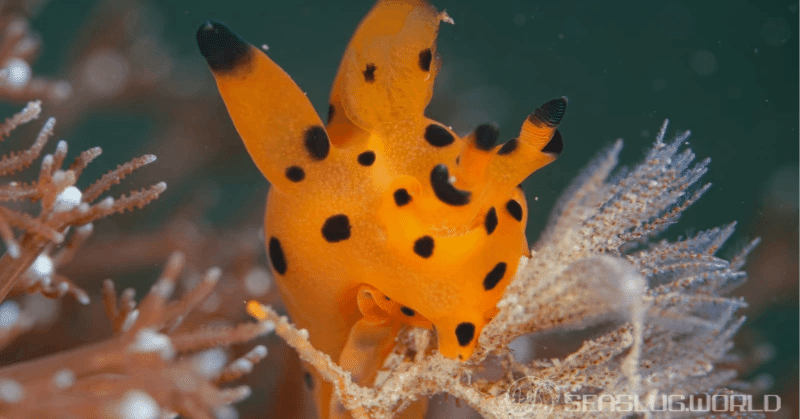
futogaya-mino-umiushi
Tenellia yamasui (Hamatani, 1993)
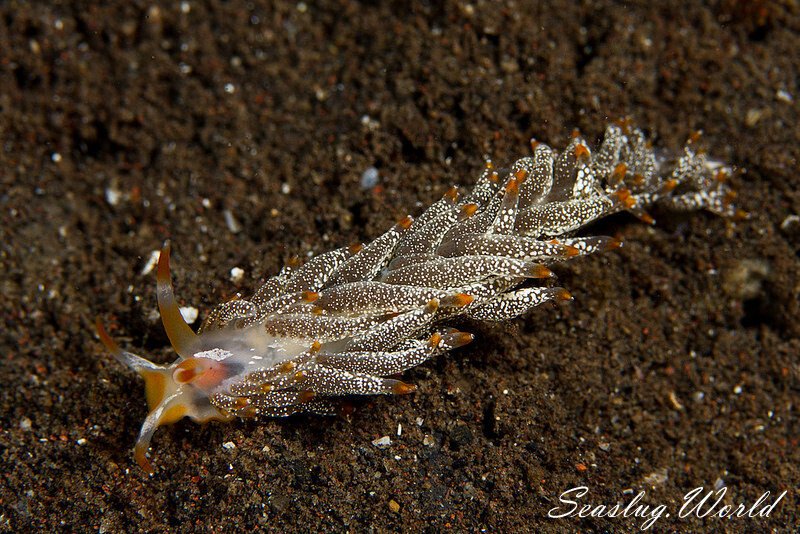
What the 2015 ID guide already said gets restated in this paper, but now with DNA: this animal is "futogaya-mino-umiushi", and the sequences are public. The paper also acknowledges the prior confusion around the name "futogaya-mino-umiushi" in older field guides and on websites.
I'll come back to the genus issue at the end, but the upshot is: it sits in Tenellia.
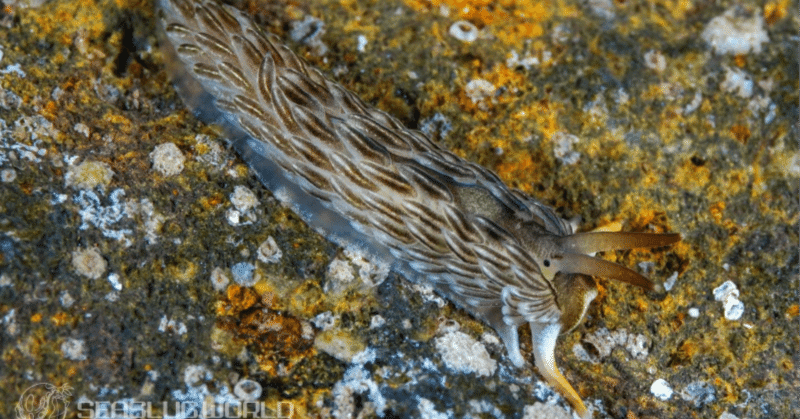
taru-mino-umiushi
Tenellia puti Kim & Gosliner sp. nov.
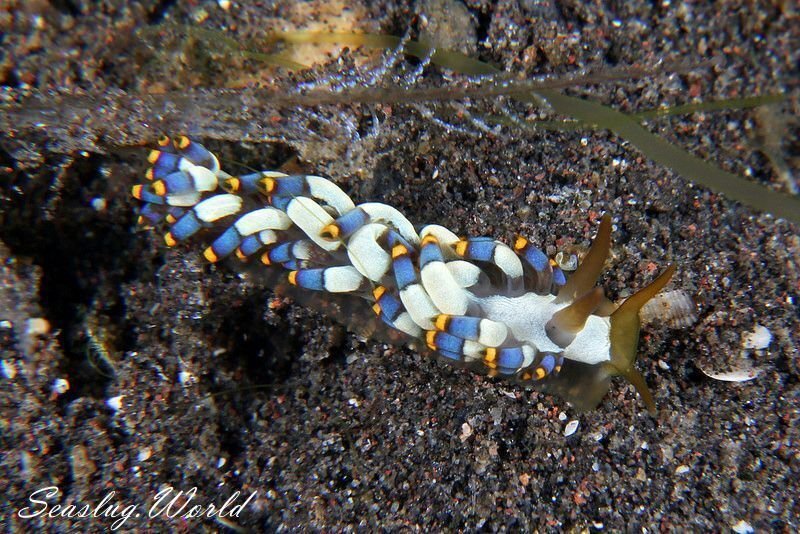
Puti is Filipino (Tagalog) for "white", reflecting the opaque white markings on the dorsum that characterise this species. The white triangular patch on the Philippine flag represents equality.
— Stirring up the muck: the systematics of soft-sediment Fionidae (Nudibranchia: Aeolidina) from the tropical Indo-Pacific
Translated loosely, you could think of it as a "white-backed" mino-umiushi. Taru-mino-umiushi had been treated by Rudman as conspecific with futogaya-mino-umiushi, but the paper shows — quite straightforwardly — that DNA, external appearance, and radula are all clearly different.
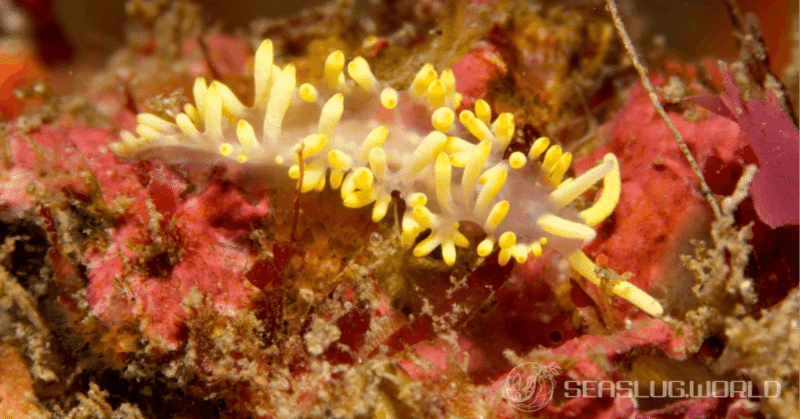
Tenellia bughaw
Tenellia bughaw Kim & Gosliner sp. nov.
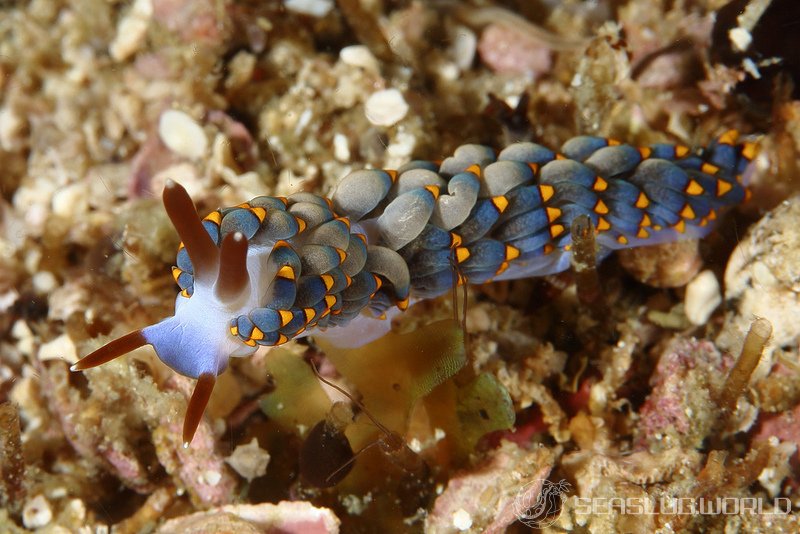
Bughaw is Filipino (Tagalog) for "blue", referring to the dominant vivid blue pigmentation of this species.
— Stirring up the muck: the systematics of soft-sediment Fionidae (Nudibranchia: Aeolidina) from the tropical Indo-Pacific
It looks essentially identical to T. puti, but is described as a separate species. On a DNA tree the two are right next to each other, but apparently still cleanly distinct.
On seaslug.world we provisionally group these futogaya-allied animals — I'd really like to see what that group looks like once DNA gets pulled.
T. bughaw and T. puti are very similar, but a few characters separate them cleanly enough that field ID is easy:
- Tip of the rhinophore is white, or not
- Base of the cerata is distinctly white, or not
- Distinct brown band around the mouth area on the face, or not
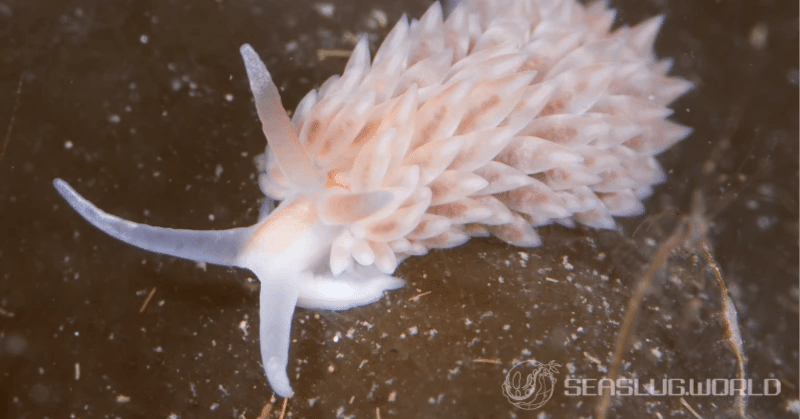
hakuto-mino-umiushi
The rest of this article is for Premium members
To read the rest of this article, a Premium membership (USD 3.00/month) is required.
- Unlimited access to all members-only articles, including new species reports and paper introductions
- No ads (AdSense) across the entire site
- Priority handling of your observations (Premium uploads are identified and published first when the moderation queue is backed up)
- Priority access to the AI identification feature
Already a member? Please log in.
Enjoyed this post? You can tip the author directly —
Tip this post