Actinocyclus verrucosus Ehrenberg, 1831
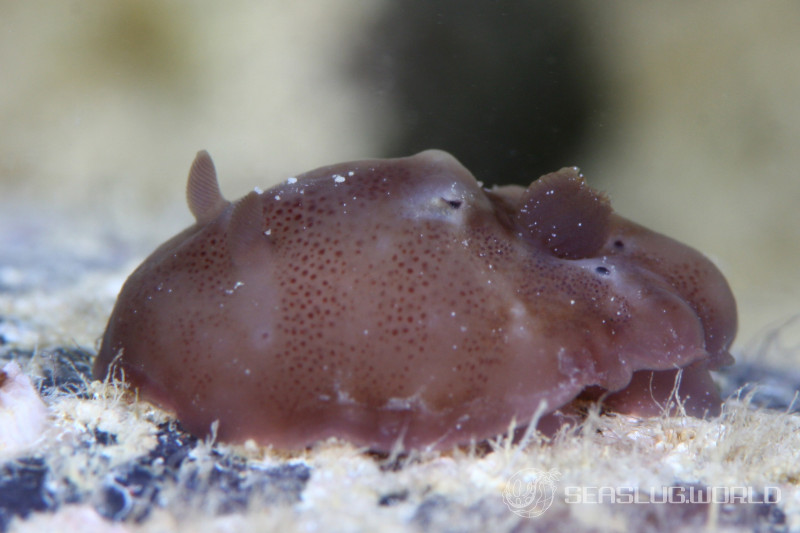
- Location
- Red Beach, Okinawa Island (East coast), Okinawa, Japan
- Date
- 2011/02/13
- Length
- 22mm
- Depth
- 13.0m
- Water temperature
- 25.0℃
Description
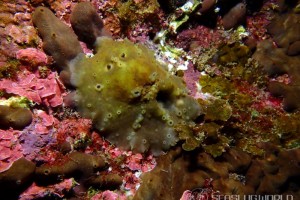
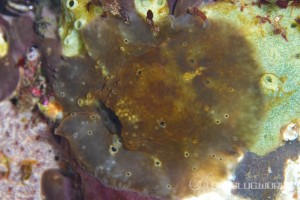
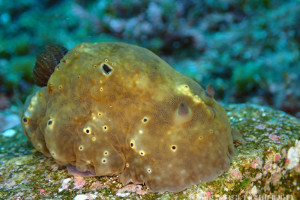
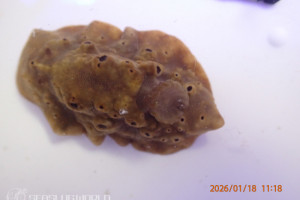
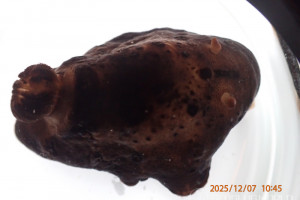
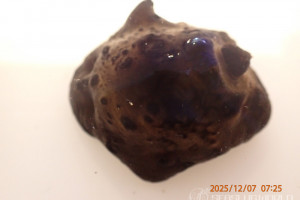
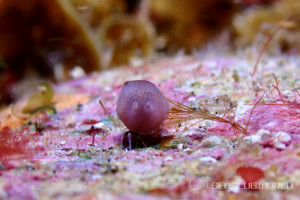
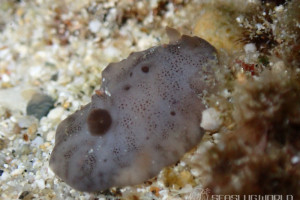
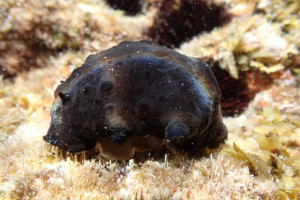
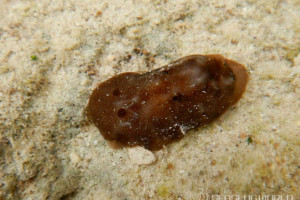
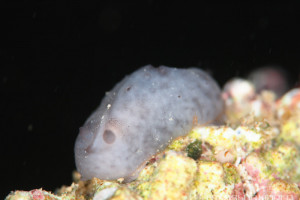
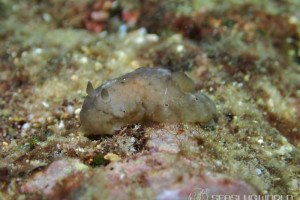
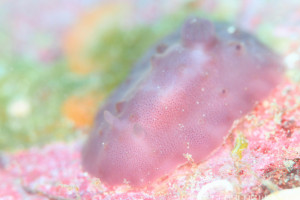
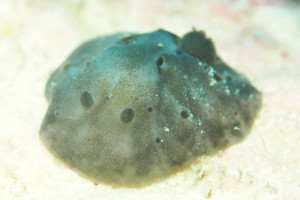
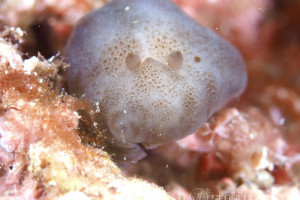
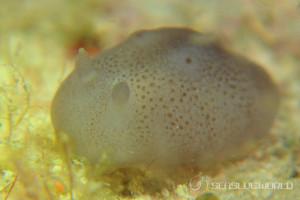
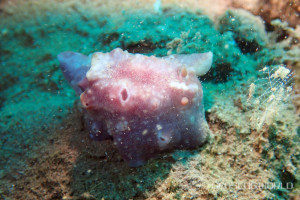
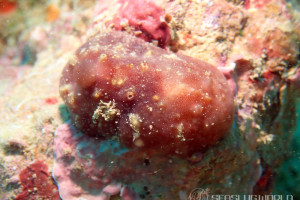
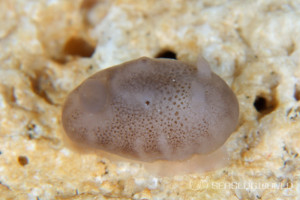
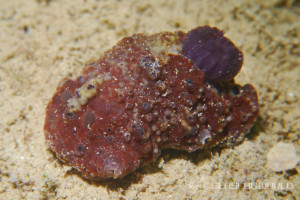
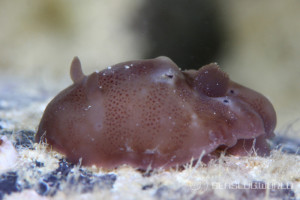
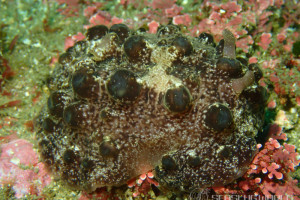
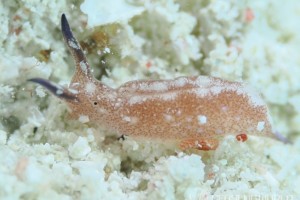
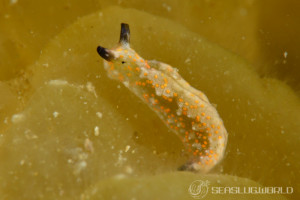
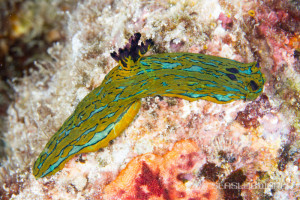
A mid-sized dorid reaching about 60 mm in length, oblong and slightly convex; both ends rounded. Body colour highly variable, ranging through pale to dark brown, reddish brown, greenish and black. The dorsum bears scattered smooth tubercles, often each marked with a small dark spot, and larger nebulous markings of yellow on a brownish ground. Underside grey, foot yellowish, mouth white. The diagnostic feature of the genus is the gill arrangement: the branchial plumes are fused into a circular radiating disc surrounding the anal opening (rather than the basal-attached gills of Doris); the gill disc bears 13 bipinnate rays in this species. Rhinophores short, brown, dorsal. No oral tentacles.Distribution
Indian Ocean and western Pacific. Records include Madagascar, the Red Sea, Australia, the Philippines, Vietnam, Japan and Hawaii. The type locality is the island of Massawa (Eritrea), in the Red Sea.Etymology
The specific epithet verrucosus is the Latin for "warty" (from verruca, "wart"), in reference to the smooth dorsal tubercles ("verrucis glabris") that are diagnostic in the original description.Remarks
Originally described as the type species of the new genus Actinocyclus erected by Ehrenberg in Symbolae Physicae, Animalia evertebrata, Pars I (Mollusca) (Berlin, 1831), based on Hemprich & Ehrenberg material from the 1820-1825 expedition through Libya, Egypt, Nubia, Syria, Arabia and Habessinia (Ethiopia). The genus name Actinocyclus ("ray-circle", from Greek aktis "ray" + kyklos "circle") refers to the radiating gill disc that distinguishes the genus from Doris.References
A Kindle field guide by the site author
Kimoto N. (2026). Sea Slugs of Japan & the Indo-Pacific, 2nd Edition.
Kindle Edition
View on Amazon PR (Amazon Associates)Seasonality
Shooting Locations
Loading shooting locations...
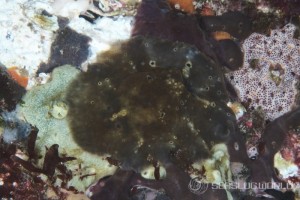
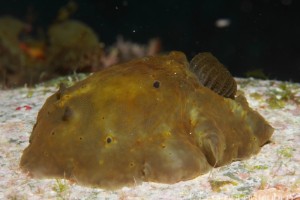
Photos of Actinocyclus verrucosus















Same Genus Nudibranchs
Similar Colors Nudibranchs
Academic Database
Sea slug observation data is available in international marine biodiversity databases.