Actinocyclus papillatus (Bergh, 1878)
Description
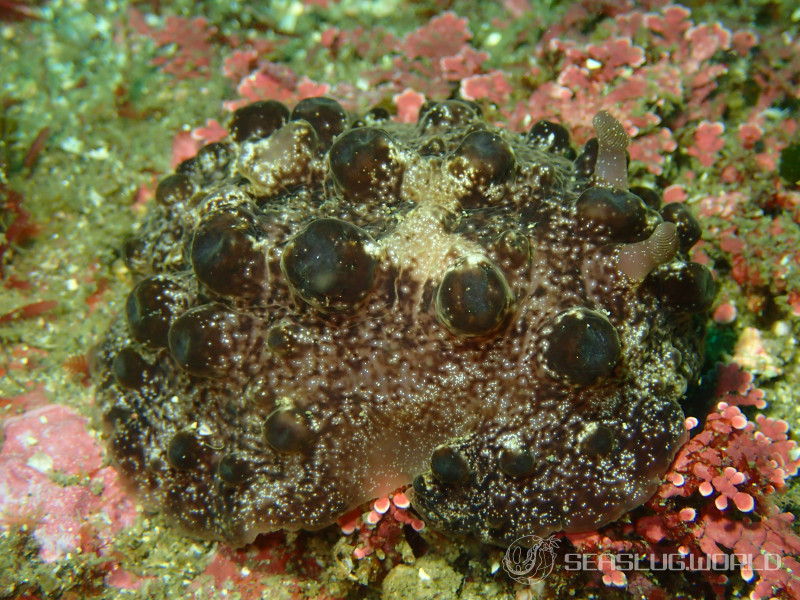
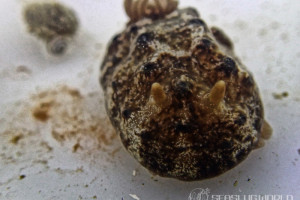
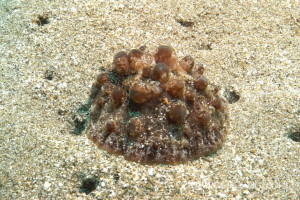
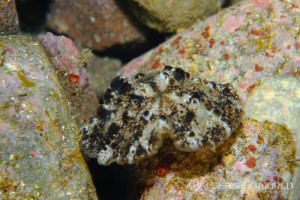
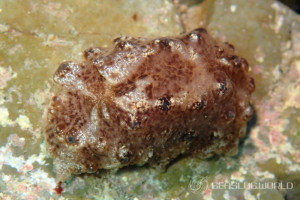
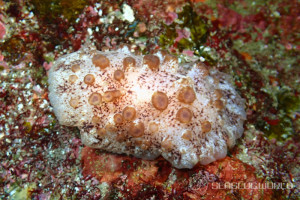
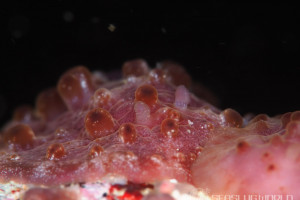
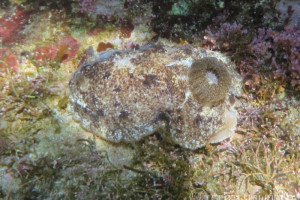
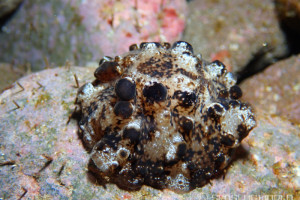
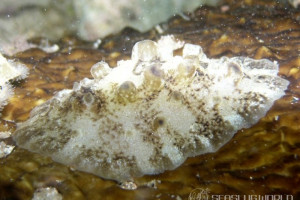
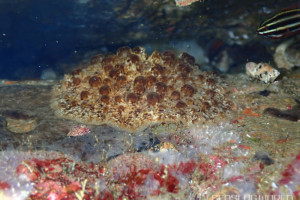
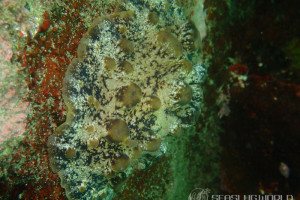
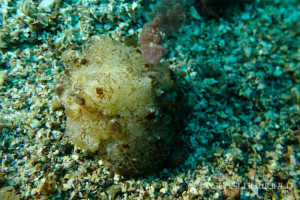
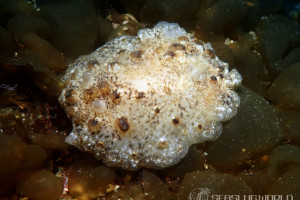
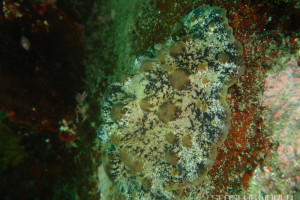
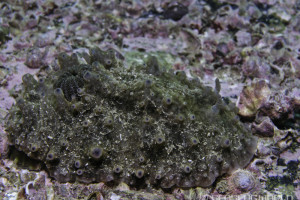
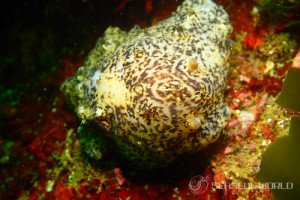
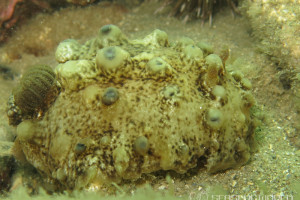
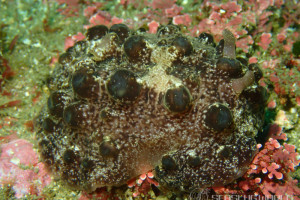
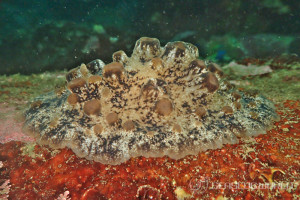
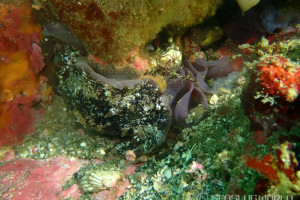
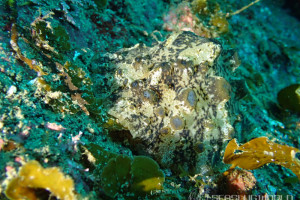
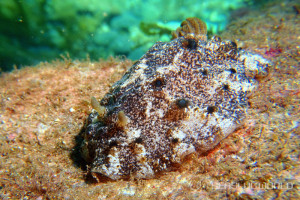
A large dorid: the preserved specimen measured 5.5 cm long, 4.5 cm wide and up to 1.5 cm high, with a foot sole 3.3 cm wide. The body is oval to rounded, with a strongly domed dorsum bearing crossing transverse and longitudinal ridges that form a reticulate pattern. No tentacles. The gill is retractile and singly pinnate; the anal opening lies almost centrally. The foot is broad with a strongly emarginate anterior margin.In life the dorsum is dark slate-grey with a greenish tinge; the paler papillae each bear a black spot at the apex. The gills are darker than the rest of the dorsum, the rhinophores likewise. The underside of the mantle skirt and the upper surface of the foot are yellowish-grey, and the foot sole is dirty yellow. The mantle skirt is densely covered with papillae of two size classes, the larger reaching up to 2.5 mm high and 3 mm in diameter and often arranged into transverse ridges. Strong longitudinal ridges run on each side of the back, up to 6 mm tall, framing the gill area; further transverse ridges arise obliquely. The gill opening is heart-shaped, 7.5 mm in inner diameter, and the gill itself is composed of 18 leaves.
Distribution
Type locality: Ubay, Bohol, Philippines. The species occurs in the western Pacific and has subsequently been recorded from the Philippines, Papua New Guinea and Japan.Etymology
The specific epithet papillata is the feminine of Latin papillatus ("furnished with papillae"), a descriptive epithet referring to the very densely papillate dorsum.Remarks
Originally described as the type of the new genus Sphaerodoris, with Ehrenberg's Actinocyclus treated as a doubtful synonym. Subsequent authors restored Actinocyclus as the senior available genus name; the parentheses in the author citation reflect this generic transfer.References
- Sphaerodoris papillata Bgh. n. sp., Bergh R. (1878). Malacologische Untersuchungen. In: Semper C. (ed.), Reisen im Archipel der Philippinen. II. Wissenschaftliche Resultate. Bd. II, Heft XIII: 547-645, Taf. LXII-LXVIII. Wiesbaden: C.W. Kreidel's Verlag.
- アマクサウミウシ, Baba K. (1949). Opisthobranchia of Sagami Bay collected by His Majesty the Emperor of Japan (相模湾産後鰓類図譜). Iwanami Shoten, Tokyo. 4+2+194+7 pp., pls. 1-50.
- 高岡生物研究会. (2002). 日本海のウミウシ. 第2版.
A Kindle field guide by the site author
Kimoto N. (2026). Sea Slugs of Japan & the Indo-Pacific, 2nd Edition.
Kindle Edition
View on Amazon PR (Amazon Associates)Seasonality
Shooting Locations
Loading shooting locations...
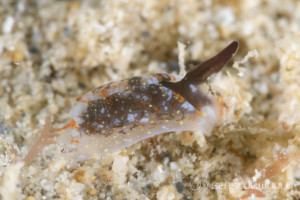
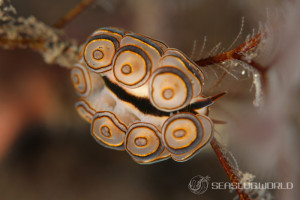
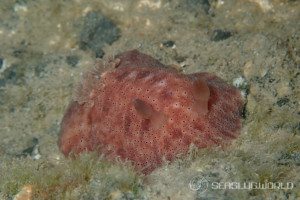
Photos of Actinocyclus papillatus
Tag:



















Same Genus Nudibranchs
Similar Colors Nudibranchs
Academic Database
Sea slug observation data is available in international marine biodiversity databases.