Armina comta (Bergh, 1880)
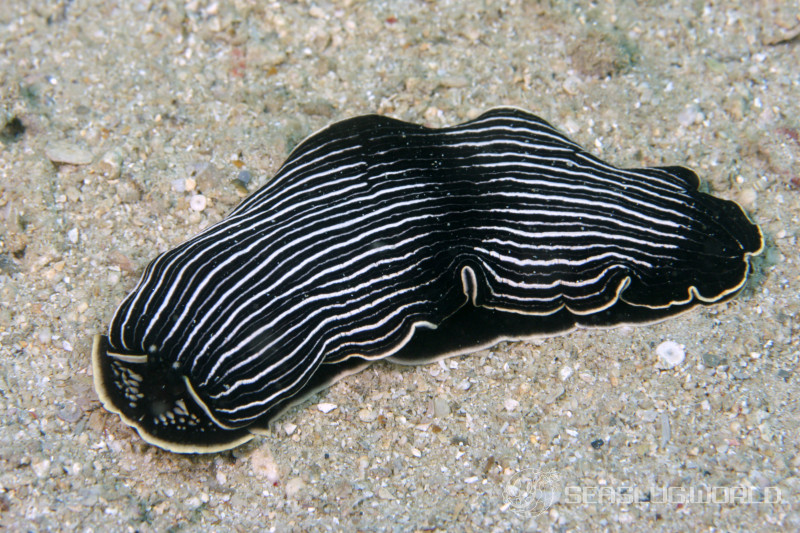
- Location
- Okinawa Island (Oura Bay), Okinawa, Japan
- Date
- 2009/07/05
- Length
- 100mm
- Depth
- 15.0m
- Water temperature
- 25.0℃
Description
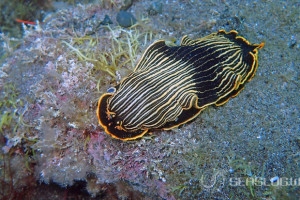
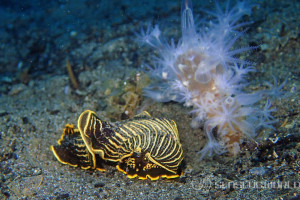
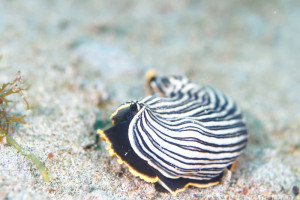
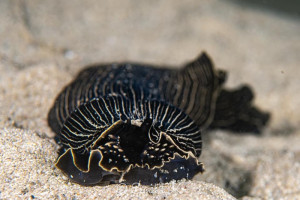
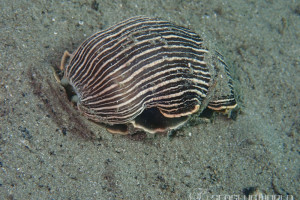
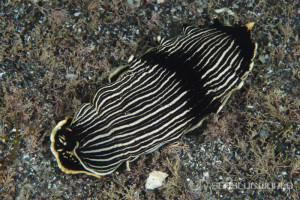
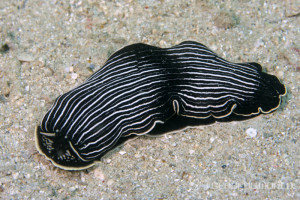
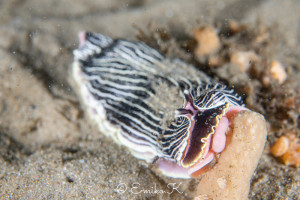
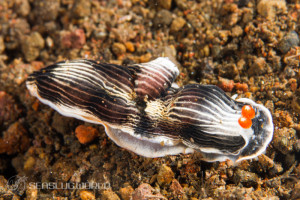
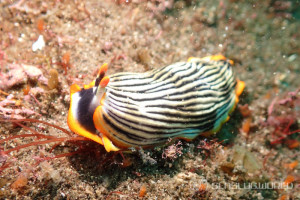
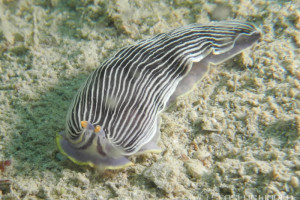
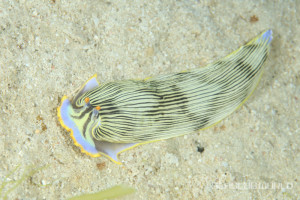
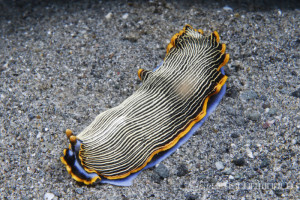
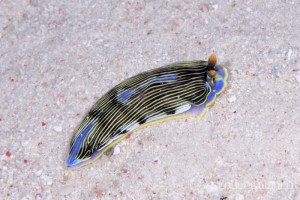
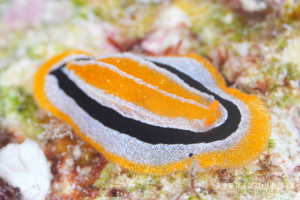
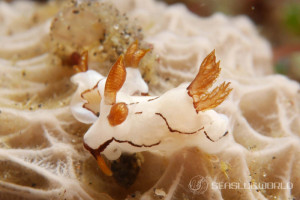
A medium-sized arminid about 30 mm in body length. The living dorsum is black with about 30 pale-yellow longitudinal lines, alternating thicker and thinner stripes. The dorsal margin, foot edge and the rim of the oral veil (tentacular shield) are bordered with pale yellow. The carunkel between the oral veils bears a row of small papillae — four unequal papillae (occasionally bifid) on each side of the shield, and a further three stout papillae set on each side of the rhinophoral pit. This papillar arrangement is a useful diagnostic character. The rhinophores are streaked with black, with pale-yellow tips. The gill runs along most of the dorsum, with about 50 leaves on each side.Distribution
Type locality: off Nagasaki, Japan (M. japonicum). The original description was based on a single specimen collected by Dr A. v. Roretz off Nagasaki in 1876. Subsequent records show that the species is widely distributed in the tropical to subtropical Indo-West Pacific, with reports from Japan, China, the Philippines and Indonesia. Specimens up to 100 mm have been observed in life.Etymology
The specific epithet comta is the feminine form of Latin comptus, meaning "adorned, neatly arranged, elegant", in reference to the orderly pattern of yellow longitudinal stripes on the black dorsum.Remarks
Originally described by Bergh as Pleurophyllidia comta n. sp. Pleurophyllidia Meckel is now treated as a synonym of Armina Rafinesque, 1814; the species has accordingly been transferred to Armina, with the parentheses in the author citation reflecting this generic change. It is closely related to the boreal Armina loveni but differs in the arrangement of the carunkel papillae and details of the radula and reproductive system.References
A Kindle field guide by the site author
Kimoto N. (2026). Sea Slugs of Japan & the Indo-Pacific, 2nd Edition.
Kindle Edition
View on Amazon PR (Amazon Associates)Seasonality
Shooting Locations
Loading shooting locations...
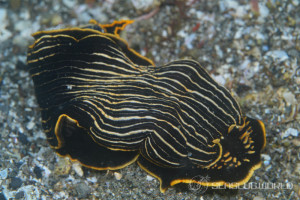
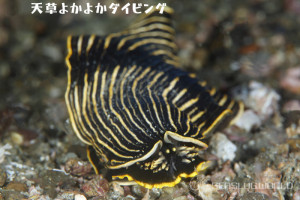
Photos of Armina comta







Same Genus Nudibranchs
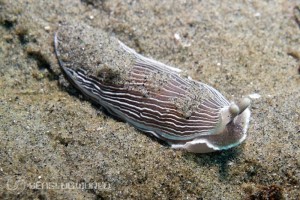
Similar Colors Nudibranchs

Academic Database
Sea slug observation data is available in international marine biodiversity databases.