Hallaxa fuscescens (Pease, 1871)
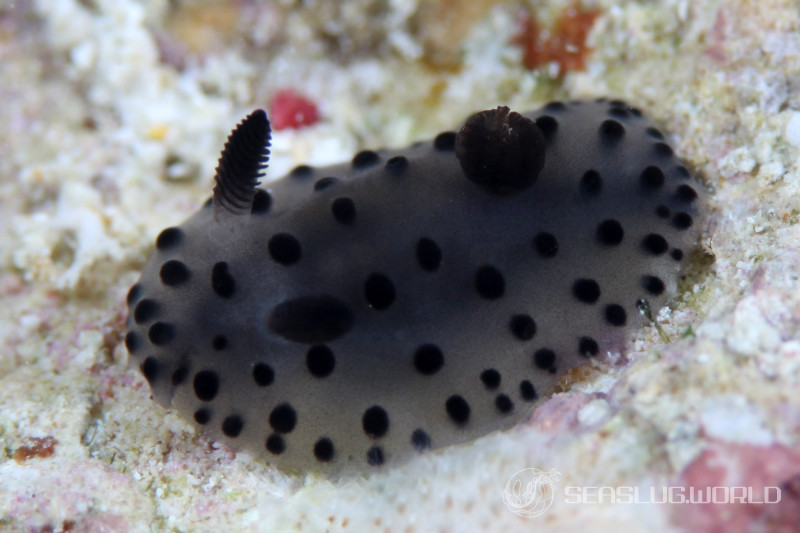
- Location
- Yamada Point, Okinawa Island (Onna and Yomitan area), Okinawa, Japan
- Date
- 2012/04/22
- Length
- 50mm
- Depth
- 13.0m
- Water temperature
- 22.0℃
Description
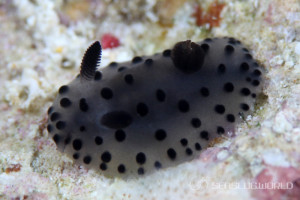
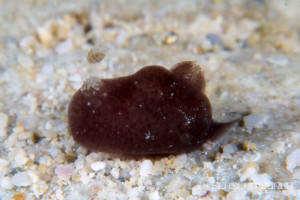
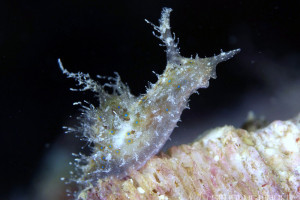
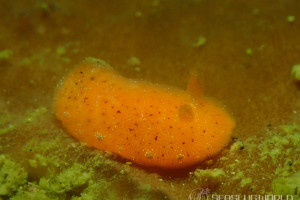
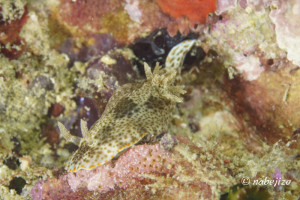
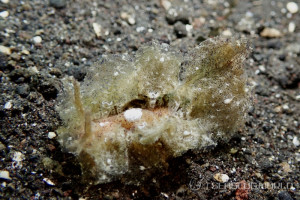
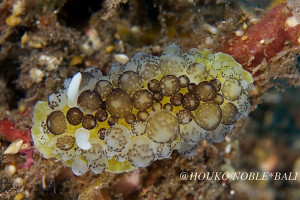
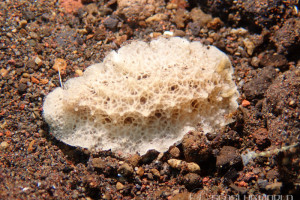
A small dorid reaching about 25 mm in body length. The body is oblong-ovate, somewhat flaccid, subpellucid; the dorsal region is convex, rounded at either end, widest in the middle, and very thin along the margins. The dorsum is studded with somewhat distant, unequal, small hemispherical papillae. The rhinophores are small, oblong-ovate, slightly oblique, on stout peduncles, coarsely and very obliquely lamellate, retractile into tubular cavities. The gill is small, about one-third the width of the body, composed of sixteen incurved lanceolate plumules forming a beautiful rosette around the vent. The mouth is notched beneath; no distinct head or labial tentacles are present. The genital papillae lie on the anterior third of the right side. The foot is oblong, much narrower than the mantle, truncately rounded in front, rounded behind, and does not project beyond the mantle posteriorly. In life the dorsum is wood-brown, most minutely punctured with white; the marginal region is paler brownish-grey, the papillae much darker. The rhinophores and gill are wood-brown, the former tipped with white; the peduncles are colourless. Pease's type was about 1 inch (≈ 2.5 cm) long.Distribution
Central to western Pacific. Type locality: Maiao Island, Society Islands, based on a specimen collected by Andrew Garrett and described by Pease. Subsequently recorded from the Hawaiian Islands, southern Japan, Taiwan, the Philippines and Indonesia.Etymology
The specific epithet fuscescens is the present participle of Latin, meaning "becoming dusky, becoming dark", in reference to the wood-brown dorsal colour of the species. Pease did not state an etymology, but the meaning is consistent with his "color along the dorsal region wood brown".Remarks
Originally placed by Pease in Doris. Later transferred to Hallaxa; the parentheses in the author citation reflect this generic transfer. Pease's diagnosis "mouth notched beneath; no distinct head or labial tentacles" anticipates one of the diagnostic features now recognised for Hallaxa. The Japanese name "ウスズミウミウシ" ("light-ink slug") refers to the thin sumi-ink-like dorsal colour.References
- Doris fuscescens Pease n. sp., Pease W.H. (1871). Descriptions of new species of Nudibranchiate Mollusca inhabiting Polynesia. No. 2. American Journal of Conchology. 7(1): 11-19, pls. III-IX.
- Hallaxa fuscescens, Terrence Gosliner, Ángel Valdés and David Behrens. (2015). Nudibranch and Sea Slug Identification Indo-Pacific. New World Pubns Inc.
- ウスズミウミウシ(新称), 中野理枝. (2018). 日本のウミウシ. 文一総合出版.
Featured in this book

Terrence Gosliner, Ángel Valdés and David Behrens. (2018). Nudibranch and Sea Slug Identification Indo-Pacific 2nd Edition. New World Pubns Inc.
New World Publications
This species, Hallaxa fuscescens, is included in the book.
View on Amazon PR (Amazon Associates)Seasonality
Shooting Locations
Loading shooting locations...
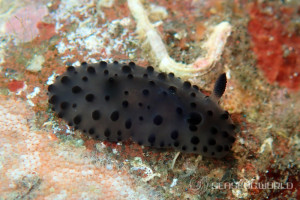
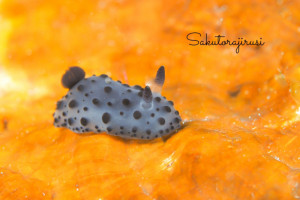
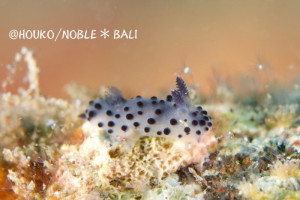
Photos of Hallaxa fuscescens




Same Genus Nudibranchs


Similar Colors Nudibranchs
Academic Database
Sea slug observation data is available in international marine biodiversity databases.