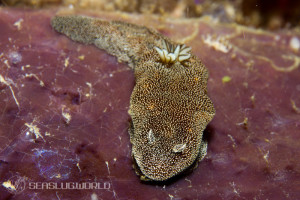
Hallaxa hileenae Gosliner & S. Johnson, 1994
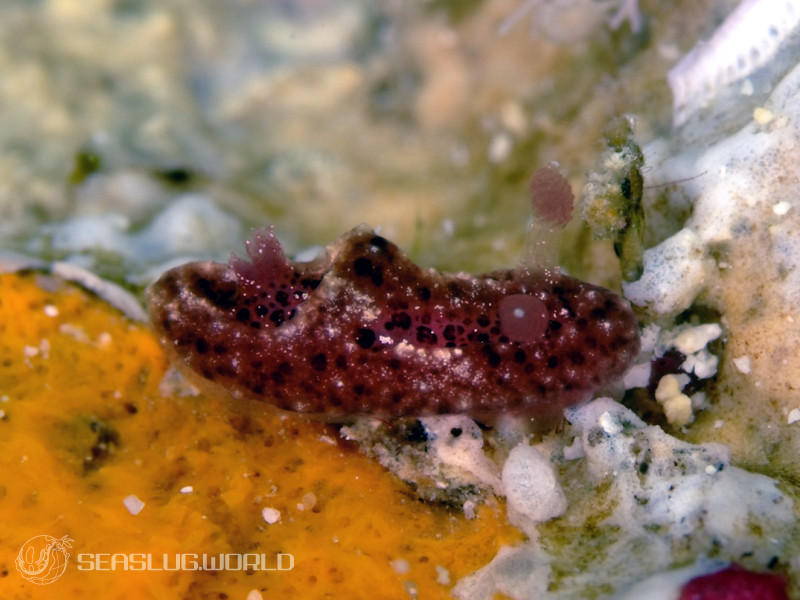
- Location
- Cape Maeda, Okinawa Island (Onna and Yomitan area), Okinawa, Japan
- Date
- 2012/05/08
- Length
- 5mm
- Depth
- 15.0m
- Water temperature
- 24.0℃
Description
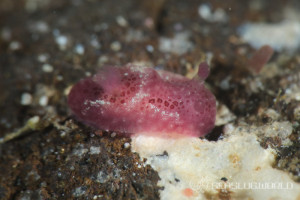
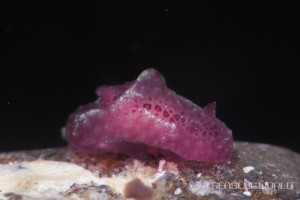
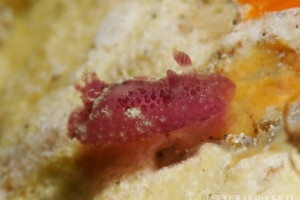
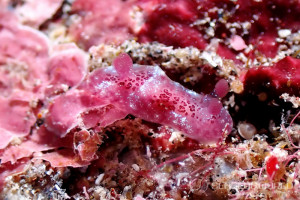
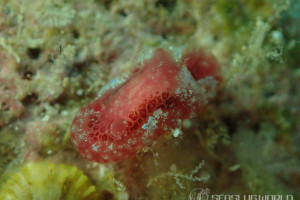
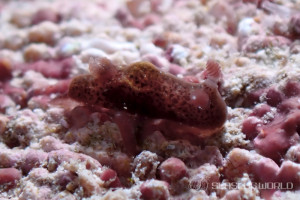
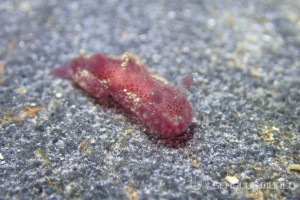
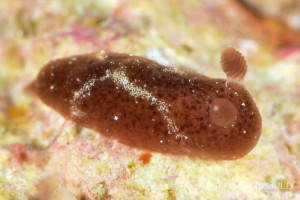
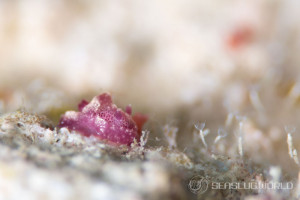
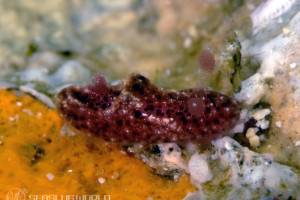
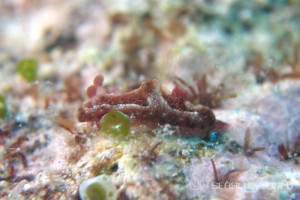
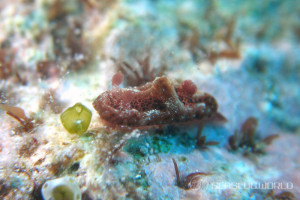
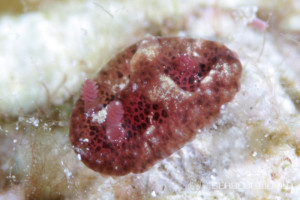
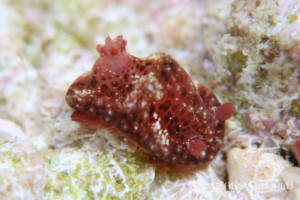
Body length 5-12 mm, elongate and ovoid. Background colour wine red. Opaque white pigment is present around the margins of the notum and gill, and on the elevated ridges of the notum. White pigment is also scattered around the rhinophores, becoming densest at the apex.A thick longitudinal ridge runs mid-dorsally from between the rhinophores to anterior to the gills, where it divides into a pair of diagonal ridges that encircle the gills, forming a y-shaped elevated portion of the otherwise smooth notum. This is the most distinctive feature of the species. Submarginal areas of the notum bear irregular charcoal gray to black markings and a few scattered opaque white spots.
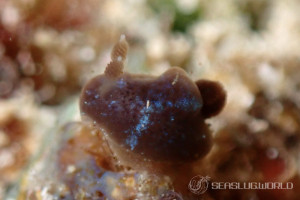
The gill consists of 6-8 unipinnate leaflets, and the bulbous rhinophores have 5-6 lamellae.
Distribution
Papua New Guinea, the Philippine Islands, and Guam.Etymology
The specific epithet hileenae honours Eileen Sobeck, who assisted in fieldwork in Papua New Guinea and collected the first specimen of the closely related Hallaxa iju. "Hileen" is the Papua New Guinea pidgin form of the name "Eileen".Remarks
Most closely related to Hallaxa indecora in sharing a purplish body colour, but distinguished externally by the characteristic y-shaped dorsal ridge and the black notal maculations. Reproductive characters place it within the derived clade also containing Hallaxa cryptica and Hallaxa michaeli.References
A Kindle field guide by the site author
Kimoto N. (2026). Sea Slugs of Japan & the Indo-Pacific, 2nd Edition.
Kindle Edition
View on Amazon PR (Amazon Associates)Seasonality
Shooting Locations
Loading shooting locations...
Photos of Hallaxa hileenae











Same Genus Nudibranchs

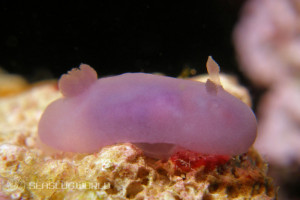
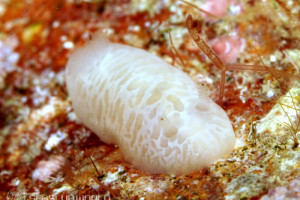

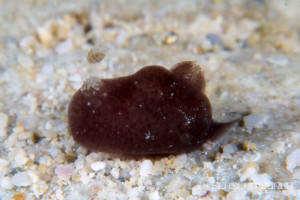
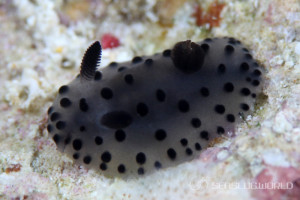
Similar Colors Nudibranchs
Academic Database
Sea slug observation data is available in international marine biodiversity databases.