Oxynoe kylei Krug, Berriman & Á. Valdés, 2018
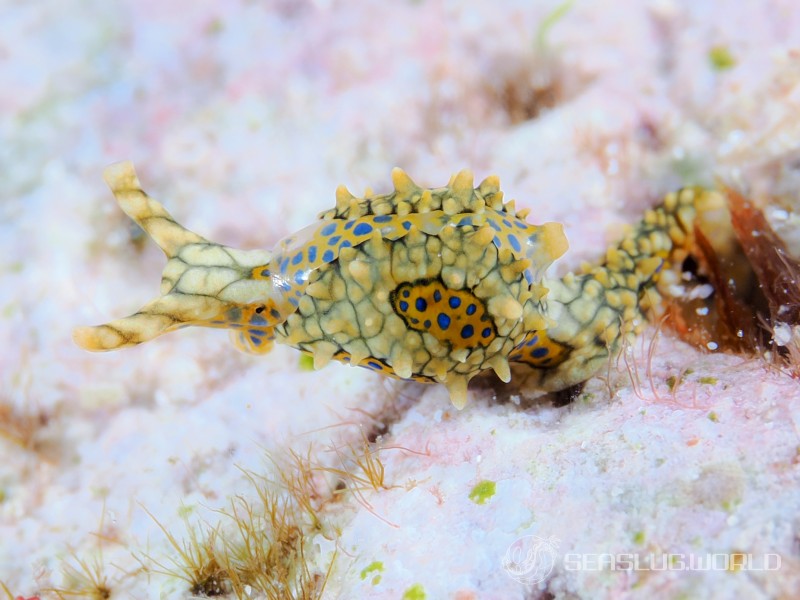
- Location
- Wall Cave, Miyakojima, Okinawa, Japan
- Date
- 2026/05/05
- Length
- 8mm
- Depth
- 20.0m
- Water temperature
- 25.0℃
Description
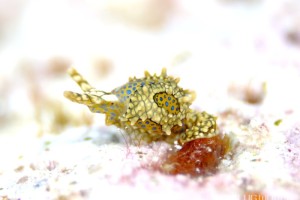
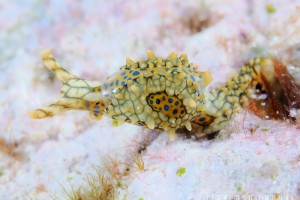
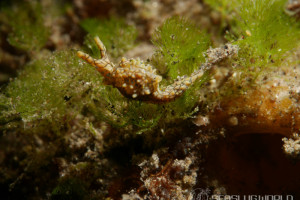
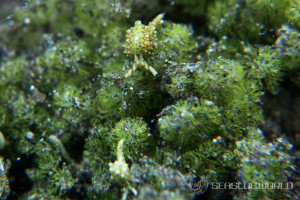
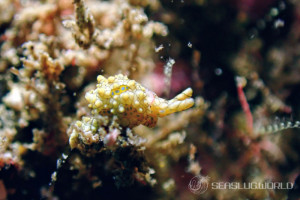
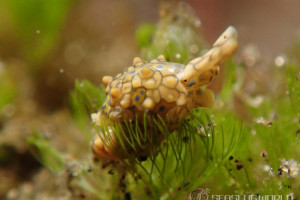
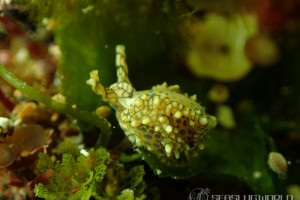
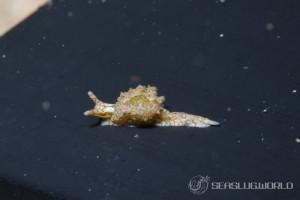
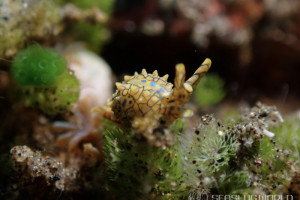
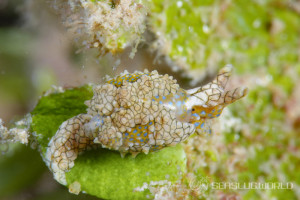
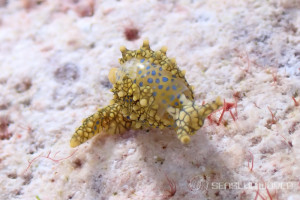
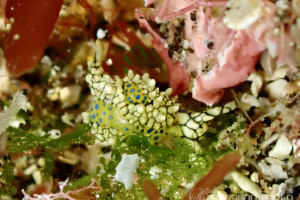
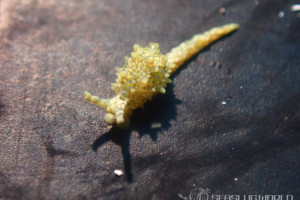
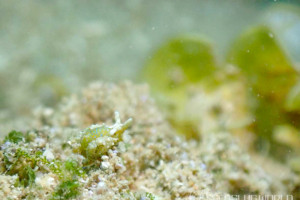
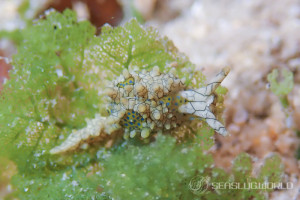
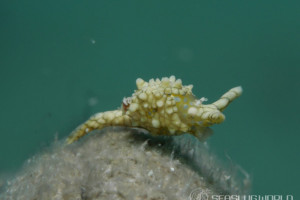
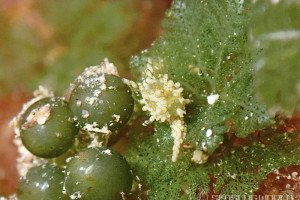
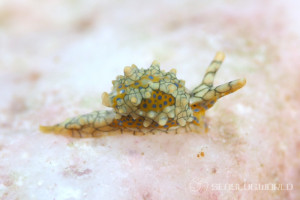
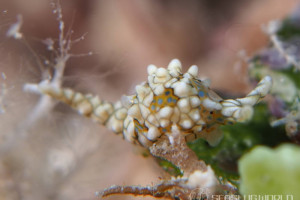
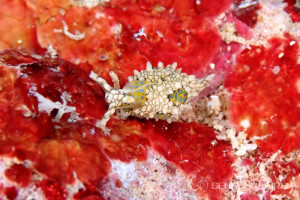
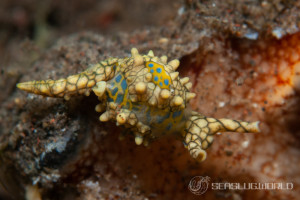
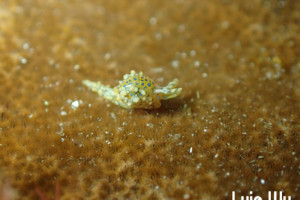
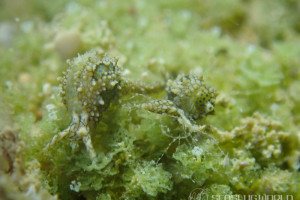
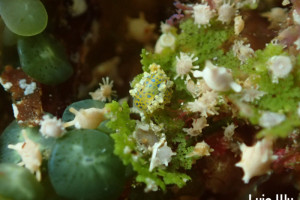
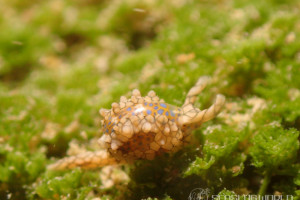
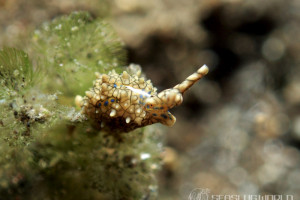
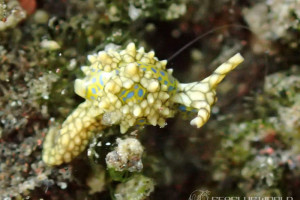
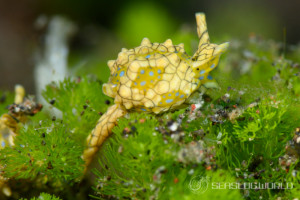
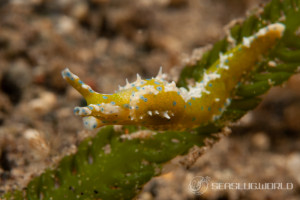
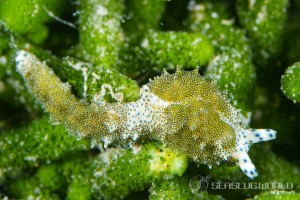
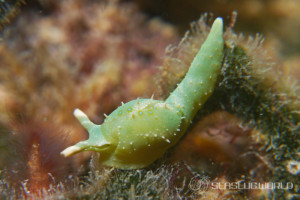
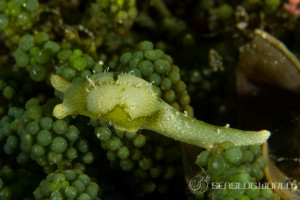
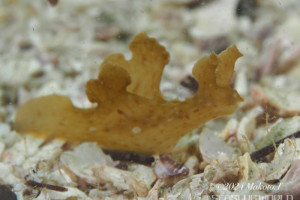
A small shelled sacoglossan reaching about 15 mm in body length. Ground colour is pale yellow, and the soft body is overlaid with a dense web of dark green fine lines forming an intricate reticulum. The parapodia are thick and bear knob-like projections, with a small opening near the centre of each parapodium through which the internal shell is partially visible.The thin layer of mantle covering the shell is yellowish-green and bears scattered pale-blue circular spots, visible only when the parapodia are opened. The species lives on green algae of the genus Caulerpa, especially Caulerpa filicoides and Caulerpa verticillata.
Distribution
Western and central Pacific, with records from Guam, the Philippines, the Marshall Islands and Palau. In Japan, it was first recorded from Tengan Pier on Okinawa Main Island.Etymology
The specific epithet kylei honours Kyle Andrew Krug, nephew of P. J. Krug, a major contributor to molecular phylogenetic research on the Sacoglossa.Remarks
The Japanese vernacular name "Tengan-no-tsuyu" refers to Tengan Pier in Uruma City, Okinawa, where the species was first recorded in Japan. The genus Oxynoe Rafinesque, 1814 comprises small shelled sacoglossans that feed suctorially on the cell contents of Caulerpa; this species likewise lives among Caulerpa beds.References
- Oxynoe kylei (compared genus), Jensen K.R. (1980). Oxynoe azuropunctata, n. sp., a new sacoglossan from the Florida Keys (Mollusca: Opisthobranchia). Journal of Molluscan Studies. 46(3): 282-292.
- テンガンノツユ(新称), 中野理枝, 今川郁 & 今本淳. (2015). 南西諸島で記録された嚢舌類の報告. Kuroshio Biosphere. 11: 41-60.
- Oxynoe sp. 1, Terrence Gosliner, Ángel Valdés and David Behrens. (2015). Nudibranch and Sea Slug Identification Indo-Pacific. New World Pubns Inc.
- Krug P.J., Berriman J.S. & Valdés Á. (2018). Phylogenetic systematics of the shelled sea slug genus Oxynoe Rafinesque, 1814 (Heterobranchia : Sacoglossa), with integrative descriptions of seven new species. Invertebrate Systematics. 32(4): 950-1003. https://doi.org/10.1071/is17080
- テンガンノツユ, 中野理枝. (2018). 日本のウミウシ. 文一総合出版.
Featured in this book
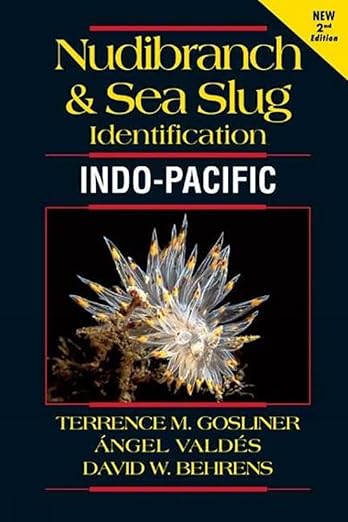
Terrence Gosliner, Ángel Valdés and David Behrens. (2018). Nudibranch and Sea Slug Identification Indo-Pacific 2nd Edition. New World Pubns Inc.
New World Publications
This species, Oxynoe kylei, is included in the book.
View on Amazon PR (Amazon Associates)Seasonality
Shooting Locations
Loading shooting locations...
Photos of Oxynoe kylei
Tag:
























Same Genus Nudibranchs
Similar Colors Nudibranchs


Academic Database
Sea slug observation data is available in international marine biodiversity databases.