Pseudobornella qingdaoensis S.Q. Zhang & J.H. Wang, 2025
Description
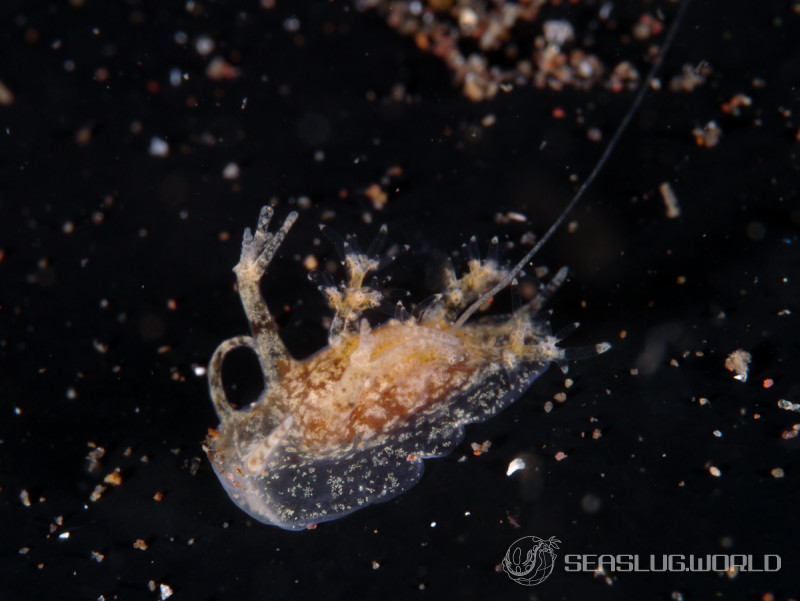
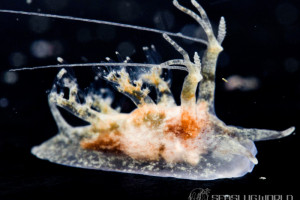
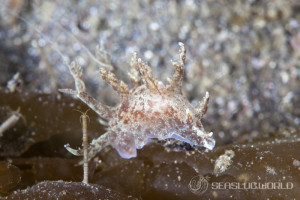
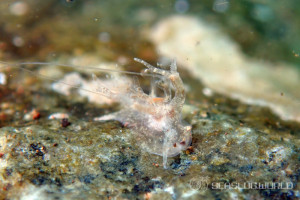
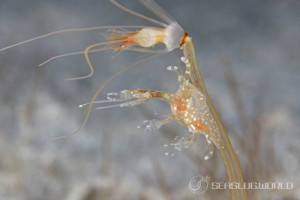
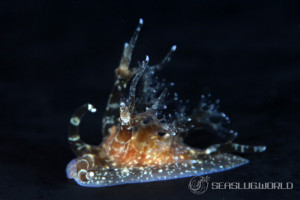
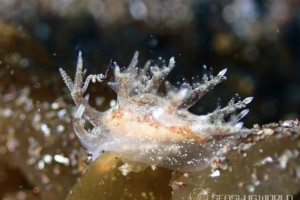
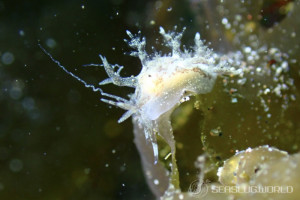
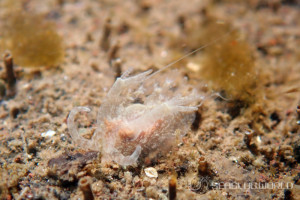
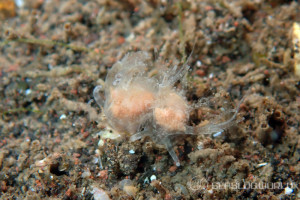
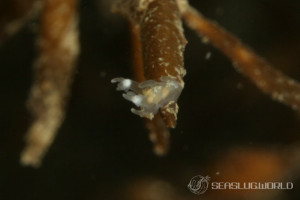
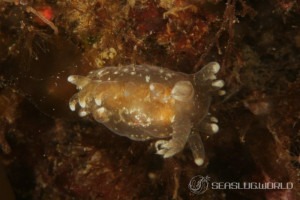
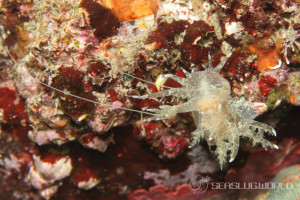
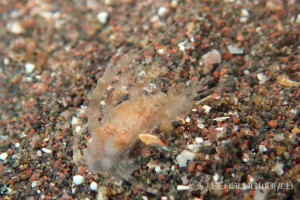
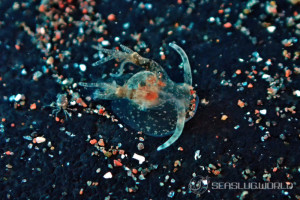
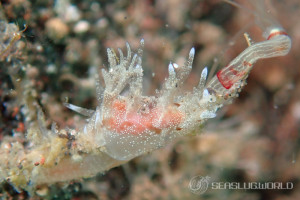
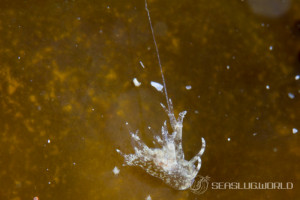
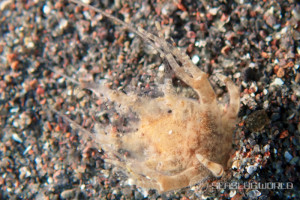
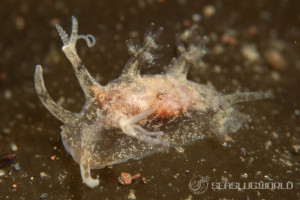
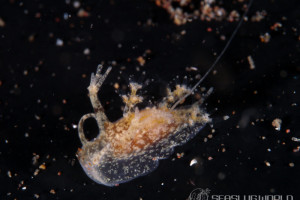
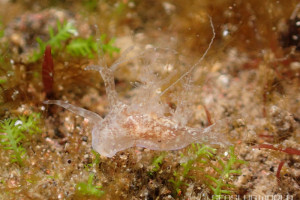
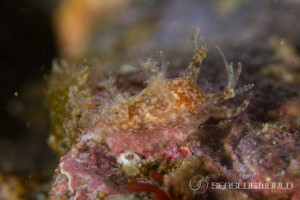
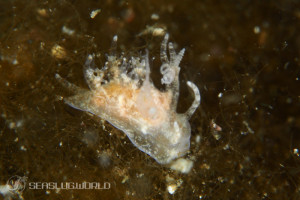
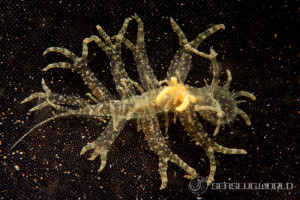
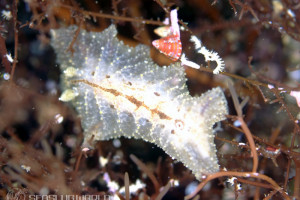
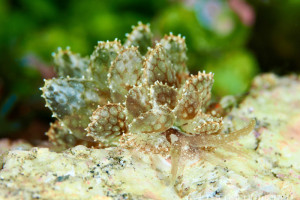
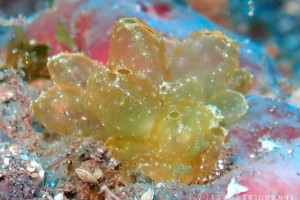
Up to 40 mm in body length, the largest known Pseudobornella. Background colour ranges from translucent yellow to dark brown, with numerous scattered orange to brown spots and white blotches; in some individuals the white blotches form two longitudinal streaks along both sides of the dorsum. Head with a rounded anterior margin, and 4–5 smooth, tapering oral tentacles of varying size on each side of the mouth. Rhinophore sheath very elongate, the upper edge bearing four lateral digitiform, branched papillae and a remarkably longer posterior papilla. Rhinophores with about 12 lamellae. Four pairs of dorsolateral papillae fringe the dorsum, decreasing in size posteriorly, each carrying numerous unbranched gills on its inner side. Anus on the right side, between the first and second pair of dorsolateral papillae; genital opening on the right, midway between the rhinophore sheath and the first dorsolateral papilla. Foot pale pink with small indistinct darker spots, separated from the head by a long transversal groove.Distribution
Type locality: intertidal zone of Golden Beach Park, Qingdao, Shandong Province, China. Currently confirmed from rocky intertidal zones along the Shandong coast (Qingdao and Rushan, Yellow Sea). Some Japanese specimens previously identified as Pseudobornella orientalis closely resemble this species in colour pattern and oral-tentacle number, suggesting the range may extend to Japan.Etymology
Named after the type locality, Qingdao, on the Yellow Sea coast of China.Remarks
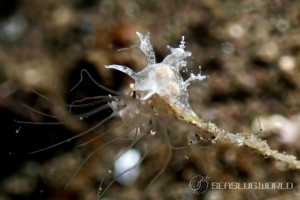
The species feeds on a hydroid in the rocky intertidal. The genus Pseudobornella had long been considered monotypic, containing only the central-Japan species P. orientalis, until integrative morphological and molecular analysis of Yellow Sea material distinguished a clearly divergent lineage and added Pseudobornella qingdaoensis as the second member of the genus. P. qingdaoensis differs externally from P. orientalis in lacking the yellow diagonal stripes on the dorsum and in bearing prominent scattered white blotches.References
- イトヒキウミウシ, 中野理枝. (2004). 本州のウミウシ. ラトルズ.
- イトヒキウミウシ属の1種, 小野篤司. (2004). 沖縄のウミウシ. ラトルズ.
- イトヒキウミウシ,ナガヒゲイトヒキウミウシ(新称),オナガイトヒキウミウシ(新称), 中野理枝. (2018). 日本のウミウシ. 文一総合出版.
- イトヒキウミウシ,ナガヒゲイトヒキウミウシ, 小野篤司 & 加藤昌一. (2020). 新版 ウミウシ. 誠文堂新光社.
- Pseudobornella qingdaoensis sp. nov., Zhang S. & Wang J. (2025). Description of a new species of Pseudobornella Baba, 1932 (Gastropoda, Nudibranchia, Dendronotidae) from the Yellow Sea. ZooKeys. 1241: 301-314. https://doi.org/10.3897/zookeys.1241.155540
Featured in this book
小野篤司 & 加藤昌一. (2020). 新版 ウミウシ. 誠文堂新光社.
誠文堂新光社
This species, Pseudobornella qingdaoensis, is included in the book.
View on Amazon PR (Amazon Associates)Seasonality
Shooting Locations
Loading shooting locations...
Photos of Pseudobornella qingdaoensis
Tag:











Same Genus Nudibranchs
Similar Colors Nudibranchs
Academic Database
Sea slug observation data is available in international marine biodiversity databases.