Pupa strigosa (A. A. Gould, 1859)
Description
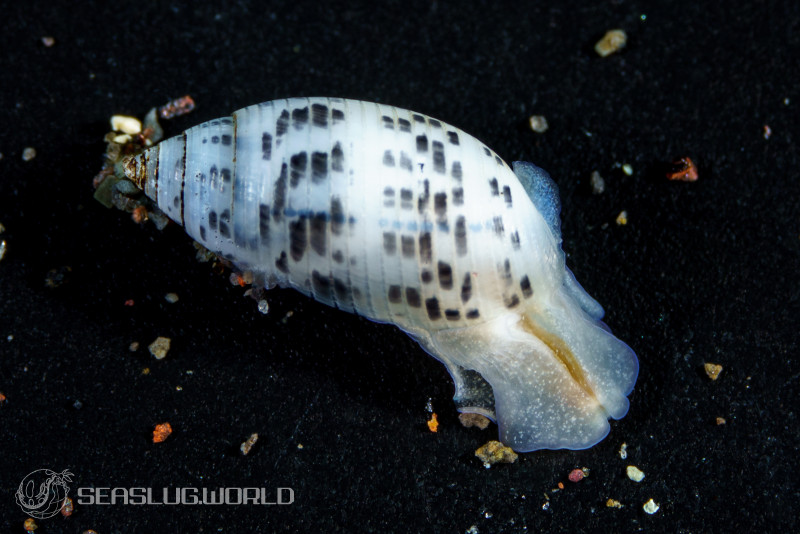
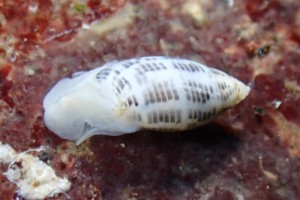
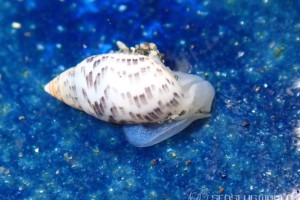
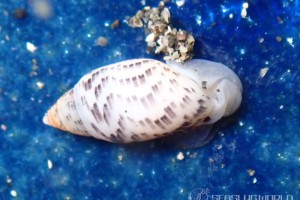
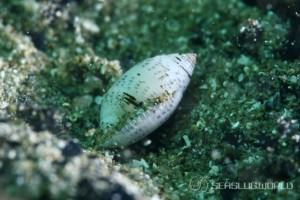
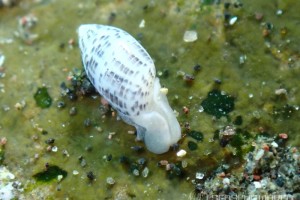
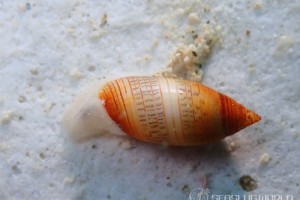
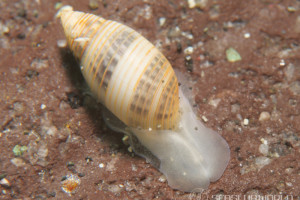
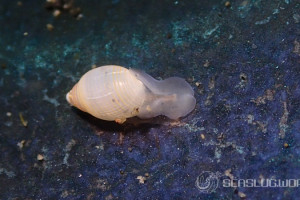
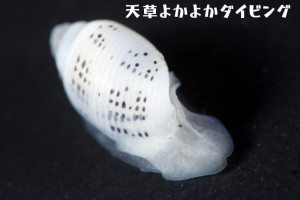
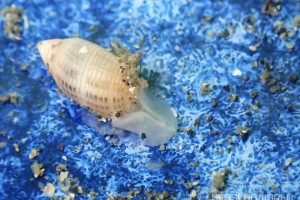
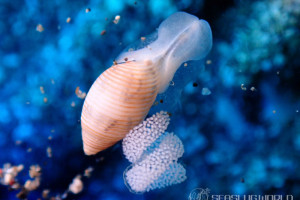
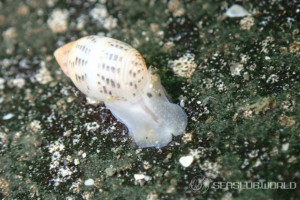
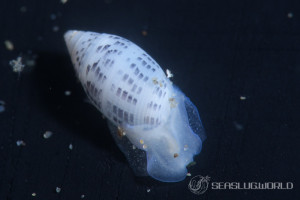
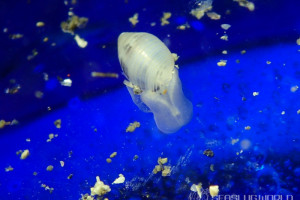
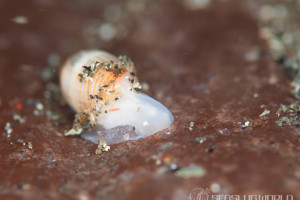
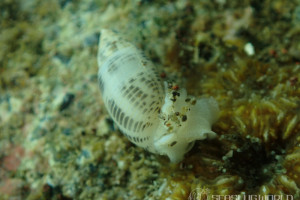
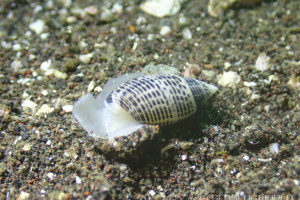
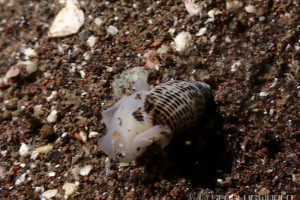
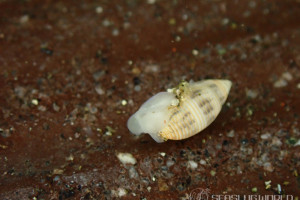
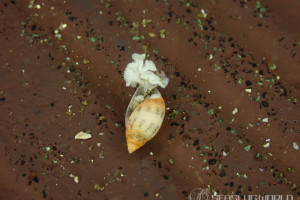
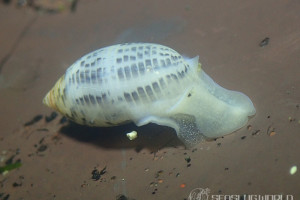
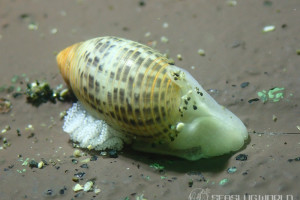
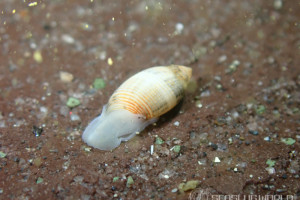
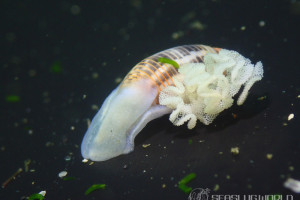
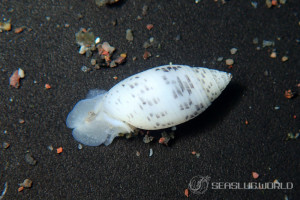
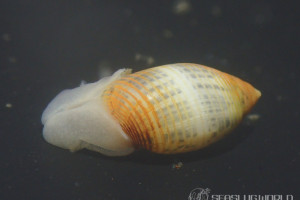
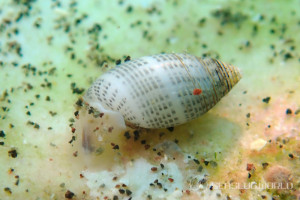
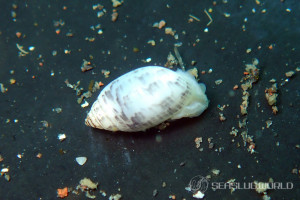
A small acteonid reaching about 15 mm in shell length. The shell is thick and white, with strong, fine, punctured spiral grooves over the entire surface; the intervals between grooves carry alternating square grey-white and black markings. The columella has a fold divided in the middle, and there is a small nodule on the upper inner lip. Habe (1961) noted that the aperture extends anteriorly into a forward-projecting form.Distribution
The original description (Gould, 1859) was based on specimens collected by the United States North Pacific Exploring Expedition from the Loo Choo (Ryukyu) Islands and Kagoshima. Habe (1961) recorded the species from Boso southward in 5–70 m depth on sandy mud bottoms. Okutani (ed.) 2000 (Marine Mollusks in Japan) extended the recorded range from Fukushima Prefecture and the Noto Peninsula southward to the South China Sea, on sand bottoms in up to 100 m depth.Etymology
The specific epithet strigosa is the Latin feminine of strigosus, "marked with fine streaks" (from striga, "line, streak"), referring to the streaked colour pattern. Gould noted considerable variability, with some specimens "much shorter than others and nearly without the slaty lines".References
- Buccinulus strigosus, Gould A.A. (1859). Descriptions of new species of shells brought home by the North Pacific Exploring Expedition. Proceedings of the Boston Society of Natural History, 7: 138-142, 161-166, 169-173.
- コシイノミガイ Strigopupa strigosa (GOULD), 波部忠重. (1961). 続原色日本貝類図鑑. 保育社, 大阪. xii + 183 + 42 pp., 66 pls. [Habe T. (1961). Coloured illustrations of the shells of Japan (II). Hoikusha, Osaka.]
- コシイノミガイ Pupa strigosa strigosa (Gould, 1859), 奥谷喬司. (2000). 日本近海産貝類図鑑. 東海大学出版会.
A Kindle field guide by the site author
Kimoto N. (2026). Sea Slugs of Japan & the Indo-Pacific, 2nd Edition.
Kindle Edition
View on Amazon PR (Amazon Associates)Seasonality
Shooting Locations
Loading shooting locations...
Photos of Pupa strigosa
Tag:















Similar Colors Nudibranchs

Academic Database
Sea slug observation data is available in international marine biodiversity databases.