Tambja morosa (Bergh, 1877)
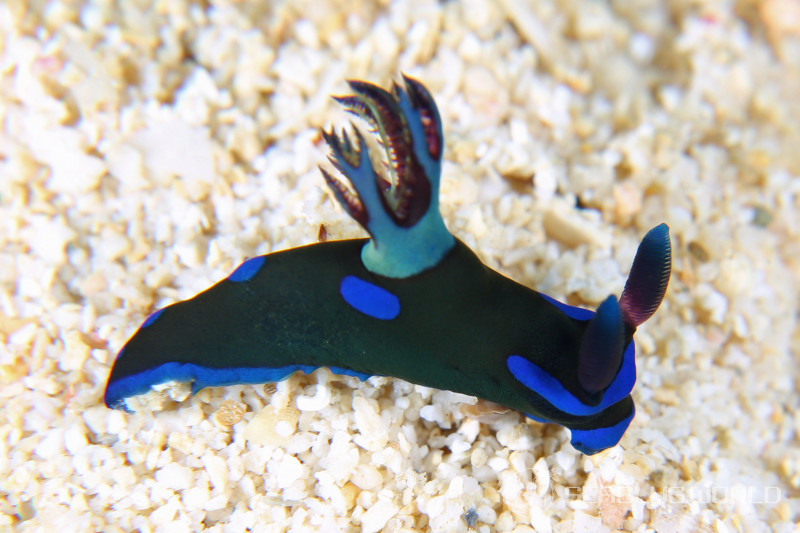
- Location
- Cross Line, Okinawa Island (Onna and Yomitan area), Okinawa, Japan
- Date
- 2015/06/21
- Length
- 20mm
- Depth
- 17.0m
- Water temperature
- 26.0℃
Description
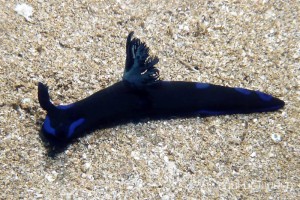
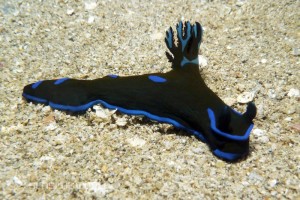
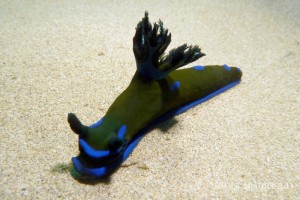
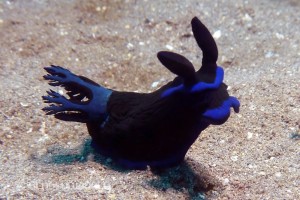
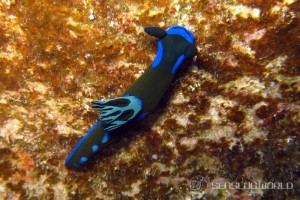
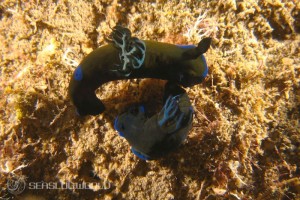
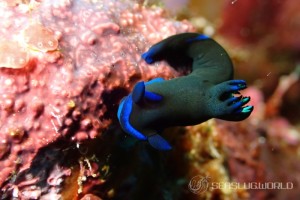
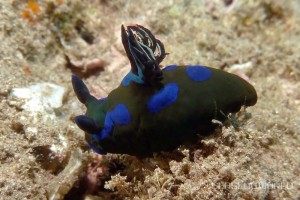
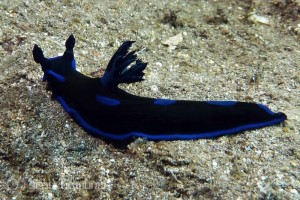
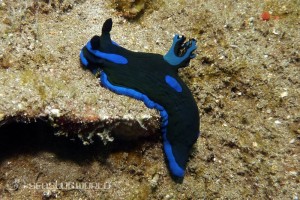
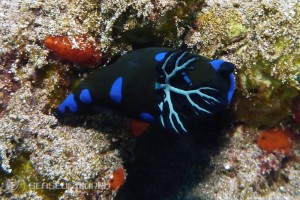
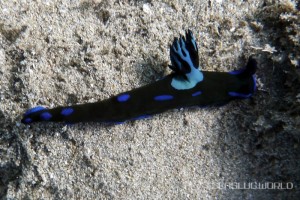
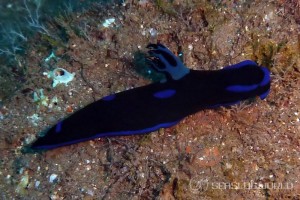
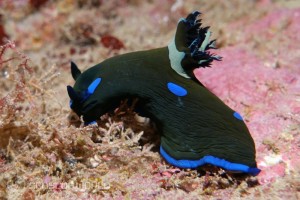
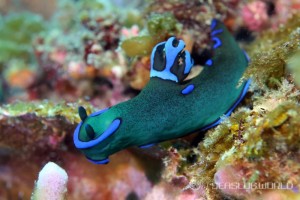
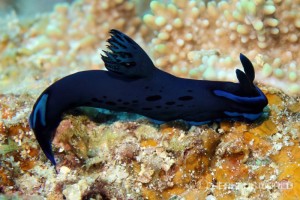
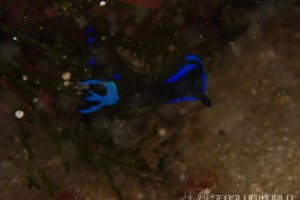
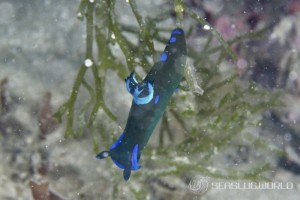
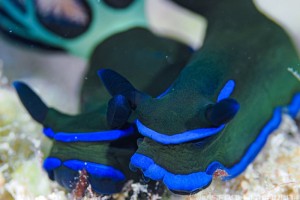
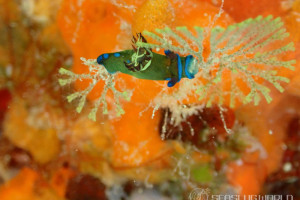
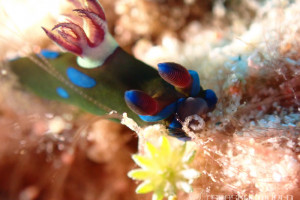
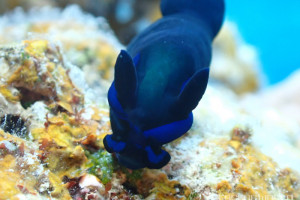
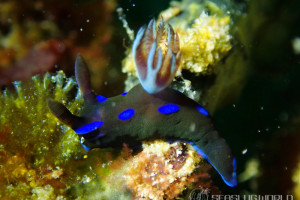
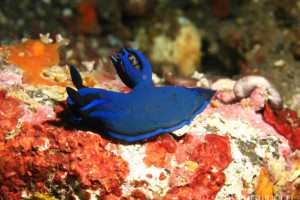
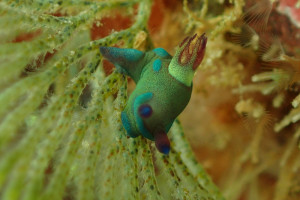
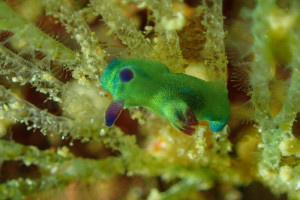
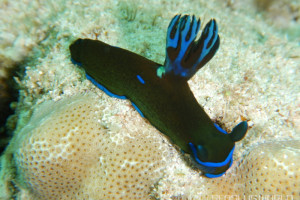
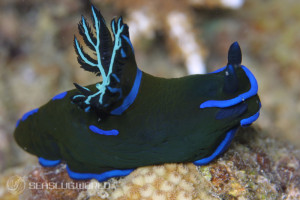
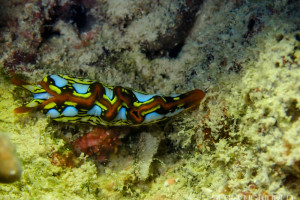
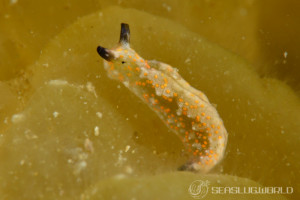
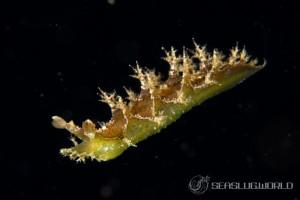
The ground colour of the living animal is very black. The front of the head is bordered by a blue line; the dorsum bears an interrupted blue stripe along each side; the upper side of the foot is edged with a similar blue marginal stripe; a median blue line runs along the dorsum of the tail and appears to form a loop posteriorly. The gill plumes are bluish-green with somewhat blackish lateral pinnae.Distribution
Type locality: Philippine seas. Now widely distributed in the Indo-West Pacific, with records from South Africa, Tanzania, New Zealand, Australia, Vanuatu, Papua New Guinea, Indonesia, the Philippines, Thailand, Taiwan, Japan, Guam and Hawaii. Body length up to about 100 mm.Etymology
The specific epithet morosa is the feminine of Latin morosus ("morose, sullen, gloomy"), referring to the very dark, sombre colour of the living animal — captured at the head of the Latin diagnosis: "Color animalis vivi aterrimus" ("the colour of the living animal is very black").Remarks
Preyed upon by Roboastra luteolineata. Tambja kushimotoensis is recognised as a junior synonym.References
- ミドリリュウグウウミウシ(新種・新称)Tambja kushimotoensis n. sp., Baba, K. 1987. Two new green-colored species of Tambja from Japan (Nudibranchia: Polyceridae). Venus 46(1):13-18.
- アオスジリュウグウウミウシ, 益田一ほか. (1996). 海岸動物 (フィールド図鑑). 補訂版第2版. 東海大学出版会.
- ミドリリュウグウウミウシ, 小野篤司. (1999). ウミウシガイドブック. TBSブリタニカ.
- アオスジリュウグウウミウシ, 殿塚孝昌. (2003). ウミウシガイドブック〈3〉. TBSブリタニカ.
- ミドリリュウグウウミウシ, 小野篤司. (2004). 沖縄のウミウシ. ラトルズ.
- ミドリリュウグウウミウシ, 中野理枝. (2004). 本州のウミウシ. ラトルズ.
- Tambja morosa (Bergh, 1877), Pola M., Cervera J.L. & Gosliner T.M. (2005). Four new species of Tambja Burn, 1962 (Nudibranchia: Polyceridae) from the Indo-Pacific. Journal of Molluscan Studies. 71(3): 257-267. https://doi.org/10.1093/mollus/eyi034
- ミドリリュウグウウミウシ, 小野篤司 & 加藤昌一. (2009). ウミウシ. 誠文堂新光社.
- Tambja morosa, Terrence Gosliner, Ángel Valdés and David Behrens. (2015). Nudibranch and Sea Slug Identification Indo-Pacific. New World Pubns Inc.
Featured in this book
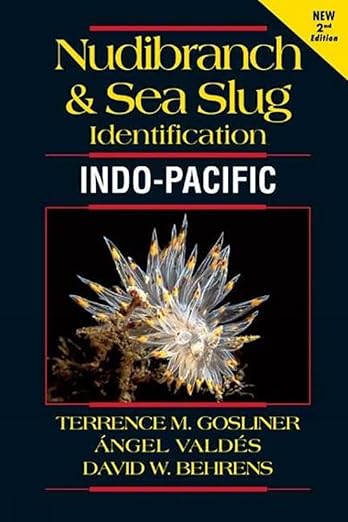
Terrence Gosliner, Ángel Valdés and David Behrens. (2018). Nudibranch and Sea Slug Identification Indo-Pacific 2nd Edition. New World Pubns Inc.
New World Publications
This species, Tambja morosa, is included in the book.
View on Amazon PR (Amazon Associates)Seasonality
Shooting Locations
Loading shooting locations...
Photos of Tambja morosa
Tag:










Same Genus Nudibranchs

Similar Colors Nudibranchs
Academic Database
Sea slug observation data is available in international marine biodiversity databases.