Tambja verconis (Basedow & Hedley, 1905)
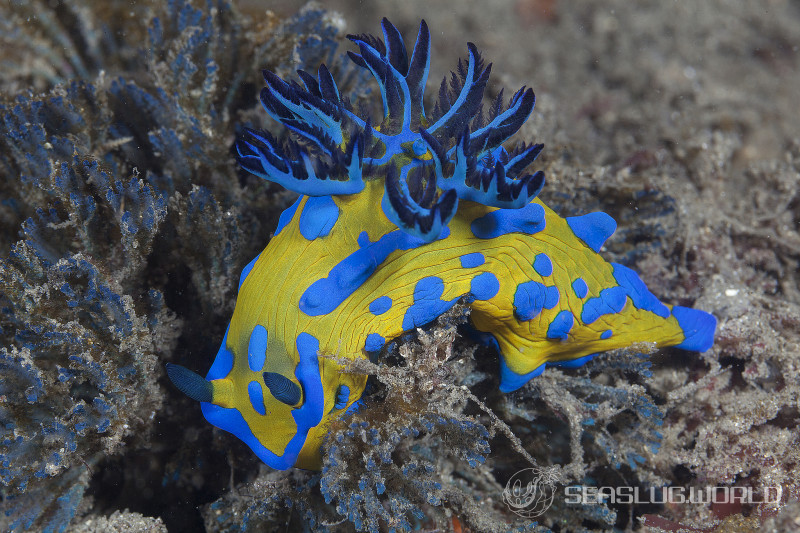
- Location
- New South Wales, Australia
- Date
- 2013/11/10
- Length
- ??mm
- Depth
- ??m
- Water temperature
- ??℃
Description
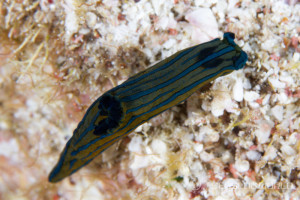
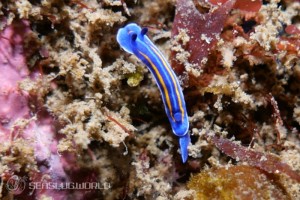
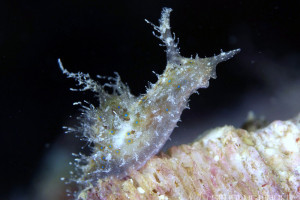
The type species of the genus Tambja. Body elongate, limaciform, reaching about 30–45 mm in extended length. Background colour highly variable: most frequently primrose yellow, but also green, blue, even black; bright-blue spots are consistently present on the dorsum and flanks regardless of background colour. Rhinophores and gills typically a contrasting dark colour. A pre-rhinophoral sensory organ is present, a feature shown by Willan & Chang 2017 to be diagnostic for Tambja sensu stricto.Distribution
Southern and south-eastern Australia, with confirmed records from South Australia (type locality area), Victoria and Tasmania. Reports from elsewhere in the western Pacific previously attributed to this species are now referred to Tambja pulcherrima Willan & Chang, 2017.Etymology
The specific epithet honours Sir Joseph Cooke Verco (1851–1933), South Australian physician and conchologist (Honorary Conchologist at the South Australian Museum), who collected the type material on his dredging expedition in Backstairs Passage in January 1903. The genus name Verconia Pruvot-Fol, 1931 also commemorates the same person.Remarks
Originally described as Nembrotha (?) verconis Basedow & Hedley, 1905; the parenthetical question mark in the original publication reflected the authors' own uncertainty regarding the generic placement. In 1962 Robert Burn established the genus Tambja based on this species and one other. The original syntypes are lost; Willan & Chang 2017 designated a neotype (SAM D.19411) collected at Penneshaw Jetty, Kangaroo Island, South Australia (35°43′S, 137°56′E) on 5 May 1999, fixing the application of the name. Feeds on the arborescent bryozoan Virididentula dentata (formerly Bugula dentata).References
- Tambja verconis (Basedow & Hedley, 1905), Burn R. (1962). Descriptions of Victorian nudibranchiate Mollusca, with a comprehensive review of the Eolidacea. Memoirs of the National Museum of Victoria, 25: 95-128, text figs. 1-26. https://www.biodiversitylibrary.org/item/120188
- Tambja verconis, Willan R.C. & Chang Y.-W. [Yen-Wei]. (2017). Description of three new species of Tambja (Gastropoda, Nudibranchia, Polyceridae) from the western Pacific Ocean reveals morphological characters with taxonomic and phylogenetic significance for traditional Polyceridae and related 'phaneorobranch' nudibranchs. Basteria. 81(1-3): 1-23.
- Tambja verconis, Willan, R. C. & Chang, Y.-W. (2017). Description of three new species of Tambja (Gastropoda, Nudibranchia, Polyceridae) from the western Pacific Ocean reveals morphological characters with taxonomic and phylogenetic significance for traditional Polyceridae and related phaneorobranch nudibranchs. Basteria 81(1-3): 1-23.
A Kindle field guide by the site author
Kimoto N. (2026). Sea Slugs of Japan & the Indo-Pacific, 2nd Edition.
Kindle Edition
View on Amazon PR (Amazon Associates)Seasonality
Shooting Locations
Loading shooting locations...
Photos of Tambja verconis

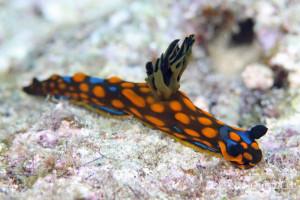
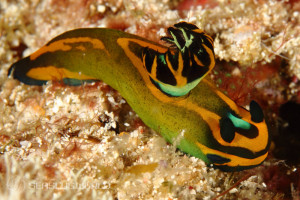
Same Genus Nudibranchs

Similar Colors Nudibranchs
Academic Database
Sea slug observation data is available in international marine biodiversity databases.