Tenellia puellula (Baba, 1955)
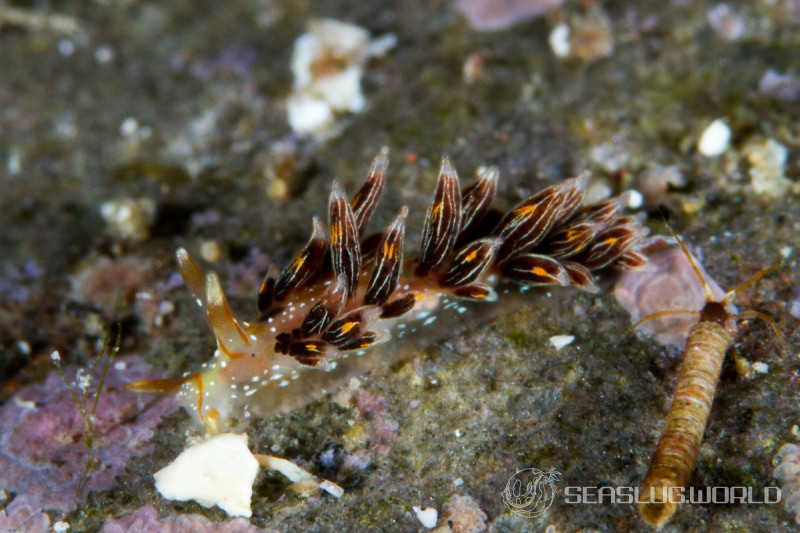
- Location
- Otchogahama, Hachijo Island, Tokyo, Japan
- Date
- 2018/05/16
- Length
- 10mm
- Depth
- 13.0m
- Water temperature
- 23.0℃
Description
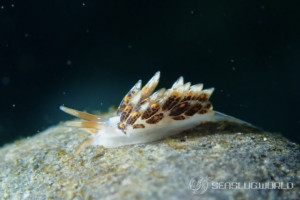
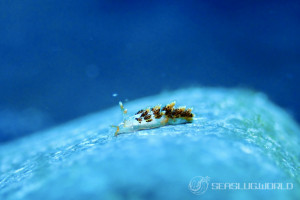
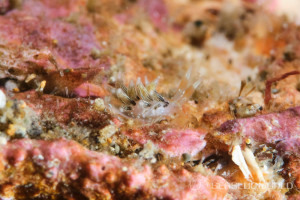
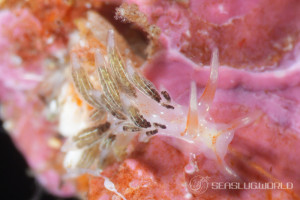
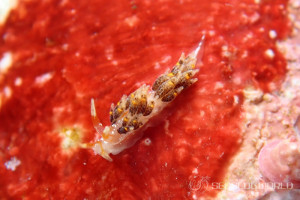
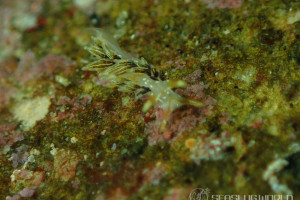
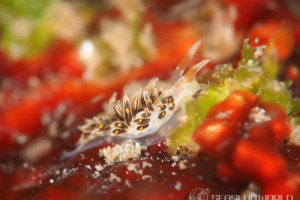
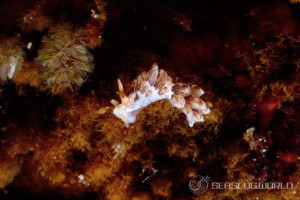
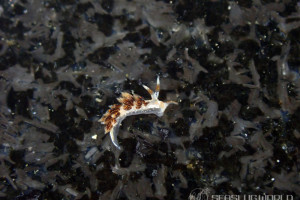
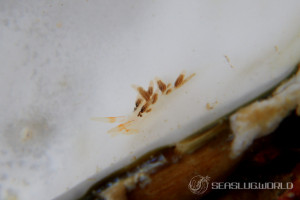
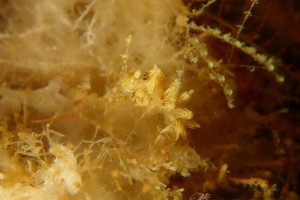
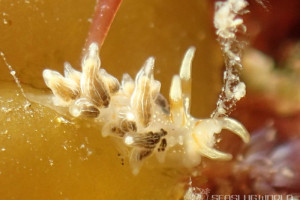
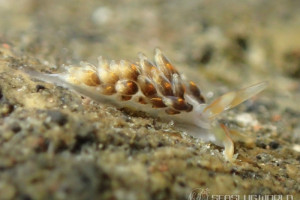
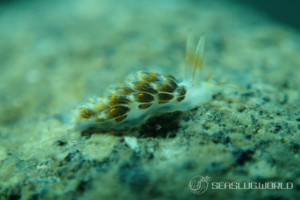
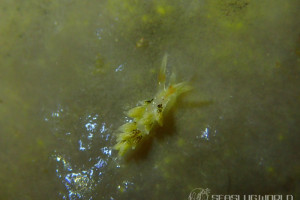
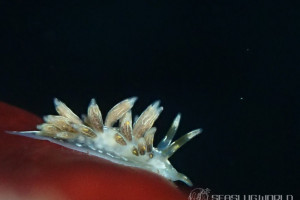
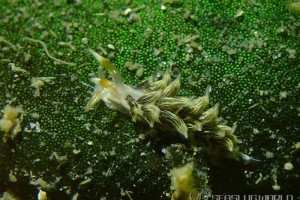
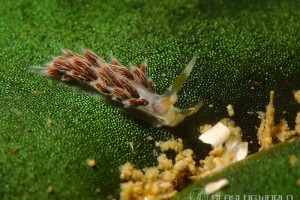
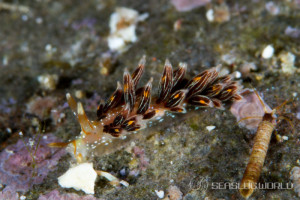
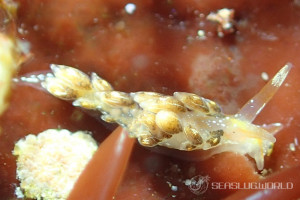
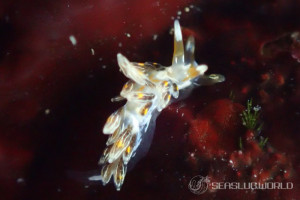
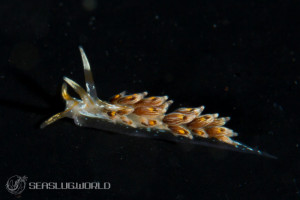
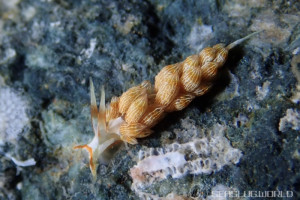
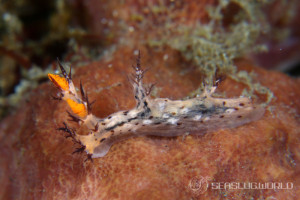
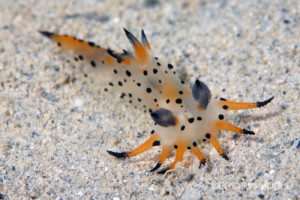
A small Aeolidacea, body length about 1 cm. Body shape similar to that of Cratena ornata. Rhinophores simple. Cerata in 8 oblique rows per side: 1st row 1, 2nd 3, 3rd-5th 4 each, 6th onward 3-1. Right (and left) liver branches into 4 oblique rows. The genital orifice opens directly below the 2nd row on the right; the anus opens just before the inner end of the 5th row. Anterior foot corners rounded. Ground colour yellow-white. The cerata bear a black central vein, and each ceras has a single orange spot just below the apex on its outer face. The masticatory edge of the jaw plate bears a single row of 10 denticles. Radula formula 55×0.1.0. The median cusp of the central tooth is not recessed; 6-7 denticles of equal length flank it on each side.Distribution
Type locality is Hayama-Koiso, Sagami Bay (intertidal, April 1950, single specimen). The original description (Baba, 1955) records the species only from the type locality.Etymology
The specific epithet puellula is Latin for little girl. The original description does not give an explicit etymology paragraph; the descriptive sense is uncertain.Remarks
Originally described as Cratena puellula; the Nomenclatural Review at the end of Baba 1955 Supplement (p.63) reassigned it to Cuthona (= Trinchesia). The species was later transferred to Tenellia under the 2016 Cuthonidae phylogenetic revision (Cella et al., 2016). Externally similar to Cratena ornata, but distinguished by the yellow-white ground with black-veined cerata each bearing a single orange subapical spot.References
- キリヒメミノウミウシ(新稱), 生物學御研究所編. (1955). 相模湾産後鰓類図譜〈補遺〉. 岩波書店.
- 高岡生物研究会. (2002). 日本海のウミウシ. 第2版.
- キリヒメミノウミウシ, 中野理枝. (2004). 本州のウミウシ. ラトルズ.
- キリヒメミノウミウシ, 小野篤司 & 加藤昌一. (2009). ウミウシ. 誠文堂新光社.
A Kindle field guide by the site author
Kimoto N. (2026). Sea Slugs of Japan & the Indo-Pacific, 2nd Edition.
Kindle Edition
View on Amazon PR (Amazon Associates)Seasonality
Shooting Locations
Loading shooting locations...
Photos of Tenellia puellula


















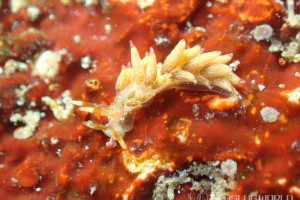
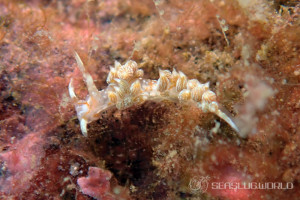
Same Genus Nudibranchs
Similar Colors Nudibranchs

Academic Database
Sea slug observation data is available in international marine biodiversity databases.