Thuridilla coerulea (Kelaart, 1858)
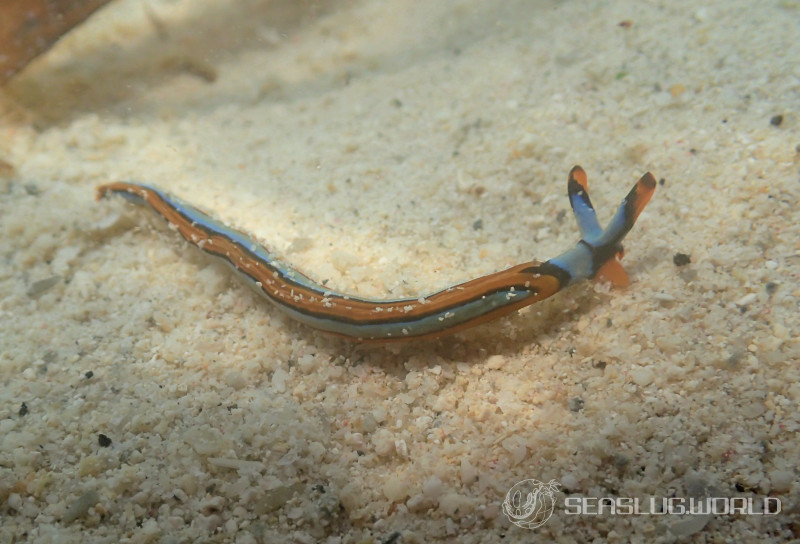
- Location
- Karimunjawa Island, Jawa, Indonesia
- Date
- 2023/08/25
- Length
- 40mm
- Depth
- 0.2m
- Water temperature
- 28.0℃
Description
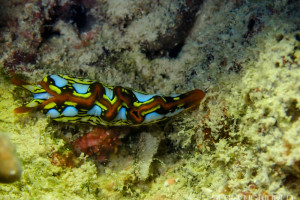
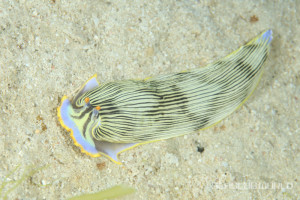
A small sacoglossan reaching about 20 mm in length. Body brilliant blue. The parapodia are bordered by a broad red-orange band edged inwardly by a fine black line. Oral tentacles red-orange with black margins. Two cephalic tentacles, blue with a central red ring and blackish tip. The fore part of the foot and the underside of the head are also red. Lives on macroalgae.Distribution
Indian Ocean. Records include Sri Lanka and the Andaman Islands. The type locality is the Inner Harbour of Trincomalee, Ceylon (Sri Lanka).Etymology
The specific epithet caerulea (the original spelling; coerulea is the spelling currently in use) is the Latin for "sky blue" or "deep blue", referring to the brilliant blue body colour.Remarks
Originally described as Elysia caerulea Kelaart (Journal of the Ceylon Branch of the Royal Asiatic Society 3(9): 107, 1858), as a "very small, beautiful species, about ¾ inch long; when the wings are folded, it is not thicker than a crow's quill". The species has rarely been re-reported since its 1858 description; the related Thuridilla lineolata and T. undula were later split off as separate species. Subsequently transferred to Thuridilla Bergh, 1872.References
A Kindle field guide by the site author
Kimoto N. (2026). Sea Slugs of Japan & the Indo-Pacific, 2nd Edition.
Kindle Edition
View on Amazon PR (Amazon Associates)Seasonality
Shooting Locations
Loading shooting locations...
Photos of Thuridilla coerulea
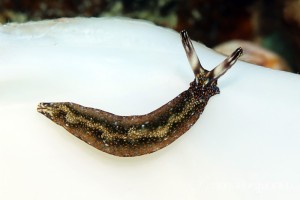
Same Genus Nudibranchs
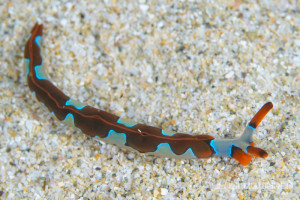

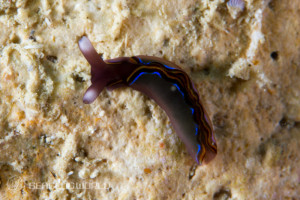
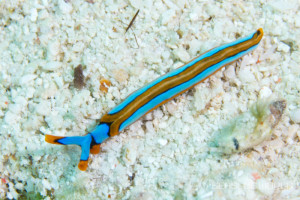
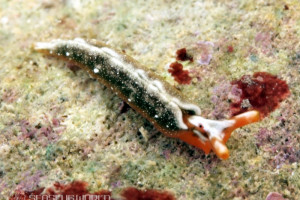


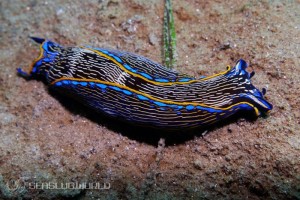
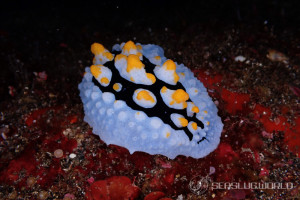
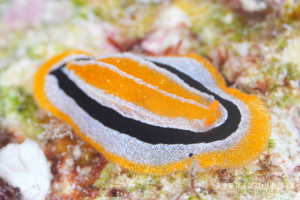
Similar Colors Nudibranchs
Academic Database
Sea slug observation data is available in international marine biodiversity databases.