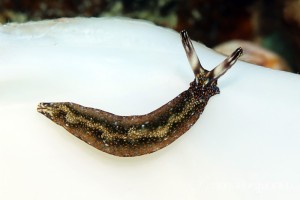
Thuridilla livida (Baba, 1955)
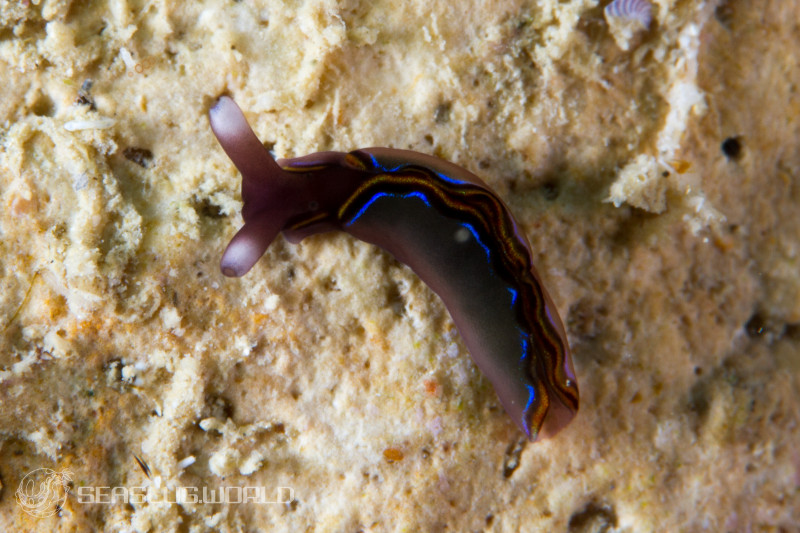
- Location
- Red Beach, Okinawa Island (East coast), Okinawa, Japan
- Date
- 2015/02/12
- Length
- 10mm
- Depth
- 6.0m
- Water temperature
- 20.7℃
Description
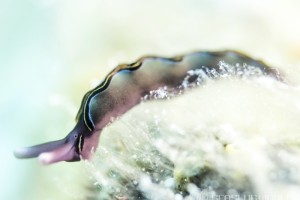
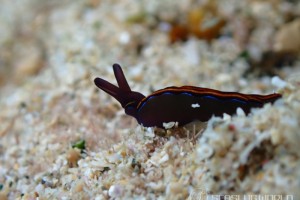
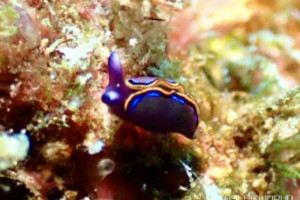
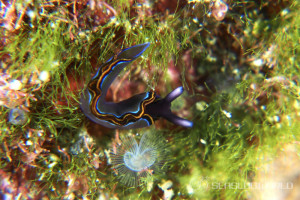
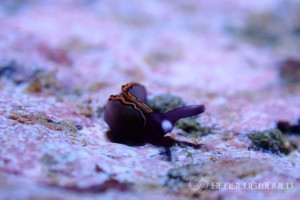
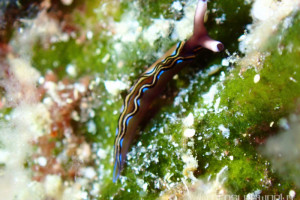
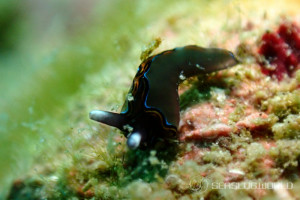
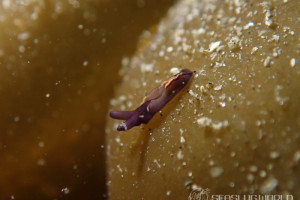
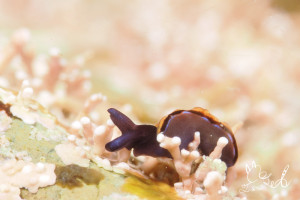
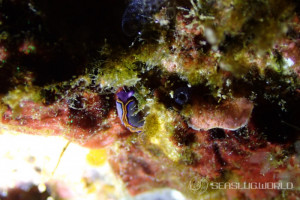
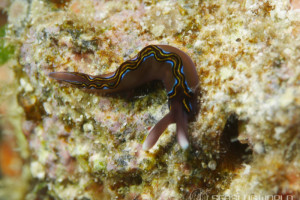
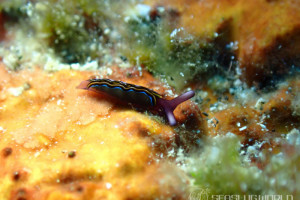
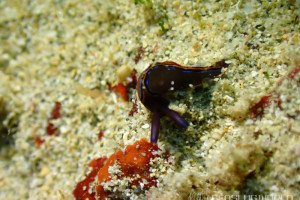
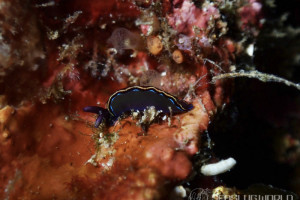
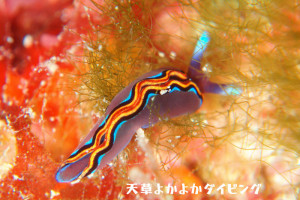
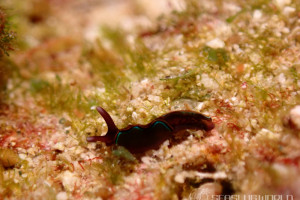
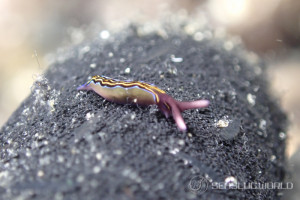
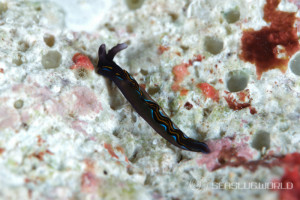
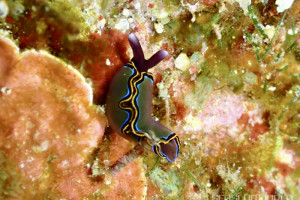
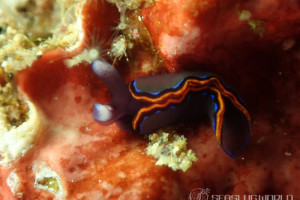
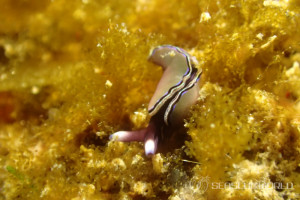
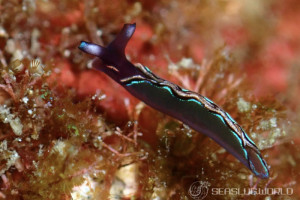
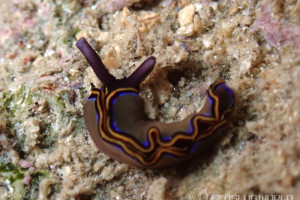
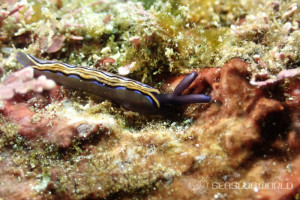
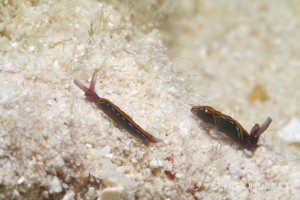
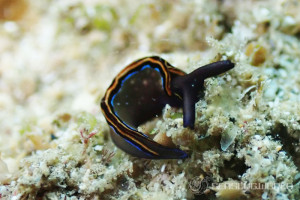
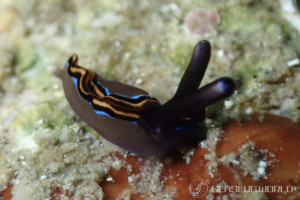
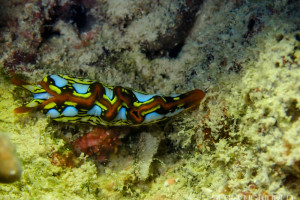
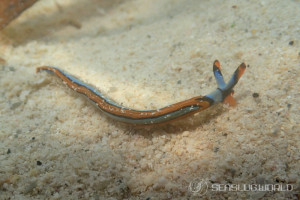
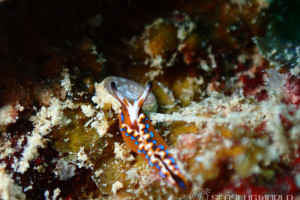
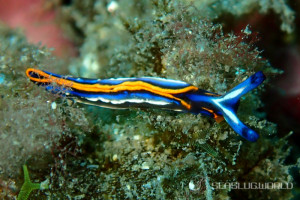
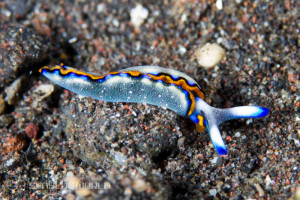
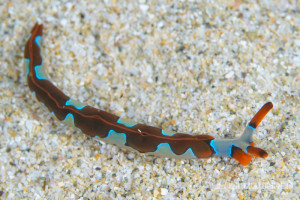
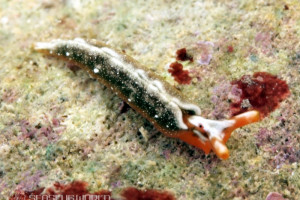
A small sacoglossan, 7-25 mm in length (most specimens 14-20 mm). Body colour is very dark, ranging from deep purple to black, and underwater the animal often appears entirely black. The parapodia have gently undulating margins, with the outer edge showing an orange band, then a black band, and innermost a narrow iridescent blue to blue-green line that is often broken into a row of dots rather than continuous. The anterior edge of the foot also bears narrow orange and blue lines. Rhinophores are dark like the body at the base, become opaque whitish in the upper half, and are tinged blue at the tips.Distribution
Widely distributed across the Indo-West Pacific: Sagami Bay (type locality), Toyama Bay, Okinawa, Guam, Marshall Islands (Enewetak, Kwajalein), the Philippines, Indonesia, the Great Barrier Reef, Aldabra Atoll, Seychelles, and South Africa. Found in shallow water (1-22 m) on coral walls, coral rubble, and reef slopes.Etymology
The specific epithet livida is from the Latin lividus (bluish-grey, leaden, livid), referring to the dark purple body colour.Remarks
Originally described by Kikutarō Baba as Elysia livida from material collected in Sagami Bay, and transferred to Thuridilla in Gosliner's 1995 revision of the genus. Closest to Thuridilla hoffae in overall appearance, but distinguished by the narrow iridescent blue line along the inner parapodial margin and by the orange and blue lines along the anterior edge of the foot, both of which are absent in T. hoffae.References
- チゴミドリガイ(新稱), 生物學御研究所編. (1955). 相模湾産後鰓類図譜〈補遺〉. 岩波書店.
- Elysia (Elysia) livida BABA, 1955 Chigo-midorigai, Baba K. (1957). THE SPECIES OF THE GENUS ELYSIA FROM JAPAN. Publications of the Seto Marine Biological Laboratory. 6(1): 69-74. https://doi.org/10.5134/174573
- チゴミドリガイ, 高岡高等学校生物研究会(編). (1964). 富山湾産後鰓類図譜.
- 高岡生物研究会. (2002). 日本海のウミウシ. 第2版.
A Kindle field guide by the site author
Kimoto N. (2026). Sea Slugs of Japan & the Indo-Pacific, 2nd Edition.
Kindle Edition
View on Amazon PR (Amazon Associates)Seasonality
Shooting Locations
Loading shooting locations...
Photos of Thuridilla livida
























Same Genus Nudibranchs



Academic Database
Sea slug observation data is available in international marine biodiversity databases.