Tomoberthella martensi (Pilsbry, 1896)
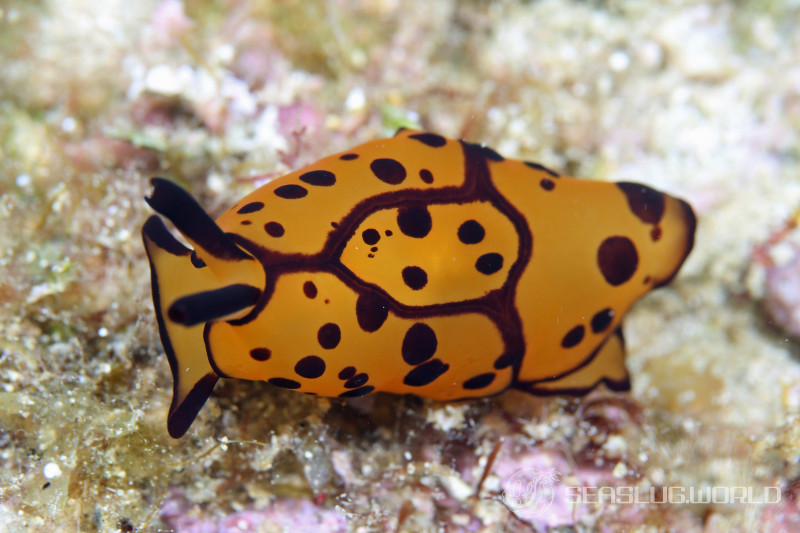
- Location
- Ishikiri(Awa), Okinawa Island (Motobu and Northern area), Okinawa, Japan
- Date
- 2015/04/11
- Length
- 40mm
- Depth
- 15.0m
- Water temperature
- 23.0℃
Description
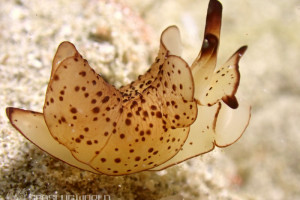
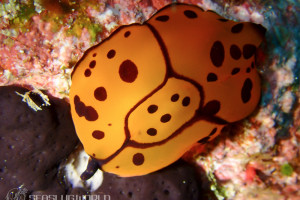
The body is flat and oval, with the mantle covering most of the foot and gill. A broad, deep anterior sinus on the mantle margin allows the rhinophores to project antero-dorsally. The mantle is divided into four regions: a triangular central part enclosing the shell, paired antero-lateral lobes, and a posterior lobe. The three outer lobes are connected to the central part by 'preformed shear zones' and are readily autotomised when the animal is disturbed. This striking habit is the basis of the Japanese name chigire-fushieragai (literally 'the torn-mantle pleurobranch').The oral veil is large and trapezoidal, exceeding the width of the anterior mantle margin. The rhinophores are rolled and fuse with each other at the base. A conspicuous mucus groove runs along the anterior edge of the foot. The gill is attached to the right side of the body and bears 11–19 (mean 14.4) pinnae on each side of a smooth rachis. The internal shell is oval, slightly convex dorsally, thin, fragile, calcified and white; in preserved material it is often decalcified, leaving only a transparent conchiolin membrane.
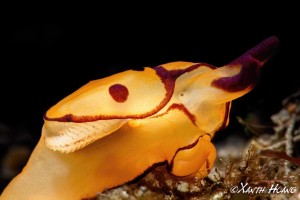
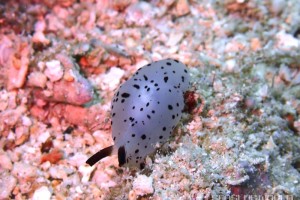
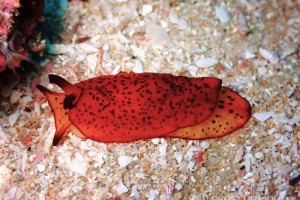
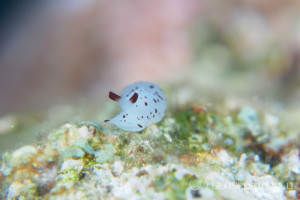
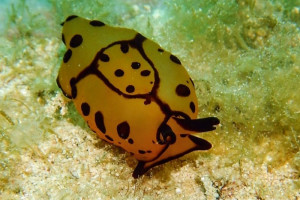
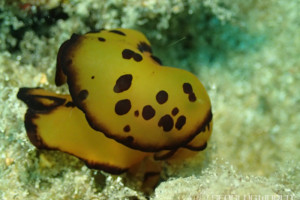
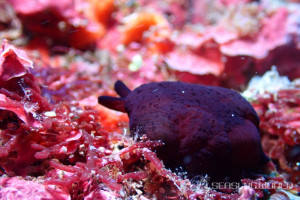
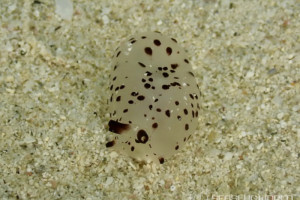
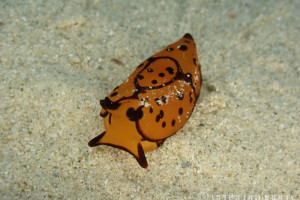
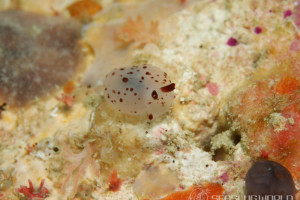
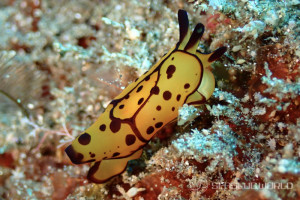
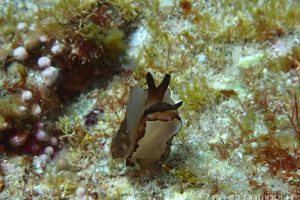
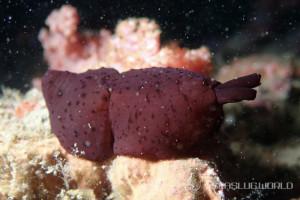
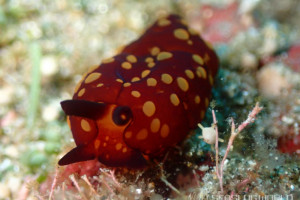
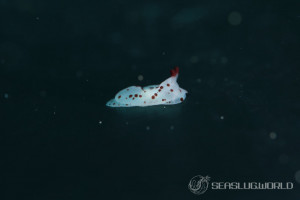
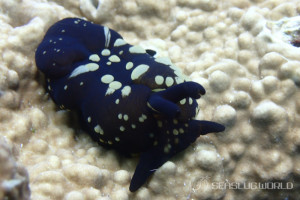
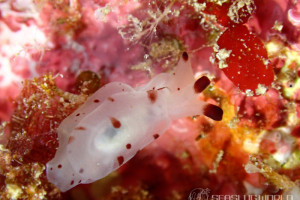
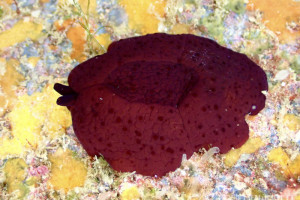
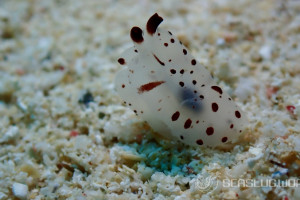
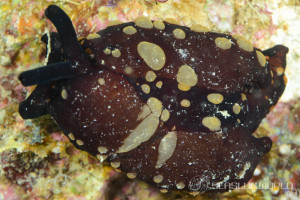
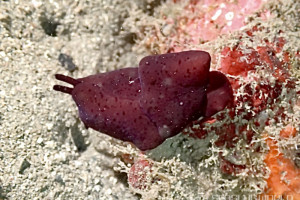
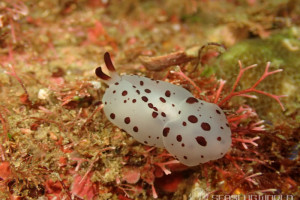
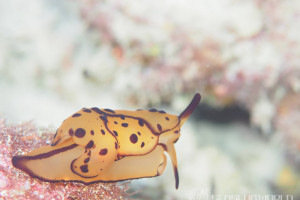
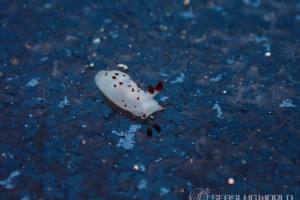
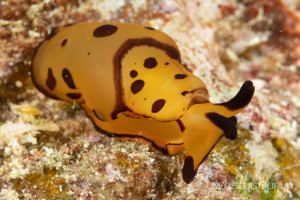
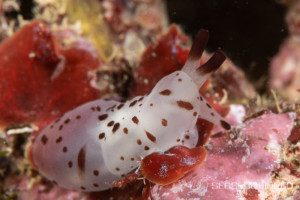
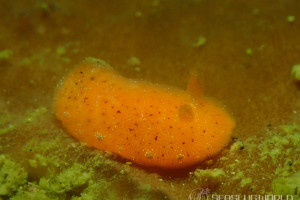
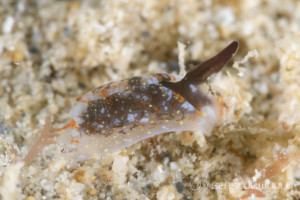
At least three colour forms are known: (1) an amber ground with numerous chocolate-brown spots, (2) a translucent whitish ground with reddish-brown spots, and (3) an umber ground with small dark-brown spots. Living specimens range from about 11 to 56 mm in body length.
Distribution
Widespread in tropical to subtropical waters of the Indo-Pacific. The type locality is Mauritius in the Indian Ocean. Willan 1984 rediscovered the species in the central West Pacific (Marshall Islands), and Gosliner & Bertsch 1988 reported it from the eastern Pacific as far east as Mexico and Panama. The first Japanese records were reported by Tsubokawa & Bolland 1991, based on 17 specimens from Okinawa Island and one from Chichijima, Ogasawara Islands. The species inhabits coral-reef areas from the intertidal zone down to about 60 m.Etymology
The specific epithet martensi honours the German malacologist Eduard von Martens, who originally described the species as Pleurobranchus scutatus in Möbius 1880 from Mauritius. Because that name was preoccupied by Pleurobranchus scutatus Forbes, 1844, Pilsbry 1896 introduced the replacement name Gymnotoplax martensi, retaining Martens' name in the binomial.Remarks
The gut contents of dissected specimens contained triaxon and tetraxon spicules, indicating a sponge-feeding diet (Tsubokawa & Bolland, 1991).The taxonomic history of the species is intricate. After its original description as Pleurobranchus scutatus by Martens (in Möbius, 1880), Pilsbry 1896 introduced the replacement name Gymnotoplax martensi; subsequent authors placed it in Berthella, under which combination it was long known. Moles et al. 2023 (Zoological Journal of the Linnean Society) reorganised the side-gilled slugs at the genus level using molecular phylogenetics and moved the species to a newly erected genus Tomoberthella, designating it as the type species. Berthella kaniae Sphon, 1972 is treated as a junior subjective synonym.
The combination of mantle autotomy along the preformed shear zones and the colour lines outlining the four mantle regions are useful field marks, but the considerable colour variation makes identification by colour alone unreliable.
References
- Berthella martensi (Pilsbry, 1896) チギレフシエラガイ, 坪川涼子 & Bolland R.F. (1991). 日本新記録の背楯類 Berthella martensi (Pilsbry, 1896) チギレフシエラガイ (新称) について. Venus, Japanese Journal of Malacology. 50(3): 184-195.
- チギレフシエラガイ, 小野篤司. (1999). ウミウシガイドブック. TBSブリタニカ.
- チギレフシエラガイ, 殿塚孝昌. (2003). ウミウシガイドブック〈3〉. TBSブリタニカ.
A Kindle field guide by the site author
Kimoto N. (2026). Sea Slugs of Japan & the Indo-Pacific, 2nd Edition.
Kindle Edition
View on Amazon PR (Amazon Associates)Seasonality
Shooting Locations
Loading shooting locations...
Photos of Tomoberthella martensi
Tag:




















Similar Colors Nudibranchs

Academic Database
Sea slug observation data is available in international marine biodiversity databases.