Tenellia futairo (Baba, 1963)
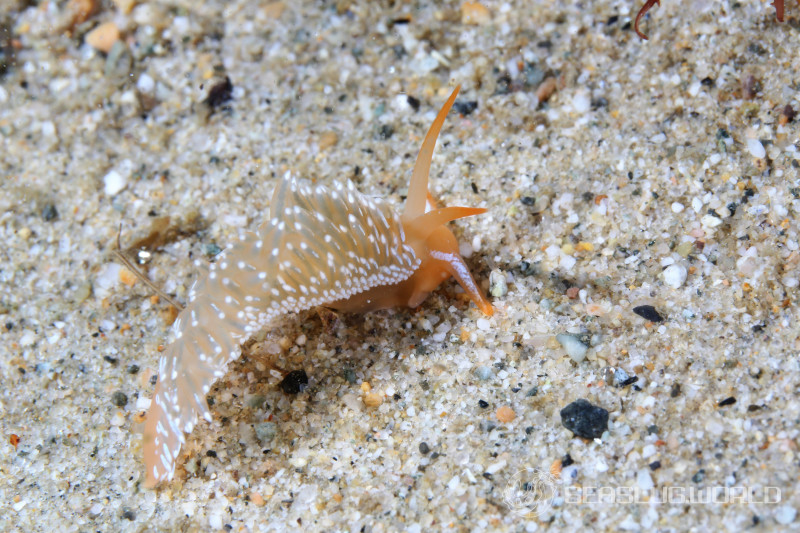
- Location
- Namerikawa, Toyama, Japan
- Date
- 2017/04/29
- Length
- 10mm
- Depth
- 15.0m
- Water temperature
- 12.0℃
Description
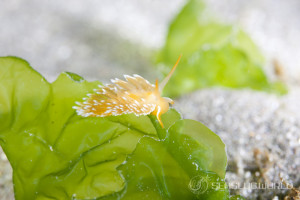
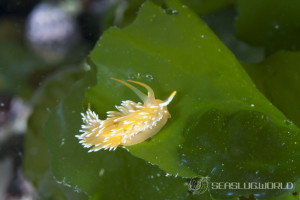
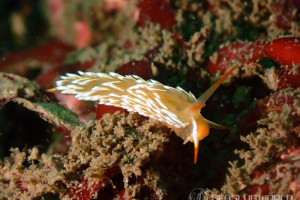
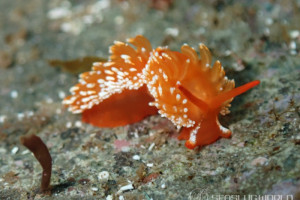
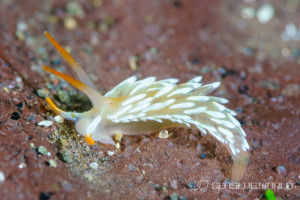
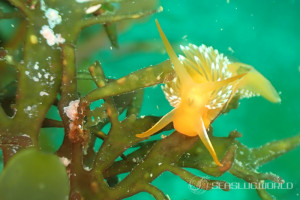
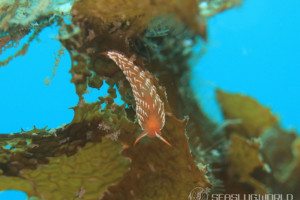
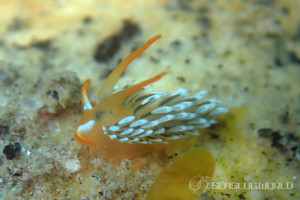
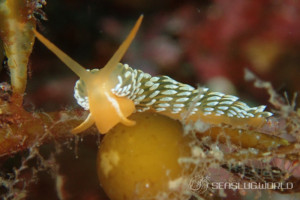
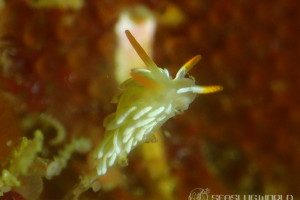
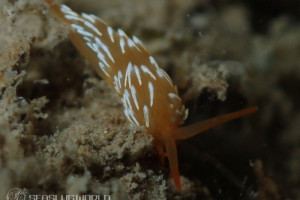
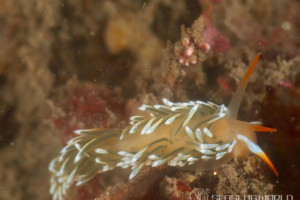
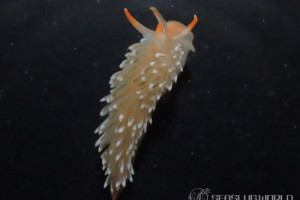
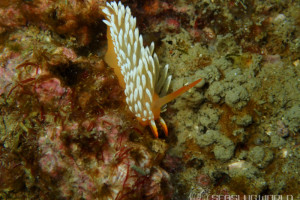
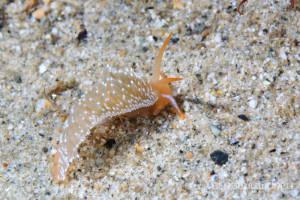
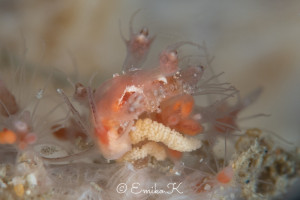
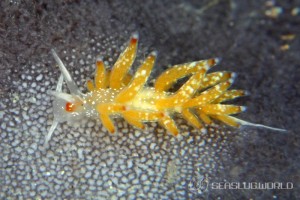
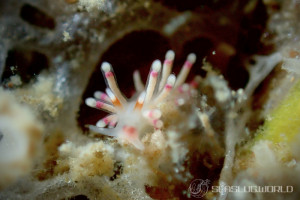
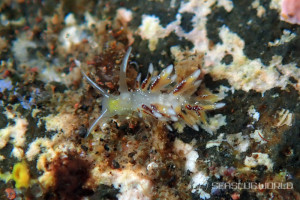
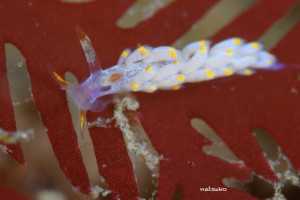
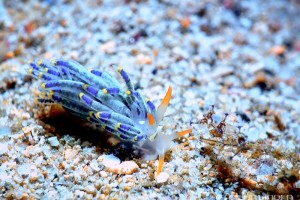
A small aeolid 5-20 mm long, with mature animals reaching 20 mm or more. The general body colour is pale orange-yellow, intensifying on the upper halves of the oral tentacles and rhinophores so that the tips appear almost orange-red. A longitudinal opaque white band runs along the posterior border of each oral tentacle. The cerata are smooth, each marked by a column of opaque white dots running down the outer face from the tip; the dark green liver diverticulum shows through the wall like a vein. Rhinophores are simple. The antero-lateral foot corners are slightly produced and angulated. The radular formula is 60-90 x 0.1.0, with a low, slightly retracted median cusp flanked by 4-5 lateral denticles on each side. The penis is elongately conical and lacks a stylet.Distribution
Type locality: Mukaishima, Inland Sea of Seto, Japan. The species is widely distributed along both the Pacific and Japan Sea coasts of Japan, from Mutsu Bay in the north (41 deg N) southward to about 32 deg 50 min N. Records include Mutsu Bay, Sagami Bay, Sugashima near Toba, Osaka Bay, the Inland Sea of Seto, Saeki Bay, Amakusa, and Toyama Bay.Etymology
The specific epithet futairo is the Japanese word for "two colours" (futa-iro). Baba originally identified Amakusa specimens in 1933 as Cratena bicolor Bergh, 1904 and gave them the Japanese name "Futairo-minoumiushi." On revision, the radular teeth and liver branching pattern proved distinct from Bergh's bicolor, so Baba erected the new species in 1963 and transferred the existing Japanese vernacular straight into the Latin epithet, an unusual case of an unaltered Japanese transcription serving as a species name.Remarks
In Osaka Bay the species appeared in great numbers, together with spawn, during the springs of 1951-1952, then nearly disappeared from the district. In more recent years it has been found abundantly in the Inland Sea of Seto on Sargassum in shallow water. The natural diet is not known with certainty. The species was originally placed in Cuthona on the basis of the absence of a penial stylet and the radular tooth shape; this site follows the current generic placement in Tenellia.References
- フタイロミノウミウシ(新稱), Baba K. (1949). Opisthobranchia of Sagami Bay collected by His Majesty the Emperor of Japan (相模湾産後鰓類図譜). Iwanami Shoten, Tokyo. 4+2+194+7 pp., pls. 1-50.
- Cratena bicolor (Bergh) Futairo-minoumiushi, Baba, K. 1957. A revised list of the species of Opisthobranchia from the northern part of Japan, with some additional descriptions. J. Fac. Sci., Hokkaido Univ.,ser. 6, Zool. 13(1-4):8-14.
- Futairo-minoumiushi, Baba, K. 1963. The anatomy of Cuthona futairo n.sp. (=C. bicolor of Baba, 1933) (Nudibranchia - Eolidoidea). Publications of the Seto Marine Biological Laboratory 11(1):109-117, pls. 5-6.
- 高岡生物研究会. (2002). 日本海のウミウシ. 第2版.
- ミノウミウシ亜目の1種 2, 中野理枝. (2004). 本州のウミウシ. ラトルズ.
A Kindle field guide by the site author
Kimoto N. (2026). Sea Slugs of Japan & the Indo-Pacific, 2nd Edition.
Kindle Edition
View on Amazon PR (Amazon Associates)Seasonality
Shooting Locations
Loading shooting locations...
Photos of Tenellia futairo

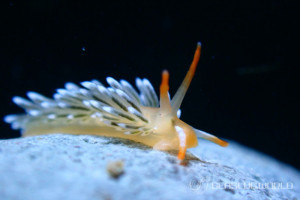

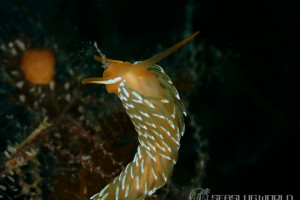

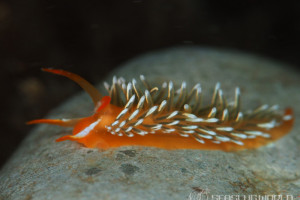

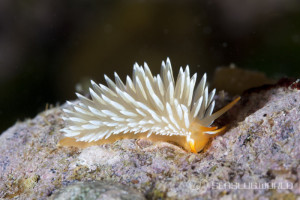













Same Genus Nudibranchs
Similar Colors Nudibranchs


Academic Database
Sea slug observation data is available in international marine biodiversity databases.