Unidentia sandramillenae Korshunova, Martynov, Bakken, Evertsen, Fletcher, Mudianta, H. Saito, Lundin, Schrödl & Picton, 2017
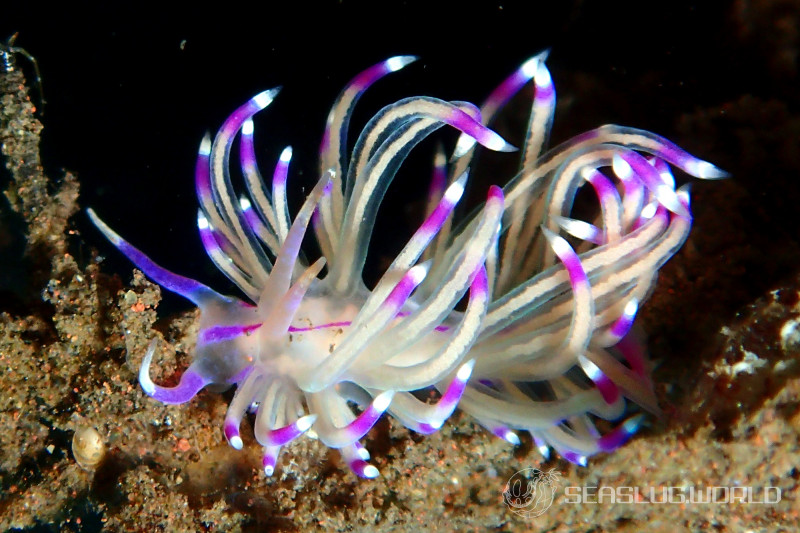
- Location
- Seraya, Tulamben, Pulau Bali, Indonesia
- Date
- 2018/02/23
- Length
- 25mm
- Depth
- 15.0m
- Water temperature
- 28.0℃
Description
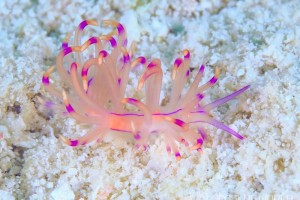
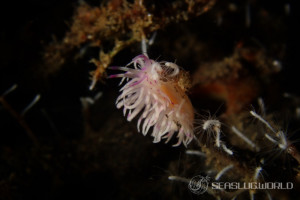
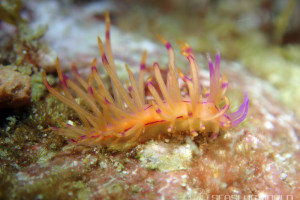
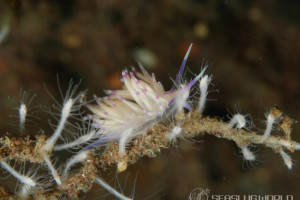
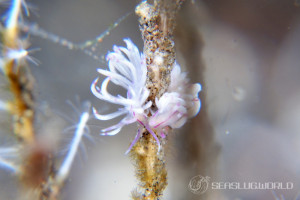
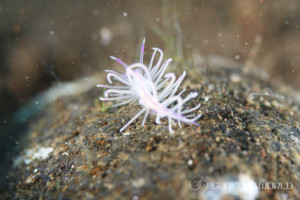
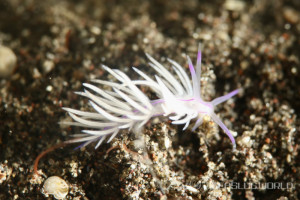
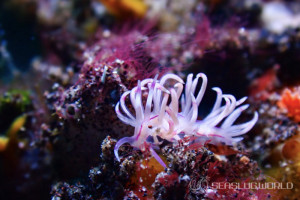
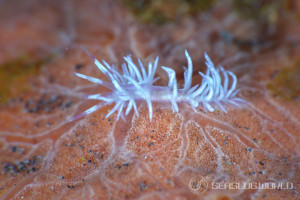
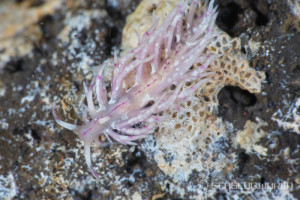
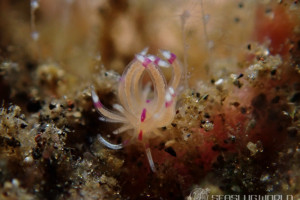
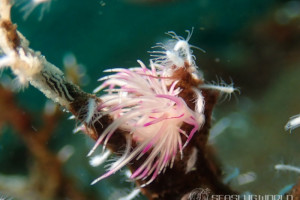
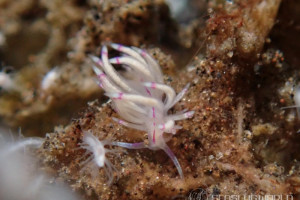
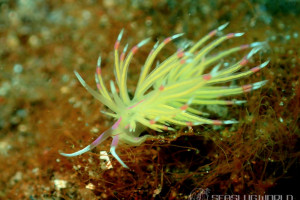
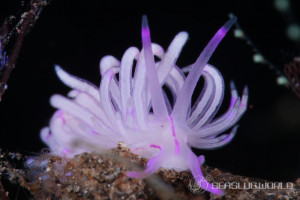
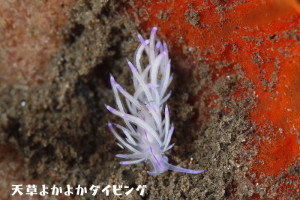
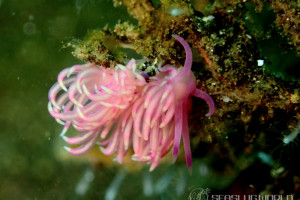
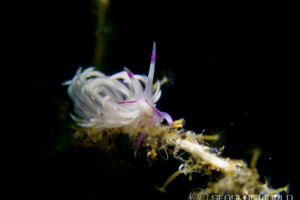
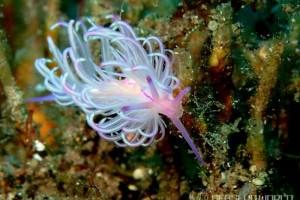
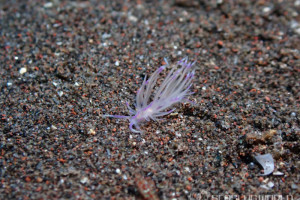
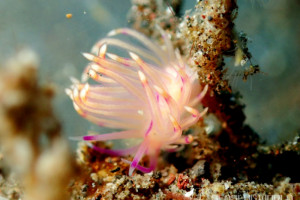
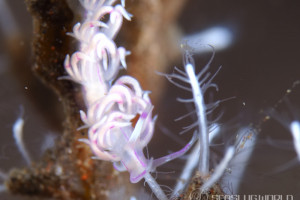
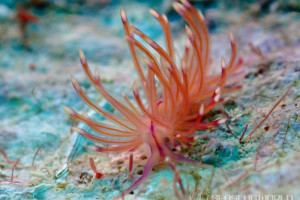
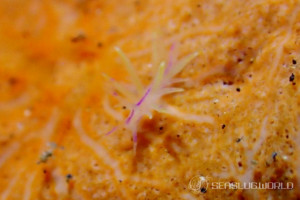
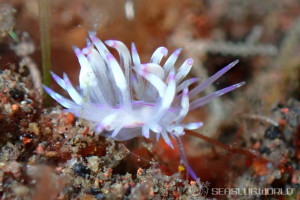
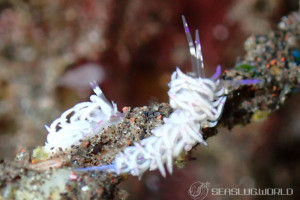
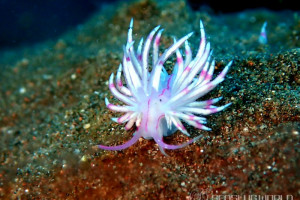
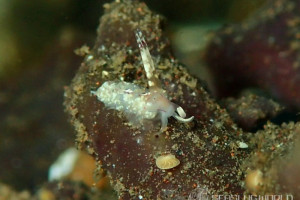
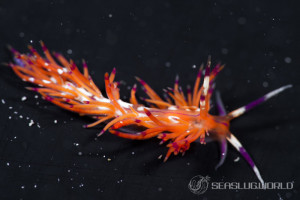
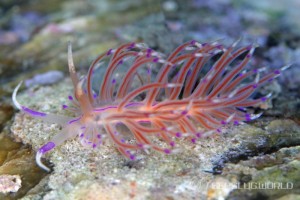
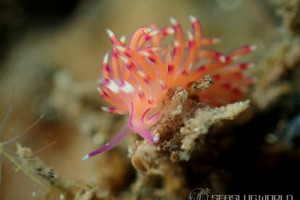
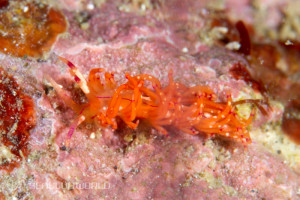
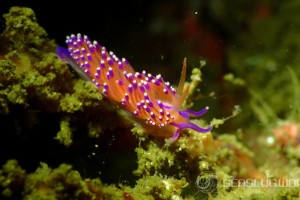
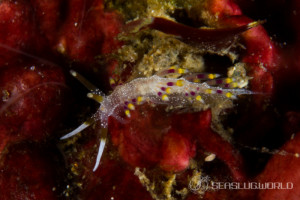
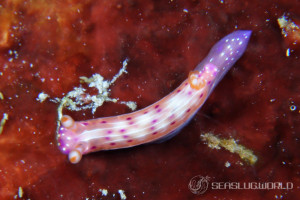
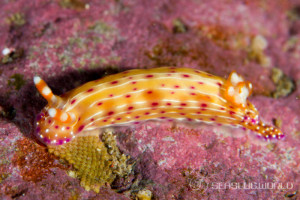
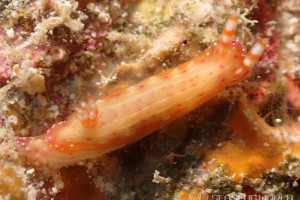
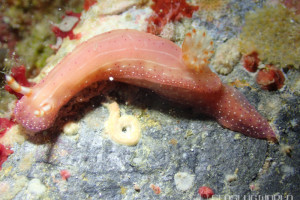
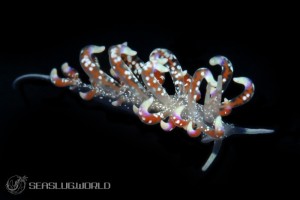
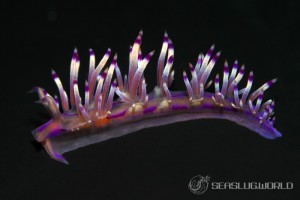
A small elongate sea slug, ~7 mm preserved. Background body colour is translucent white with an overall violet hue, and a thin purple middorsal line runs along the back. Along the dorsal edges sit 8-10 distinctly elongated elevations bearing clusters of finger-shaped to fusiform cerata. Subapical purple rings adorn the cerata. Rhinophores are smooth and similar in length to the oral tentacles; the oral tentacles are densely covered with purple pigment over their basal half.Distribution
Type locality: Bali Island, Indonesia — Tulamben (Holotype ZMMU Op-617, 7 mm preserved, 5-10 m depth, stones, collected 2 February 2017 by I Wayan Mudianta). Currently confirmed only from Indonesia, but probably distributed across the Indo-West Pacific.Etymology
Verbatim from the original description (Korshunova et al., 2017, p.59):In honour of prominent nudibranch researcher, Sandra Millen (The University of British Columbia), who for almost 50 years has conducted fine taxonomic studies, including separation of the new family, Unidentiidae, together with Alicia Hermosillo.
Remarks
Described as a new species together with U. nihonrossija in a 2017 revision ZooKeys 717: 1-139. Found on stones and on algae covered with athecate hydroids. The radula is uniserial (formula 25 × 0.1.0); the rachidian tooth bears up to eight denticles, with vestigial basal denticles only on the cusp of a few anterior teeth; lateral teeth absent. The reproductive system has two proximal receptacula seminis but no supplementary penial gland, and the penis bears a hollow stylet. The authors noted that the species "differs considerably from the only other known species of the genus Unidentia, U. angelvaldesi Millen & Hermosillo, 2012, both externally and internally", distinguished externally by the whitish ground colour (vs. red-orange in Mexican U. angelvaldesi) and internally by the shape of the central cusp of the rachidian teeth, the shape of the ampulla, and the presence of a distinct second seminal reservoir (p.60). COI p-distance from U. nihonrossija is 14.2%.References
- Flabellina angelvaldesi, Terrence Gosliner, Ángel Valdés and David Behrens. (2015). Nudibranch and Sea Slug Identification Indo-Pacific. New World Pubns Inc.
- Unidentia sandramillenae sp. n., Korshunova T., Martynov A., Bakken T., Evertsen J., Fletcher K., Mudianta I.W., Saito H., Lundin K., Schrödl M. & Picton B. (2017). Polyphyly of the traditional family Flabellinidae affects a major group of Nudibranchia: aeolidacean taxonomic reassessment with descriptions of several new families, genera, and species (Mollusca, Gastropoda). ZooKeys. 717: 1-139. https://doi.org/10.3897/zookeys.717.21885
- サンドラミノウミウシ(新称), 中野理枝. (2018). 日本のウミウシ. 文一総合出版.
Featured in this book
Terrence Gosliner, Ángel Valdés and David Behrens. (2018). Nudibranch and Sea Slug Identification Indo-Pacific 2nd Edition. New World Pubns Inc.
New World Publications
This species, Unidentia sandramillenae, is included in the book.
View on Amazon PR (Amazon Associates)Seasonality
Shooting Locations
Loading shooting locations...
Photos of Unidentia sandramillenae
Tag:

















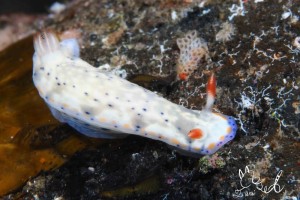
Same Genus Nudibranchs

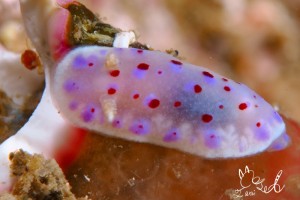
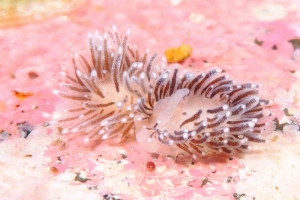
Similar Colors Nudibranchs
Academic Database
Sea slug observation data is available in international marine biodiversity databases.