Aplysia reticulata Eales, 1960
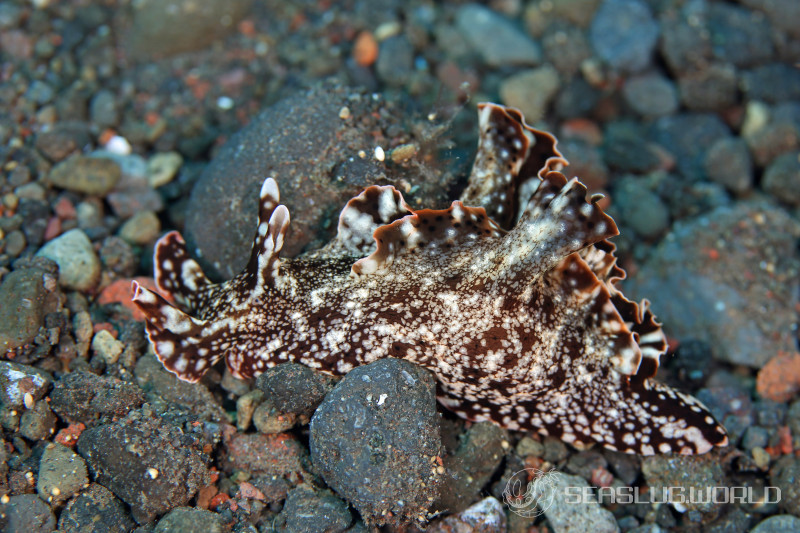
- Location
- Petti San, Tulamben, Pulau Bali, Indonesia
- Date
- 2015/11/13
- Length
- 50mm
- Depth
- 13.0m
- Water temperature
- 30.0℃
Description
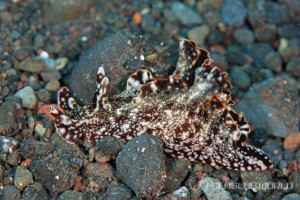
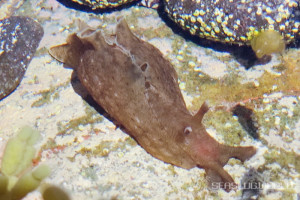
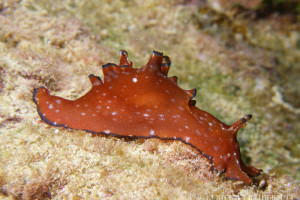
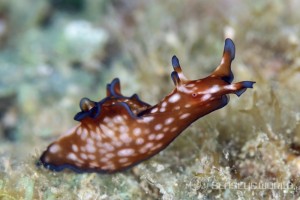
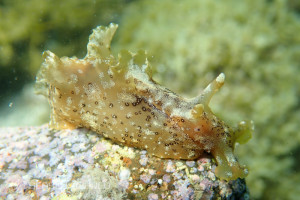
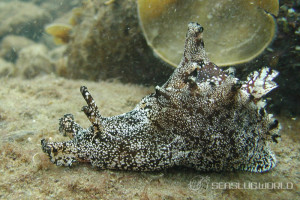
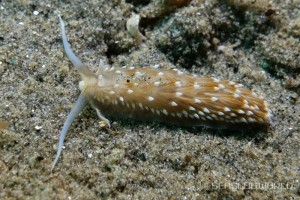
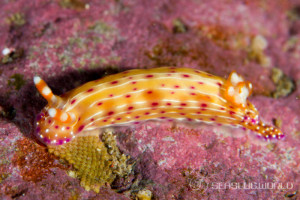
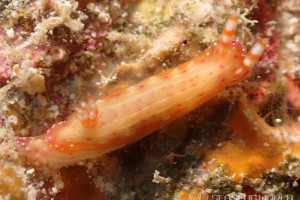
A medium-sized sea hare with a cream background colour and a dense network of brown lines and patches running across the whole body. The brown spots tend to enlarge towards the parapodial margins, the rhinophores, and the oral tentacles. The parapodia are well developed and the animal swims actively by flapping them.Distribution
Originally described from material taken off north-western Australia. Subsequently recorded across the Indo-West Pacific, including various parts of Australia (Queensland and Western Australia) and as far as Hawaii.Etymology
The specific epithet reticulata is Latin for "reticulate" or "net-like", in reference to the netted brown markings on the body.Remarks
Feeds on algae, rasping them with the radula. Japanese material is often misidentified as the common Aplysia kurodai, but A. reticulata can be distinguished by its active parapodial swimming and its finer, denser reticulate body pattern.References
- Aplysia reticulata n. sp., Eales N.B. (1960). Revision of the world species of Aplysia. Bulletin of the British Museum (Natural History), Zoology. 5(10): 267-404.
- Aplysia reticulata, Klussmann-Kolb A. (2004). Phylogeny of the Aplysiidae (Gastropoda, Opisthobranchia) with new aspects of the evolution of seahares. Zoologica Scripta. 33(5): 439-462.
A Kindle field guide by the site author
Kimoto N. (2026). Sea Slugs of Japan & the Indo-Pacific, 2nd Edition.
Kindle Edition
View on Amazon PR (Amazon Associates)Seasonality
Shooting Locations
Loading shooting locations...
Photos of Aplysia reticulata




Same Genus Nudibranchs
Similar Colors Nudibranchs

Color:
Brown
Academic Database
Sea slug observation data is available in international marine biodiversity databases.