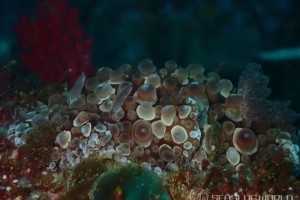
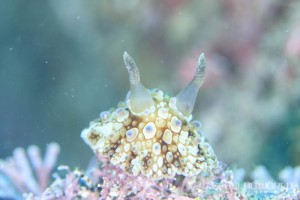
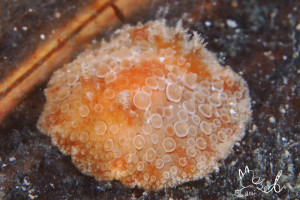
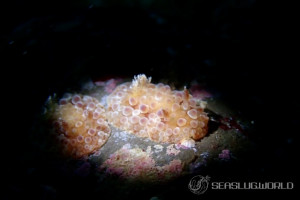
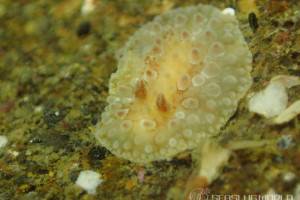
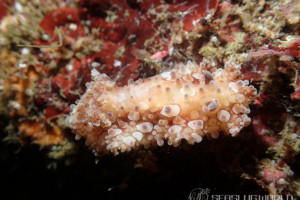
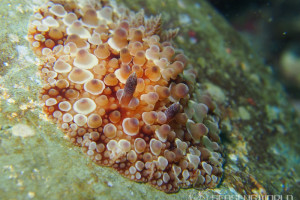
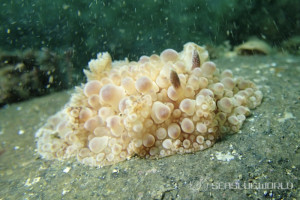
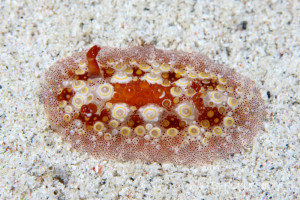
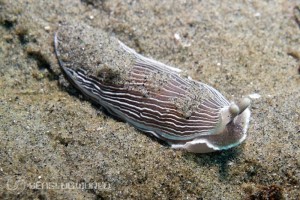
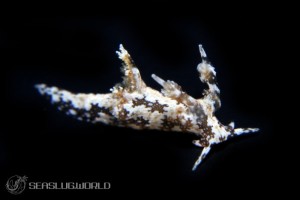
Carminodoris armata Baba, 1993
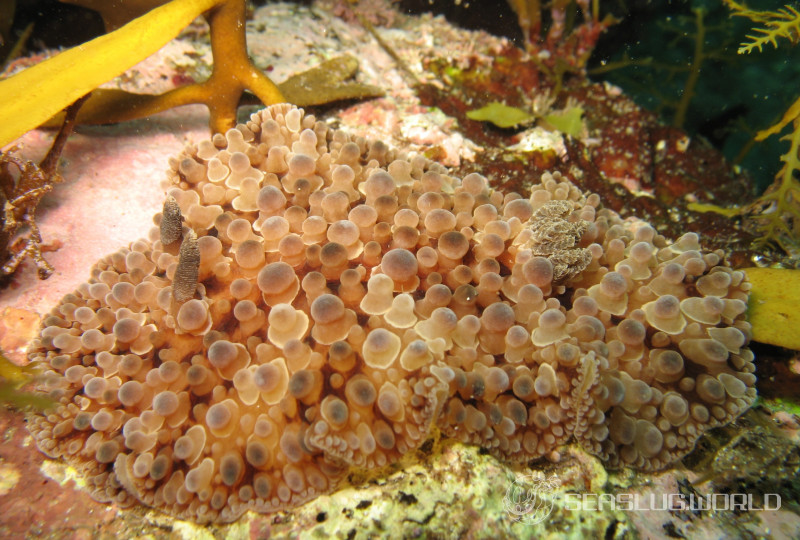
- Location
- Gakkoushita(pool mae), Etizen, Fukui, Japan
- Date
- 2009/07/28
- Length
- 100mm
- Depth
- 5.0m
- Water temperature
- 25.0℃
Description
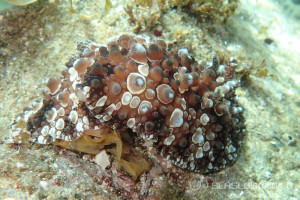
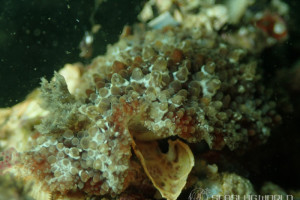
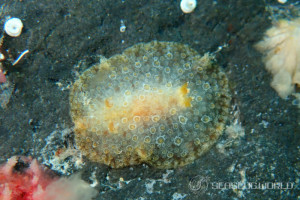
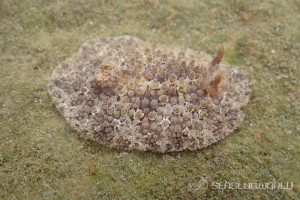
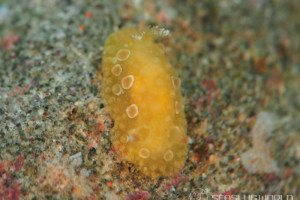
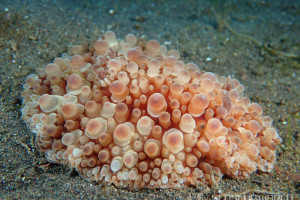
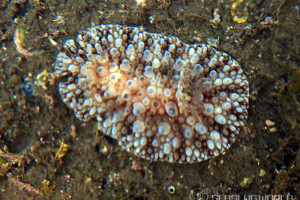
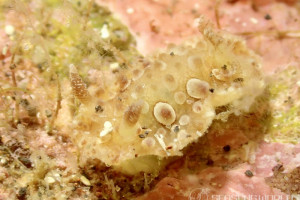
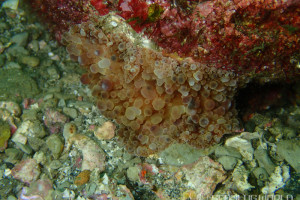
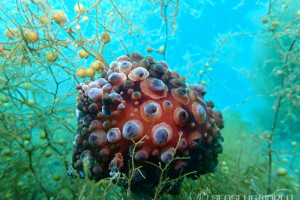
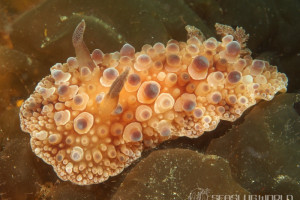
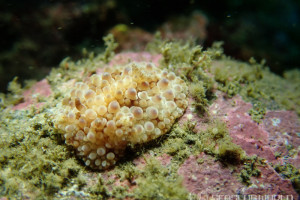
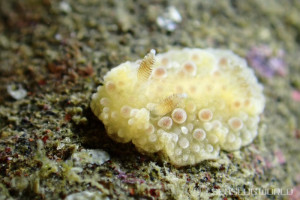
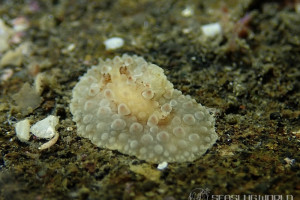
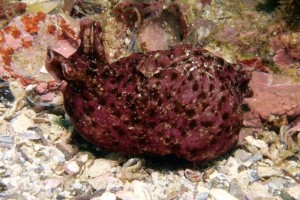
A medium to large dorid reaching about 60 mm in body length (preserved). The body is elliptical and soft, with the dorsum densely covered by rounded tubercles of various sizes; some morphs bear chocolate-brown caps on the tops of the tubercles. Fine interwoven spicules are embedded in the integument but do not extend onto the tubercle tops. Each rhinophoral sheath is protected by a pair of valve-like tubercles. The gill cavity margin is tuberculate, and the gills are tripinnate and six in number. Oral tentacles are digitate. The anterior margin of the foot is bilabiate with a median notch on the upper lip. Jaws consist of fibrous rods; the radular formula is 45×50-60.0.50-60, with all lateral teeth (including the outermost) hamate and smooth — the diagnostic distinction from the type species C. mauritiana, which has denticulate outermost lateral teeth. The male genital duct bears a large prostate mass and a narrow vas deferens; the penis is armed with hooks.Distribution
Currently considered endemic to Japan. Type locality: Sugashima near Toba, Shima (Mie Pref.). The original type series also includes material from Futae near Tomioka (Amakusa, Kumamoto, collected 1937), Kojima in Osaka Bay, and Sagami Bay (Kasagone and Kannonzuka-dashi at 70-90 m). Subsequently recorded from Korea.Etymology
The specific epithet armata is Latin for "armed", referring to the armed (hook-bearing) penis — the character that originally led Baba to assign this species to Carminodoris.Japanese vernacular name
The vernacular name "Manryō-umiushi" (マンリョウウミウシ) refers to Manryō (万両, lit. "ten thousand ryō"), an auspicious Japanese plant with red winter berries; the chocolate-brown spots on the dorsum recall the scattered red berries on its branches. The name was coined in the 1993 original description.Remarks
The genus Carminodoris Bergh, 1889 is based on the type species C. mauritiana Bergh, 1889 from Mauritius, and is characterised by jawed buccal mass, denticulate outer lateral radular teeth, a large prostate gland, and an armed penis. Baba (1993) described C. armata together with a congener C. bifurcata Baba, 1993 (Senryō-umiushi) and tentatively assigned the new species to Carminodoris, noting that the outermost lateral teeth differ between the two genera. Fahey & Gosliner (2003) revised the Discodorididae and transferred this species to Hoplodoris as H. armata, but the current WoRMS classification retains Carminodoris armata Baba, 1993 as the valid name.References
- Carminodoris armata n. sp. マンリョウウミウシ(新種・新称), 馬場菊太郎. (1993). 日本産マンリョウウミウシ属(新称) 2 新種の記載. 貝類学雑誌. 52(3): 223-234. https://doi.org/10.18941/venusjjm.52.3_223
- マンリョウウミウシ, 鈴木敬宇. (2000). ウミウシガイドブック〈2〉. TBSブリタニカ.
- 高岡生物研究会. (2002). 日本海のウミウシ. 第2版.
- Hoplodoris armata (= Carminodoris armata), Fahey S.J. & Gosliner T.M. (2003). Mistaken identities: on the Discodorididae genera Hoplodoris Bergh, 1880 and Carminodoris Bergh, 1889 (Opisthobranchia, Nudibranchia). Proceedings of the California Academy of Sciences, Series 4. 54(10): 169-208.
- マンリョウウミウシ, 中野理枝. (2004). 本州のウミウシ. ラトルズ.
- マンリョウウミウシ, 小野篤司 & 加藤昌一. (2009). ウミウシ. 誠文堂新光社.
- Carminodoris armata, Terrence Gosliner, Ángel Valdés and David Behrens. (2015). Nudibranch and Sea Slug Identification Indo-Pacific. New World Pubns Inc.
Featured in this book
Terrence Gosliner, Ángel Valdés and David Behrens. (2018). Nudibranch and Sea Slug Identification Indo-Pacific 2nd Edition. New World Pubns Inc.
New World Publications
This species, Carminodoris armata, is included in the book.
View on Amazon PR (Amazon Associates)Seasonality
Shooting Locations
Loading shooting locations...
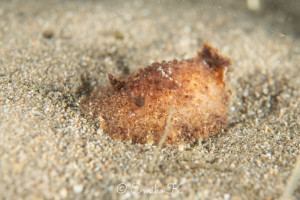
Photos of Carminodoris armata
Tag:





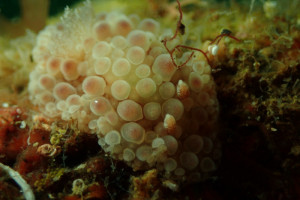

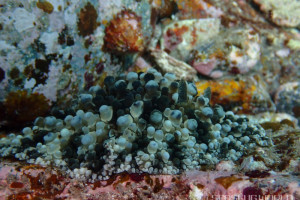

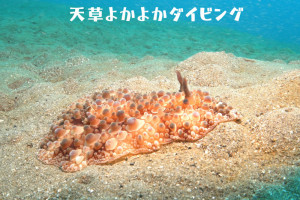

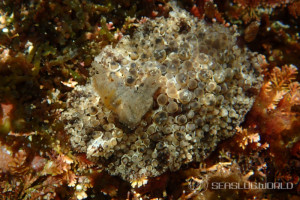















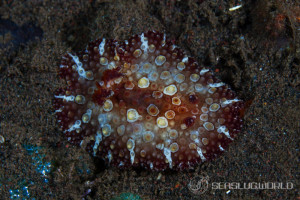
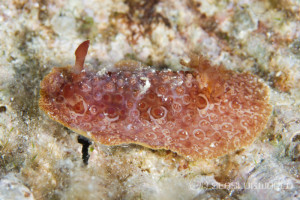
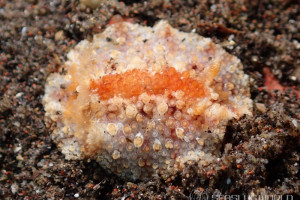
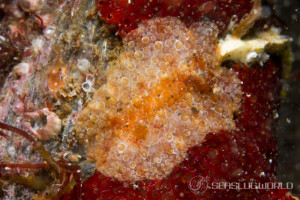
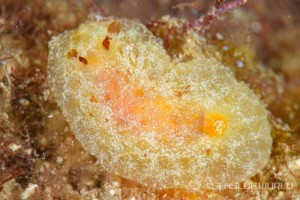
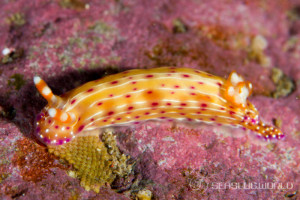
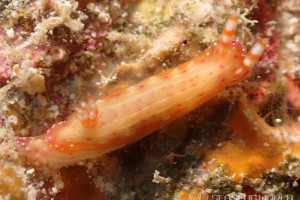
Same Genus Nudibranchs
Similar Colors Nudibranchs

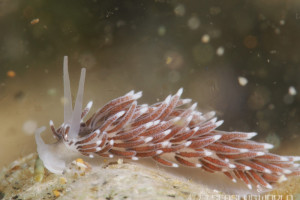
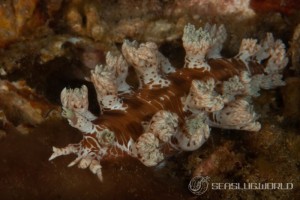
Color:
Brown
Academic Database
Sea slug observation data is available in international marine biodiversity databases.