Carminodoris grandiflora (Pease, 1860)
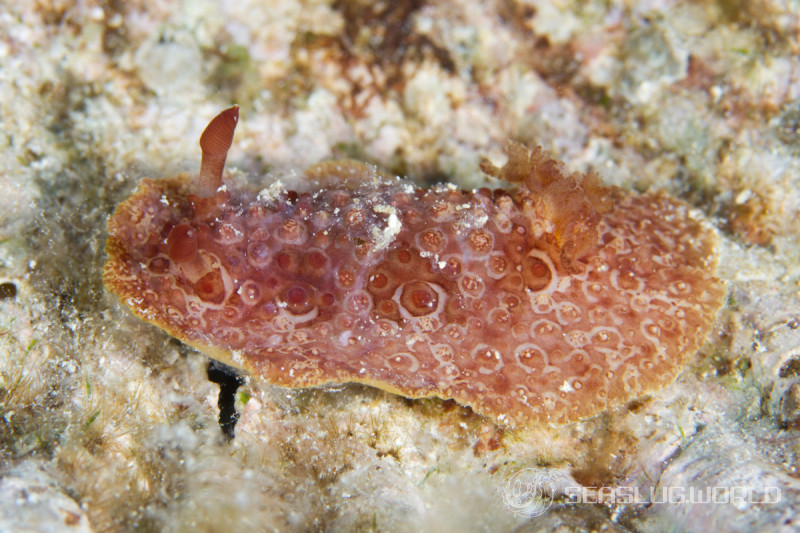
- Location
- Ishigaki and Yaeyama, Okinawa, Japan
- Date
- 2017/02/15
- Length
- 30mm
- Depth
- 6.0m
- Water temperature
- 24.0℃
Description
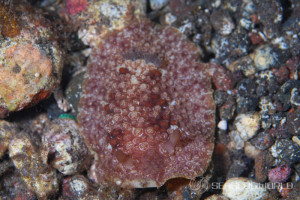
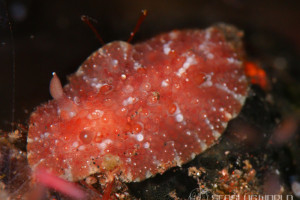
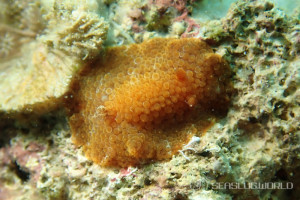
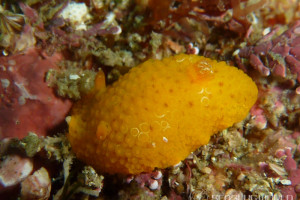
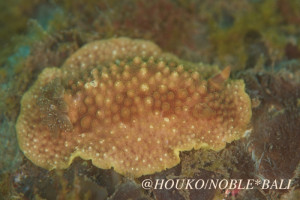
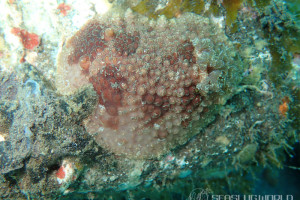
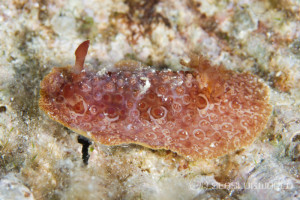
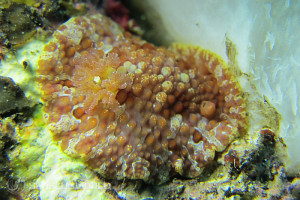
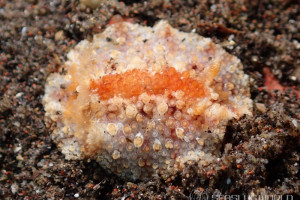
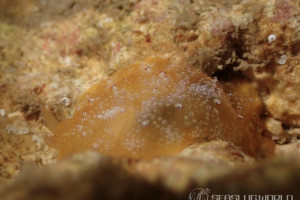
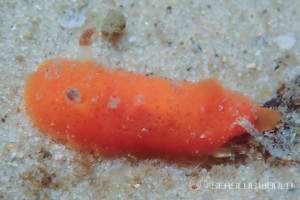
A large dorid reaching about 80 mm in body length. The body is oblong-ovate, similarly rounded at both ends, soft and convex above. The mantle is widest in the middle, conceals the foot, and is thin and crisped along the margins. The dorsum is strongly rugose, covered with irregular-sized, prominent, rounded tubercles. The gill is very large, procumbent, arborescent, of five plumes, inserted far back, surrounding the vent and retractile into a common cavity. The rhinophores are moderate in size, rather slender, oblong-ovate, obliquely lamellate, on stout peduncles, retractile into tubular cavities. The oral tentacles are small and crisped. The foot is similarly rounded at both ends, projecting posteriorly beyond the mantle, with thin crisped margins. In life the dorsum is dark fawn, closely veined with polish; mantle margins lighter and tipped with dusky; tubercles fawn with translucent peduncles. The gill is greyish-fawn, remotely spotted with whitish, the outer surface paler and the inner surface dusky. Pease's type was about 3 1/4 inches (≈ 8.3 cm) long. The spawn, deposited under loose stones in an irregular spiral coil, is of a faded yellow colour.Distribution
Indo-West Pacific to the central Pacific. Type locality: Sandwich Islands (Hawaiian Islands), based on Pease's observations of Hawaiian specimens. Subsequently recorded from the Hawaiian Islands, southern Japan, Taiwan, the Philippines, Indonesia, Guam, the Red Sea and elsewhere.Etymology
The specific epithet combines Latin grandis ("great, large") with flos, gen. floris ("flower"), meaning "large-flowered", in reference to the large arborescent gill that spreads out like a flower. Pease did not state an etymology, but the meaning is consistent with his description "branchiae very large, procumbent, arborescent".Remarks
Originally placed by Pease in Doris. Later transferred to Carminodoris; the parentheses in the author citation reflect this generic transfer. The Japanese name "ツブツブウミウシ" ("granular slug") refers to the dense tuberculation of the dorsum. The species has at times been placed in Discodoris and shows considerable colour variation; tubercle size and gill leaf count are useful for distinguishing it from related species.References
- Doris grandiflora Pease n. sp., Pease W.H. (1860). Descriptions of new species of Mollusca from the Sandwich Islands. Part I. Proceedings of the Zoological Society of London. 28: 18-36.
- ツブツブウミウシ(仮称), 小野篤司. (1999). ウミウシガイドブック. TBSブリタニカ.
- Hoplodoris grandiflora (= Carminodoris grandiflora), Fahey S.J. & Gosliner T.M. (2003). Mistaken identities: on the Discodorididae genera Hoplodoris Bergh, 1880 and Carminodoris Bergh, 1889 (Opisthobranchia, Nudibranchia). Proceedings of the California Academy of Sciences, Series 4. 54(10): 169-208.
- ツブツブウミウシ, 小野篤司. (2004). 沖縄のウミウシ. ラトルズ.
- ツブツブウミウシ, 中野理枝. (2004). 本州のウミウシ. ラトルズ.
- Carminodoris grandiflora, Terrence Gosliner, Ángel Valdés and David Behrens. (2015). Nudibranch and Sea Slug Identification Indo-Pacific. New World Pubns Inc.
Featured in this book

Terrence Gosliner, Ángel Valdés and David Behrens. (2018). Nudibranch and Sea Slug Identification Indo-Pacific 2nd Edition. New World Pubns Inc.
New World Publications
This species, Carminodoris grandiflora, is included in the book.
View on Amazon PR (Amazon Associates)Seasonality
Shooting Locations
Loading shooting locations...
Photos of Carminodoris grandiflora











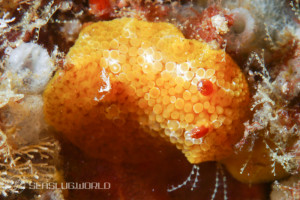
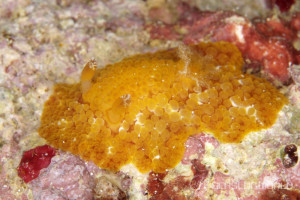

Same Genus Nudibranchs
Similar Colors Nudibranchs

Academic Database
Sea slug observation data is available in international marine biodiversity databases.