Elysia thompsoni K. R. Jensen, 1993
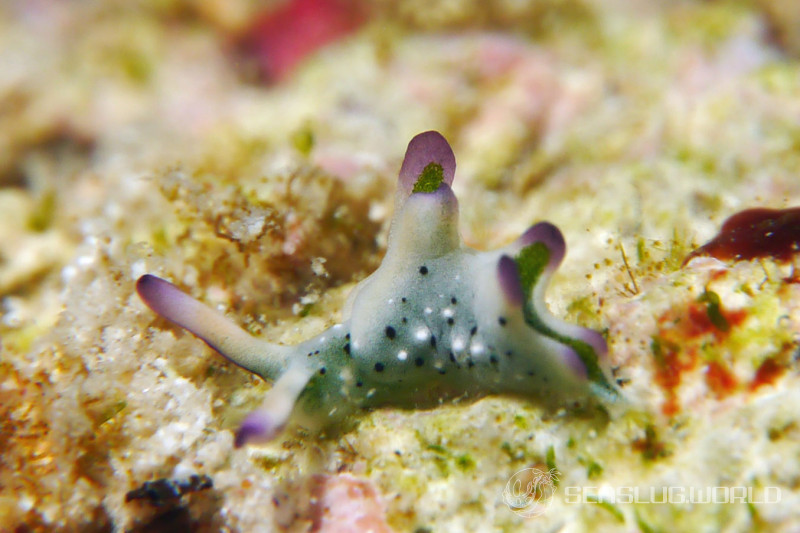
- Location
- Sunabe Water Treatment Plants, Okinawa Island (Chatan and Southern area), Okinawa, Japan
- Date
- 2014/04/25
- Length
- 5mm
- Depth
- 1.0m
- Water temperature
- 22.0℃
Description
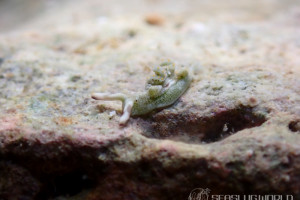
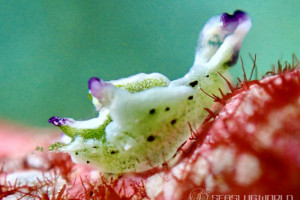
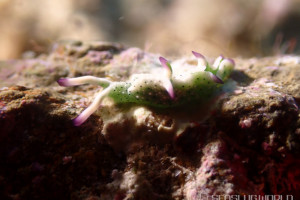
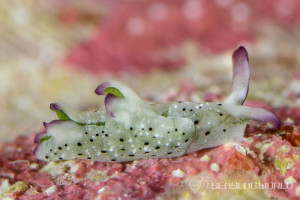
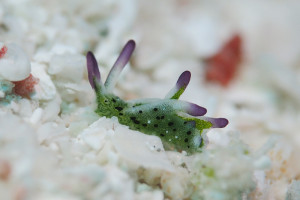
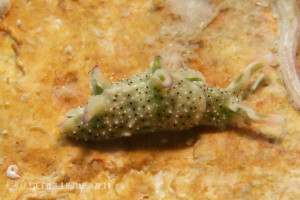
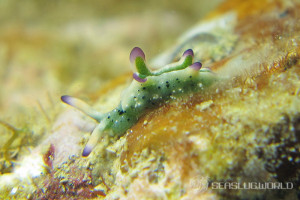
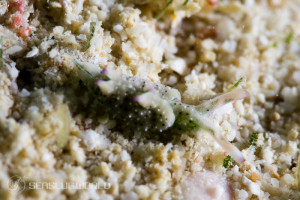
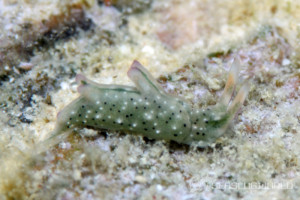
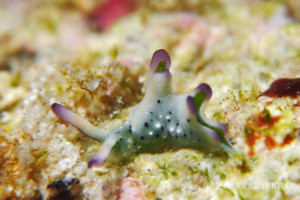
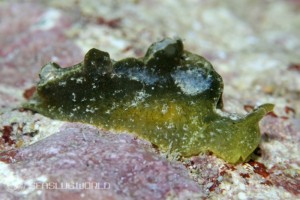
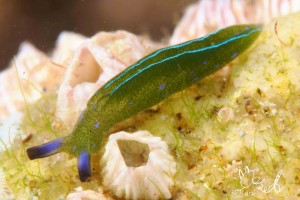
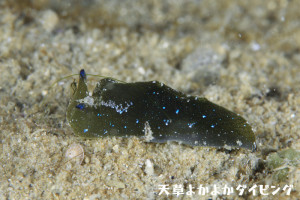
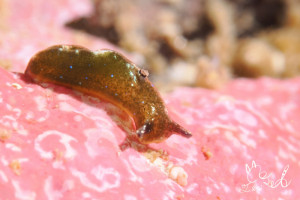
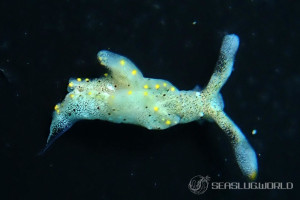
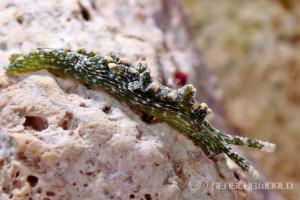
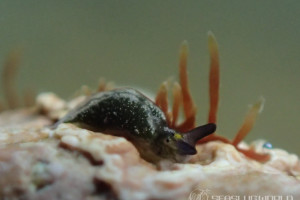
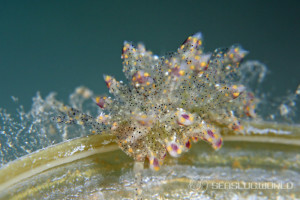
A small sacoglossan, 6–10 mm long in preserved specimens. The body is light grey, almost white, while the inner (dorsal) surface of the parapodia is bright green from numerous fine branches of the digestive gland. The rhinophores are long and rather thick, almost meeting anterodorsally on the head, with dark purple tips and a black line along their anterior margin. The parapodial margins form three "chimneys" — raised folds — and a dark purple spot sits at each chimney; in some specimens these spots merge into an almost continuous purple line along the margin. The rest of the parapodial margin is white, with a faint yellow line running just inside the margin. Small black spots are scattered on the external surface of the parapodia, and a pair of larger black spots marks the points where the parapodia meet the neck. Warty papillae cover the outer surface of the parapodia, and there is a small red spot on either side of the mouth. The tail is moderately long and very thin. Specimens from Shark Bay lack the purple and black pigment on rhinophores and parapodial margins, and the yellow submarginal line is more distinct.Distribution
Originally described from Radar Reef, Rottnest Island, and from Shark Bay in central Western Australia. Subsequently recorded from Madagascar, Indonesia, and Japan, indicating a broad Indo-West Pacific range. In Japan known from Zanpa and Yabuji-jima (Okinawa-jima) and Nagura Bay (Ishigaki-jima). Type locality: Radar Reef, Rottnest Island, Western Australia.Etymology
The specific epithet thompsoni honours the British opisthobranch worker T. E. Thompson, who had died before the publication of the original description.Japanese vernacular name
The Japanese name "Tsuma-murasaki-midorigai" (= purple-tipped green sea slug) refers to the purple coloration on the tips of the parapodia and rhinophores.Remarks
A herbivorous sacoglossan feeding on green algae; like its congeners it can sequester functional chloroplasts in its digestive-gland branches for a limited period (kleptoplasty).References
- Elysia thompsoni n. sp., Jensen K.R. (1993). Sacoglossa (Mollusca, Opisthobranchia) from Rottnest Island and central Western Australia. In: Wells F.E., Walker D.I., Kirkman H. & Lethbridge R. (eds), The Marine Flora and Fauna of Rottnest Island, Western Australia: Proceedings of the Fifth International Marine Biological Workshop. Western Australian Museum, Perth. pp. 207-253.
- ゴクラクミドリガイ属の1種 2 / Elysia sp. 8, 小野篤司. (2004). 沖縄のウミウシ. ラトルズ.
- ツマムラサキミドリガイ(新称), 中野理枝, 今川郁 & 今本淳. (2015). 南西諸島で記録された嚢舌類の報告. Kuroshio Biosphere. 11: 41-60.
A Kindle field guide by the site author
Kimoto N. (2026). Sea Slugs of Japan & the Indo-Pacific, 2nd Edition.
Kindle Edition
View on Amazon PR (Amazon Associates)Seasonality
Shooting Locations
Loading shooting locations...
Photos of Elysia thompsoni
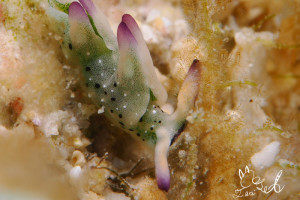

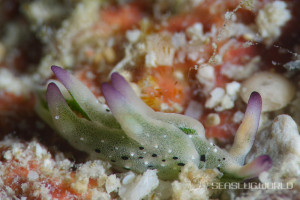




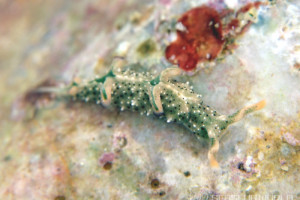

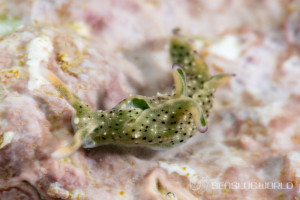

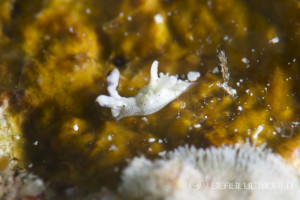

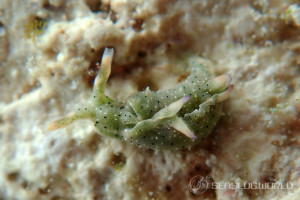






Same Genus Nudibranchs
Similar Colors Nudibranchs
Academic Database
Sea slug observation data is available in international marine biodiversity databases.