Gymnodoris subornata Baba, 1960
Description
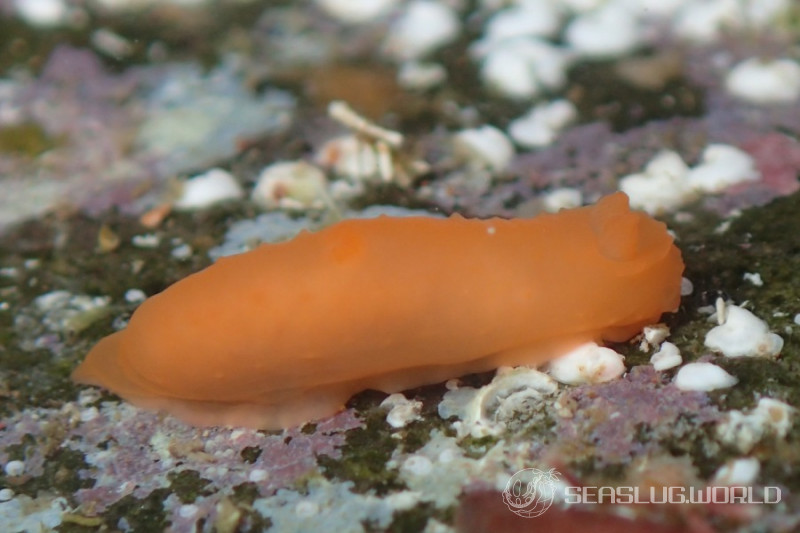
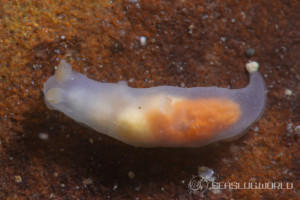
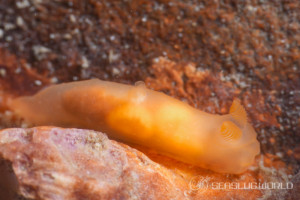
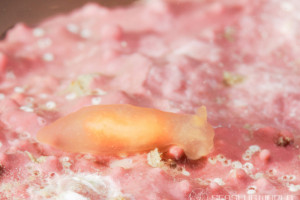
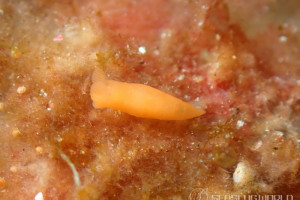
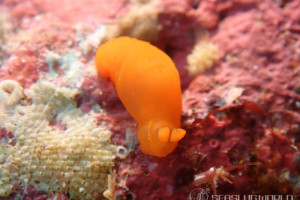
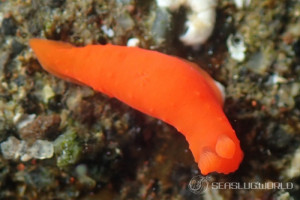
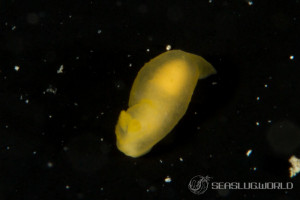
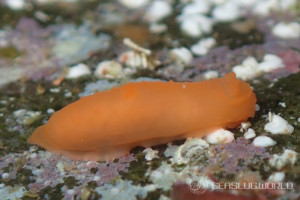
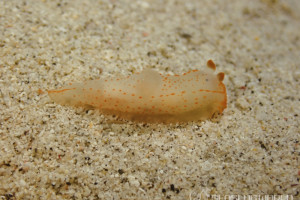
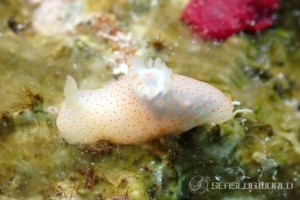
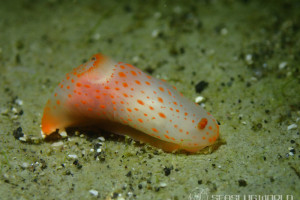
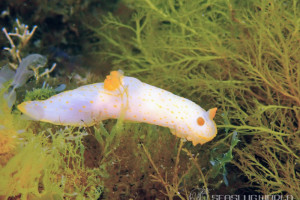
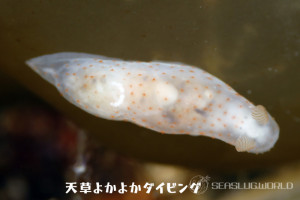
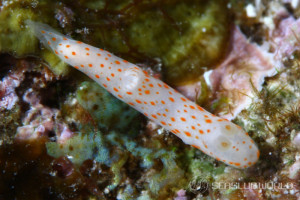
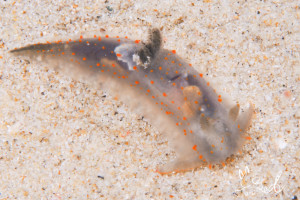
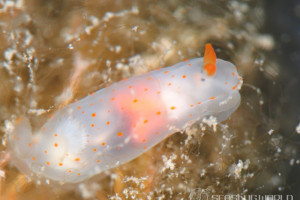
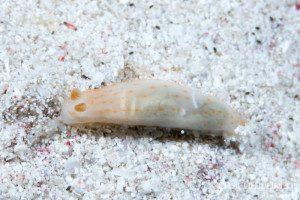
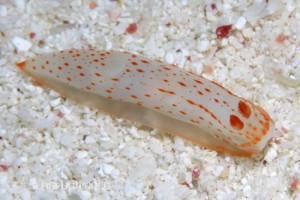
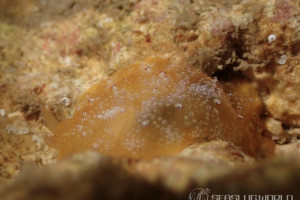
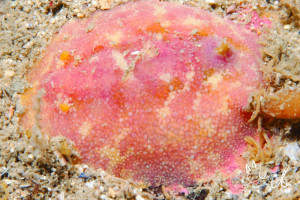
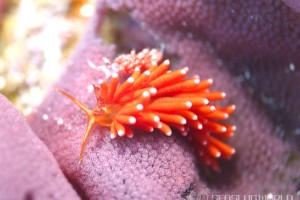
A small Gymnodoris species, 6-10 mm in body length. The body surface is smooth, sometimes with minute conical tubercles scattered along the pallial margin. The whole body is deep orange-red, and the rhinophores and gills are also orange-red. The gills are small, formed of 3-8 plumes arranged in a semicircle. The radula is always small and more or less rudimentary, with a representative formula of 16x6.1.0.1.6 (Seto specimen). The first lateral tooth is very small or missing altogether; the outer laterals are roughly hamate, each bearing a straight hook.Distribution
Type locality: Seto, Kii Province, Japan (May 1954, coll. by Mr. Yamamoto). The original description also reports specimens from Murotozaki (Shikoku, April 1958), Ogi in Toyama Bay (July 1953, coll. by Mr. Abe), and Matsugazaki in Tsuruga Bay (July 1955, coll. by Mr. Abe), all from inshore shallow waters.Etymology
The original description does not explicitly state the meaning of the specific epithet. subornata derives from Latin sub- ("somewhat") and ornata ("ornate, decorated"), thus "somewhat ornate". The name likely refers to the minute tubercles scattered along the pallial margin and the bright orange-red body coloration.Remarks
The coloration somewhat recalls Gymnodoris inornata, but G. subornata is distinguished by its smaller body size and rudimentary radula. The Japanese vernacular name "Hime-kinuhada-umiushi" was coined in the original description, with "Hime" ("small/diminutive") referring to its smaller size compared with the related G. inornata.References
- Gymnodoris subornata BABA, n. sp. Hime-kinuhada-umiushi (n.n.), Baba K. (1960). THE GENERA GYMNODORIS AND NEMBROTHA FROM JAPAN (NUDIBRANCHIA-POLYCERIDAE). Publications of the Seto Marine Biological Laboratory. 8(1): 71-74. https://doi.org/10.5134/174700
- 高岡生物研究会. (2002). 日本海のウミウシ. 第2版.
- ヒメキヌハダウミウシ, 中野理枝. (2004). 本州のウミウシ. ラトルズ.
A Kindle field guide by the site author
Kimoto N. (2026). Sea Slugs of Japan & the Indo-Pacific, 2nd Edition.
Kindle Edition
View on Amazon PR (Amazon Associates)Seasonality
Shooting Locations
Loading shooting locations...
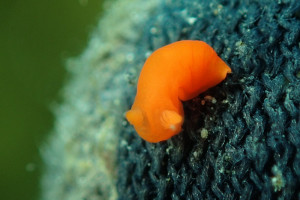
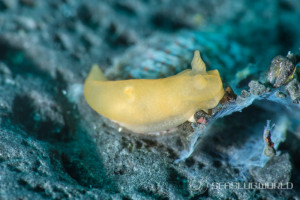
Photos of Gymnodoris subornata





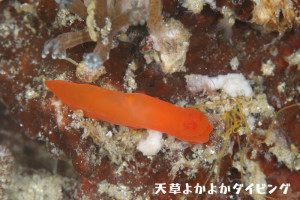

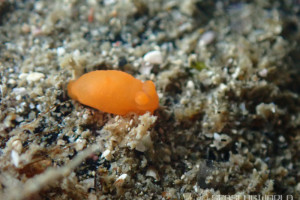

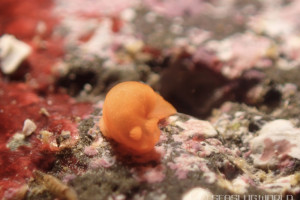

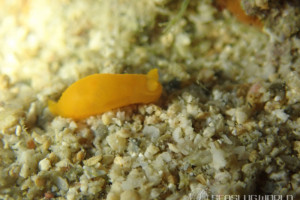




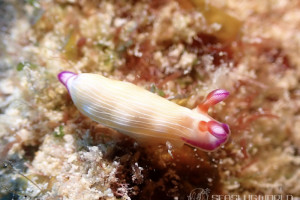
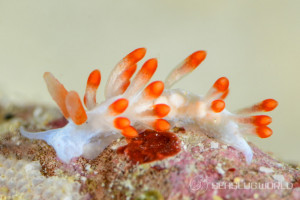
Same Genus Nudibranchs

Similar Colors Nudibranchs
Academic Database
Sea slug observation data is available in international marine biodiversity databases.