Hypselodoris insulana Gosliner & R. F. Johnson, 1999
Hypselodoris insulana
No field photograph submitted for this species yet
Have you photographed this species?Description
A medium-sized Hypselodoris reaching approximately 50 mm in length. The body is salmon pink with approximately 20 opaque white longitudinal lines running the length of the notum; some of the outer lines do not extend to the anterior end of the head. A purple band runs submarginally on the notum and on the sides of the body, extending posteriorly to the foot. A translucent band lies along the margin of the notum, through which the opaque white mantle glands are visible. The gills are opaque white basally with a red-orange rachis in the distal two-thirds. The rhinophores have an irregular red-orange band basally, a white area with some red orange medially, another red-orange band sub-apically and a white apex. Behind the rhinophores are two patches of lighter, more translucent pigment through which the eyes are visible. The head is distinctly spatulate, an important diagnostic character.The posterior end of the mantle has approximately 40 slightly enlarged glands, and about 10 small anterolateral glands are present on each side of the head; anterior and lateral glands are absent. The radular formula in one specimen is 65×72.0.72, lacking rachidian teeth. The jaw rodlets are elongate and quadrangular in cross section; the undivided cusps lack lateral flanges. The inner lateral teeth have 1-3 denticles on the inner side of the bifid cusps and two denticles on the outside. The middle laterals have 3-5 denticles on the outer side of the bifid cusps, and the outer laterals are thin and elongate with 2-5 elongate denticles. The penial sac is massive in this species, a key autapomorphy. The minute, short pyriform receptaculum seminis has a short duct attached to the middle of the vaginal duct.
Distribution
Known only from Midway Atoll and Kure Atoll on the leeward side of the Hawaiian Archipelago. Type locality: NE side of Sand Island, Inner Harbour, Midway Atoll (1-10 m depth).Etymology
Verbatim from the original description (Gosliner, Johnson & Andersson, 1999, Zoological Journal of the Linnean Society 125: p.36):The name insulana is from the Latin for islander, referring to its apparent geographical restriction to the leeward atolls of the Hawaiian Archipelago.
Remarks
Described in a 1999 revision. The colour pattern of H. insulana is very similar to that of its sister species, H. andersoni Bertsch & Gosliner, 1989. H. insulana lacks the small black spots usually present in H. andersoni, has a distinctly spatulate head (vs. roughly linear in H. andersoni), and reaches 50 mm in length while H. andersoni does not exceed 15 mm and produces egg masses at 7 mm. H. insulana is also closely related to H. violabranchia, H. maculosa (Pease, 1871) and H. alboterminata; H. insulana and H. violabranchia share a pinkish body with longitudinal opaque white lines and a purple margin, but in H. violabranchia the purple margin is discontinuous and only present anteriorly and posteriorly. H. insulana has two red bands on the rhinophores while H. violabranchia has only a single basal band. H. insulana is the only species in the clade with a massive penial sac.References
- Hypselodoris insulana sp. nov., Gosliner T.M. & Johnson R.F. (1999). Phylogeny of Hypselodoris (Nudibranchia: Chromodorididae) with a review of the monophyletic clade of Indo-Pacific species, including descriptions of twelve new species. Zoological Journal of the Linnean Society. 125: 1-114. https://doi.org/10.1111/j.1096-3642.1999.tb00585.x
- Hypselodoris insulana, Johnson R.F. & Gosliner T.M. (2012). Traditional taxonomic groupings mask evolutionary history: a molecular phylogeny and new classification of the chromodorid nudibranchs. PLoS ONE 7(4): e33479.
- ハワイイロウミウシ(新称), スーザン・ミドルトン他. (2015). 海の美しい無脊椎動物. 創元社.
Featured in this book
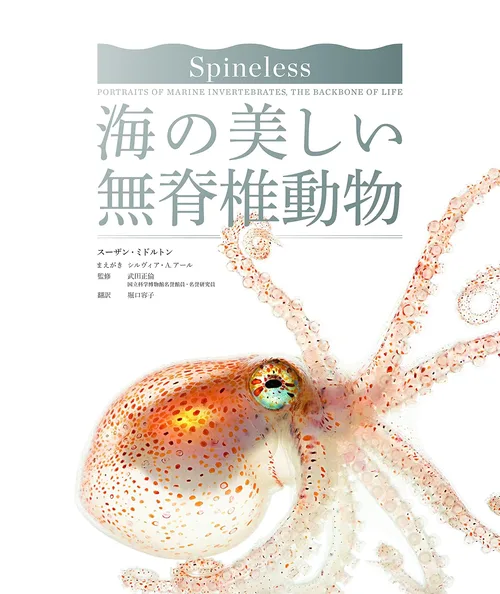
スーザン・ミドルトン他. (2015). 海の美しい無脊椎動物. 創元社.
創元社
This species, Hypselodoris insulana, is included in the book.
View on Amazon PR (Amazon Associates)Seasonality
Shooting Locations
Loading shooting locations...
Same Genus Nudibranchs

Similar Colors Nudibranchs
Academic Database
Sea slug observation data is available in international marine biodiversity databases.