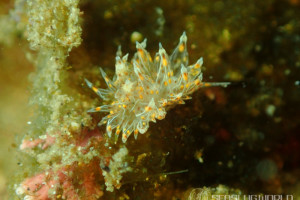
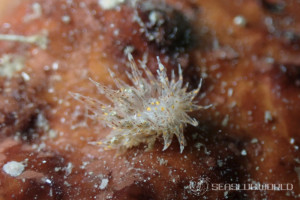
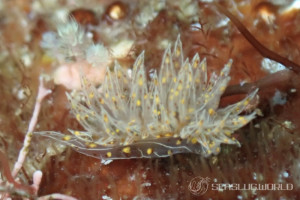
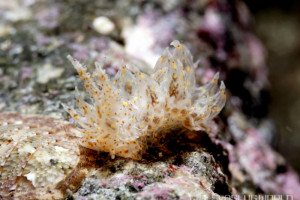
Janolus indicus (Eliot, 1909)
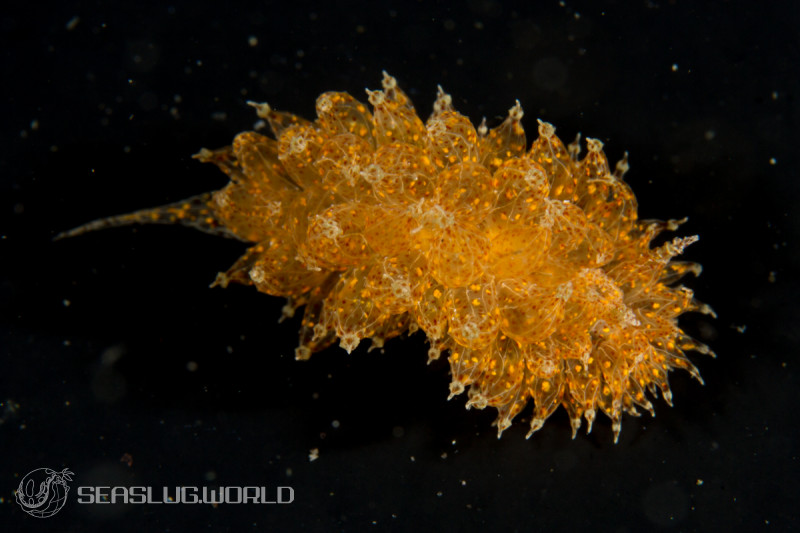
- Location
- Futou beach, Tago, Futou, Dougashima, Shizuoka, Japan
- Date
- 2016/10/13
- Length
- 30mm
- Depth
- 5.0m
- Water temperature
- 23.1℃
Description
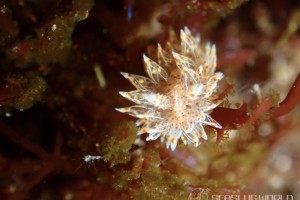
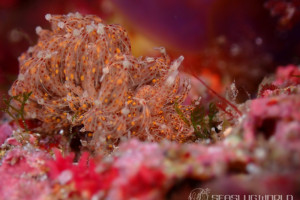
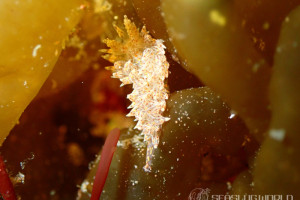
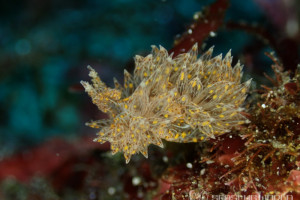
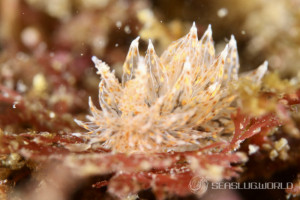
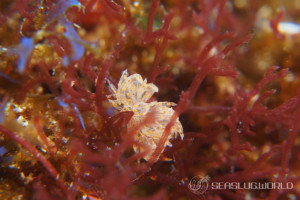
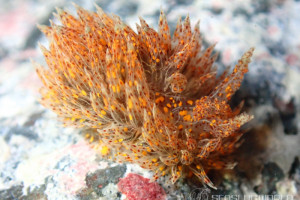
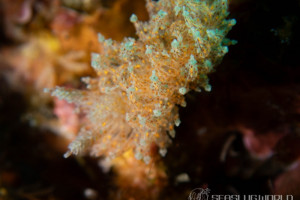
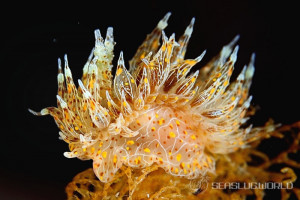
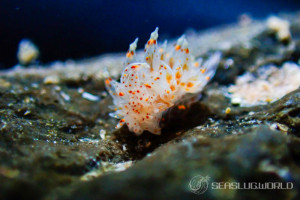
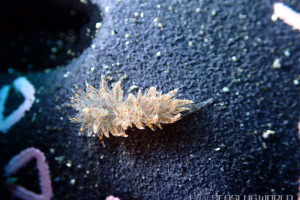
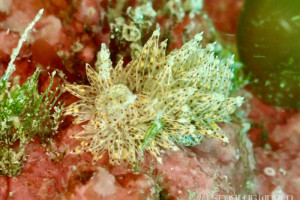
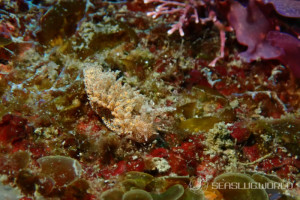
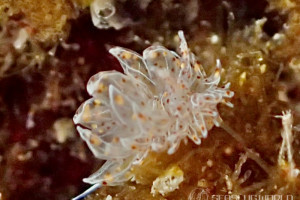
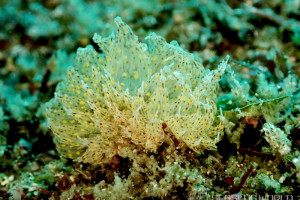
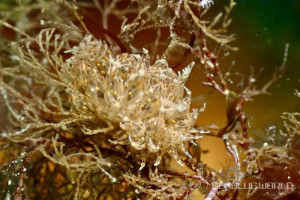
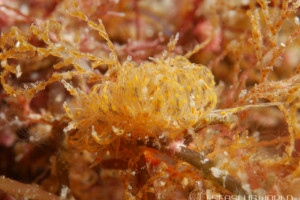
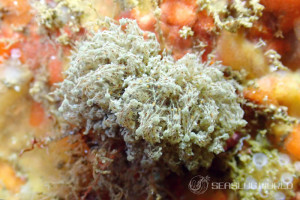
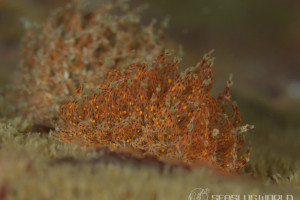
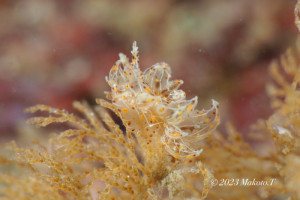
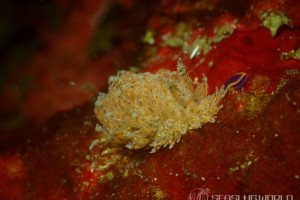
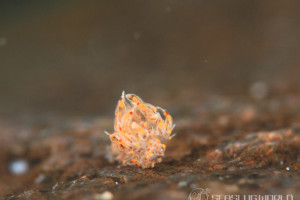
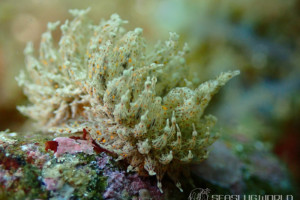
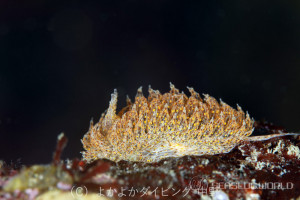
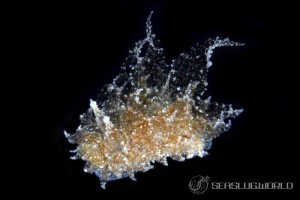
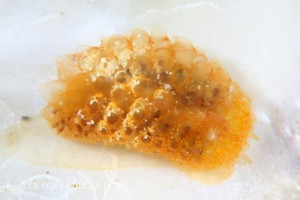
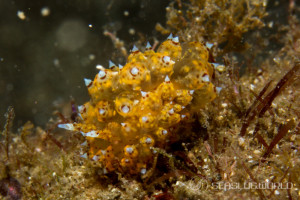
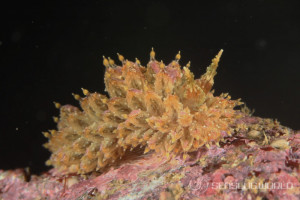
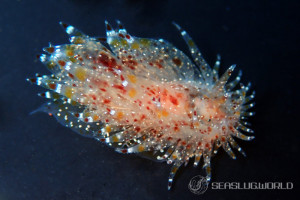
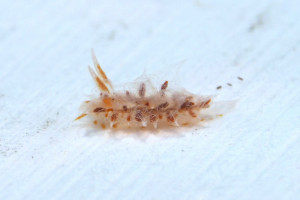
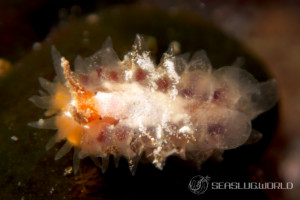
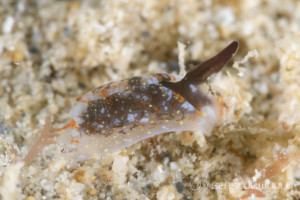
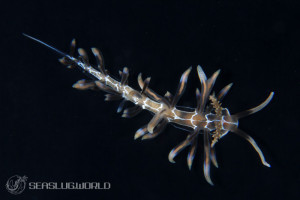
Reaches about 30 mm in length when alive. The general ground color is brownish yellow with dark brown (chocolate brown) minute spots scattered on the back, rhinophores, inter-rhinophorial crest, branchial papillae and sides; the central region of the back additionally bears orange-yellow spots and a fine network of opaque white. The sole is brownish yellow with dark brown spots and an opaque-white network. The rhinophores carry minute conical papillae on the upper part of their posterior surface. The branchial papillae are smooth, with a branched liver diverticulum running into each. The cutting edge of each jaw plate bears two or three blunt denticles. The radula is much reduced, with a formula of approximately 40 × 15-20 · 1 · 15-20; the central tooth and the lateral teeth are all smooth.Distribution
The type locality is Okhamandal on the Kathiawar Peninsula, Gujarat, India, where Eliot in 1909 described the species as Antiopella indica. In Japan, a single specimen (30 mm alive) collected at Tamagawa on the Echizen Coast, Fukui Prefecture, on 13 August 1966 by the Takaoka Biological Club, was figured and recorded by Baba 1986 as Janolus indicus.Etymology
The specific epithet indicus is Latin for "of India," referring to the type locality at Okhamandal on the Kathiawar Peninsula of Gujarat, India.Remarks
The species was originally described by Eliot 1909 as Antiopella indica and was subsequently transferred to Janolus. Baba 1986 confirmed that the Tamagawa specimen agreed with the type of J. indicus in its dark-brown spotted body color and in the morphology of its denticulated jaw plates and smooth radular teeth. The Japanese name "Tamagawa-koyanagi-umiushi" was proposed by Baba 1986 for the Japanese specimen, after the locality of Tamagawa on the Echizen Coast, Fukui Prefecture. Members of Janolidae feed on bryozoans, unlike most other nudibranchs.References
- Janolus indicus (Eliot, 1909); Antiopella indica Eliot, 1909 [Tamagawa-koyanagi-umiushi], Baba K. (1986). Janolus in Japan. Shells and Sea Life. 18(11): 182-184.
- 高岡生物研究会. (2002). 日本海のウミウシ. 第2版.
A Kindle field guide by the site author
Kimoto N. (2026). Sea Slugs of Japan & the Indo-Pacific, 2nd Edition.
Kindle Edition
View on Amazon PR (Amazon Associates)Seasonality
Shooting Locations
Loading shooting locations...
Photos of Janolus indicus
Tag:

























Same Genus Nudibranchs
Similar Colors Nudibranchs
Academic Database
Sea slug observation data is available in international marine biodiversity databases.