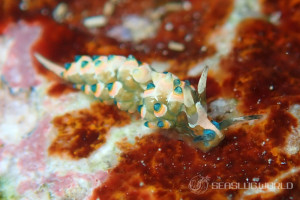
Marioniopsis arborescens (Bergh, 1890)
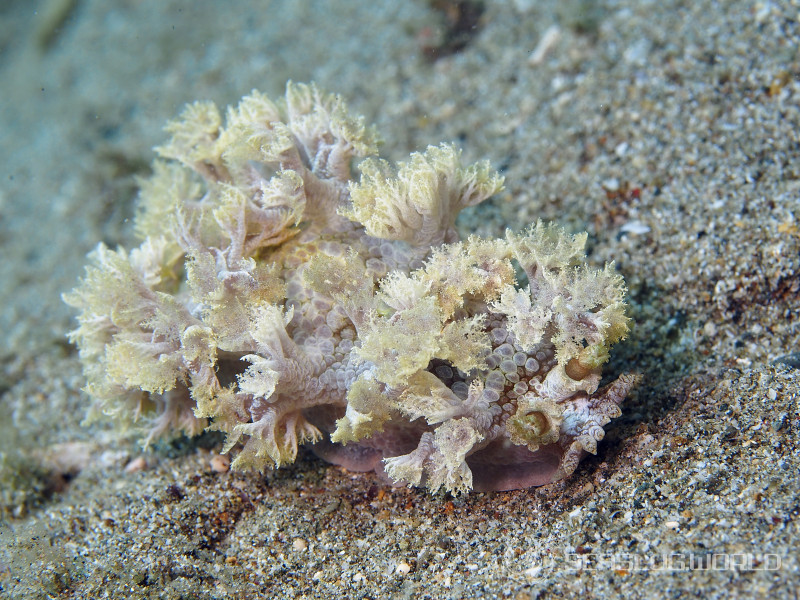
- Location
- Anilao, Philippines
- Date
- 2024/03/22
- Length
- 100mm
- Depth
- 7.0m
- Water temperature
- 26.0℃
Description
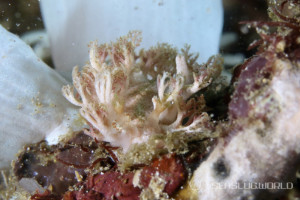
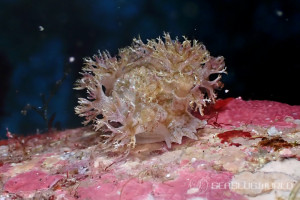
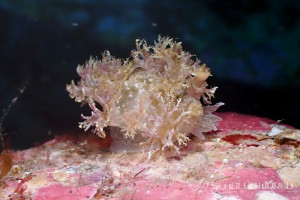
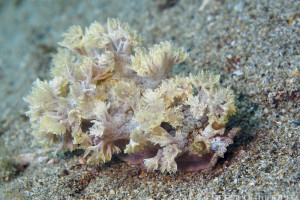
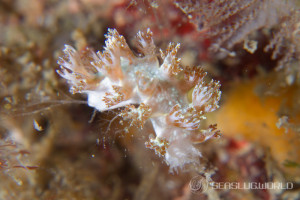
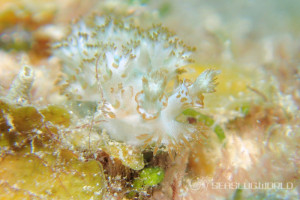
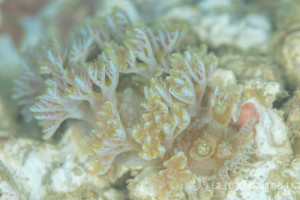
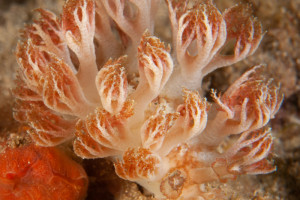
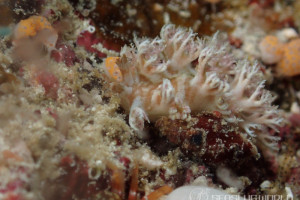
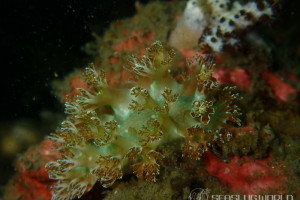
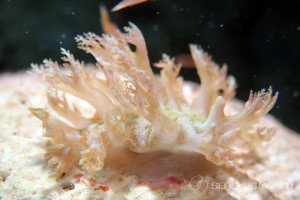
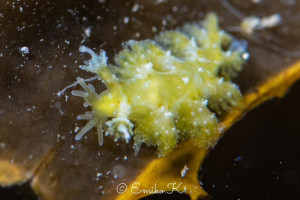
A medium-sized marioniopsid. In alcohol, body length 4-6 cm with maximum width about 1.9 cm. The colour is pale yellowish-green or greenish-yellow; the gill leaves more strongly green; the head and the sole of the foot dirty yellowish-white. The frontal margin bears simple finger-shaped marginal papillae of unequal size. Outside them stand the finger-shaped oral tentacles with a deep groove on the underside. Postero-laterally on the neck are the rhinophore sheaths, with the deeply retracted club of the usual tassel-shape bearing five bipinnate leaves. The dorsum is rather broad and fairly flat, covered all over with small to medium-sized rounded or short-conical knobs. The dorsal margin projects as a thin border, and from it issue the gills at progressively shorter intervals to the rear. The number of gills is usually 4 on each side, rarely up to 10; they branch tree-like, the terminal branches bipinnate.Distribution
Type locality: Amboina (Ambon, Indonesia). Distributed across the Indo-West Pacific in coral-reef sand and rubble habitats.Etymology
The Latin arborescens is the present participle of arborescere ("to become tree-like"), in reference to the tree-like branching of the gills.Remarks
Originally described as Marionia arborescens and later transferred to Marioniopsis; the parentheses in the author citation reflect this transfer. Like other tritoniids, this species is a carnivorous predator of cnidarians (octocorals).References
- Marionia arborescens, Terrence Gosliner, Ángel Valdés and David Behrens. (2015). Nudibranch and Sea Slug Identification Indo-Pacific. New World Pubns Inc.
- シンリンウミウシ(新称), 中野理枝. (2018). 日本のウミウシ. 文一総合出版.
- Marioniopsis arborescens, Gosliner, T. et al. (2023). Southern African Sea Slugs. Southern Underwater Research Group Press, 7 Blackwood Drive, Hout Bay 7806, Cape Town, South Africa.
Featured in this book
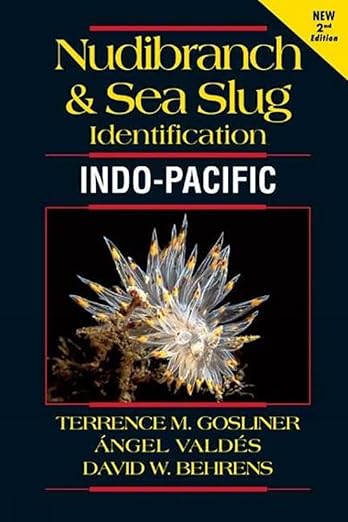
Terrence Gosliner, Ángel Valdés and David Behrens. (2018). Nudibranch and Sea Slug Identification Indo-Pacific 2nd Edition. New World Pubns Inc.
New World Publications
This species, Marioniopsis arborescens, is included in the book.
View on Amazon PR (Amazon Associates)Seasonality
Shooting Locations
Loading shooting locations...
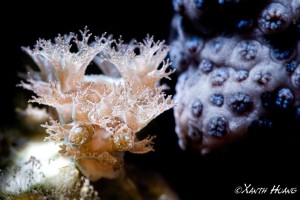
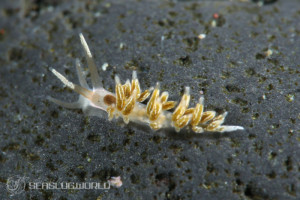
Photos of Marioniopsis arborescens


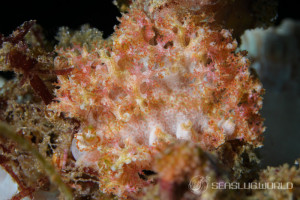

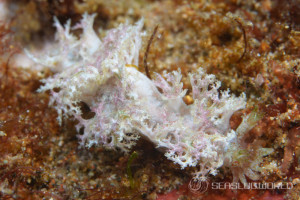
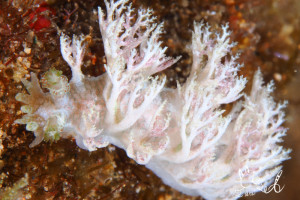

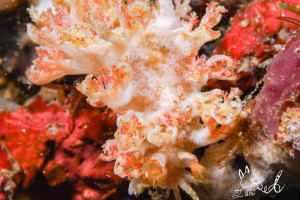









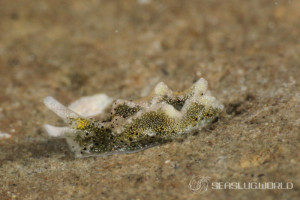
Same Genus Nudibranchs
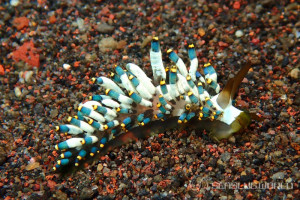
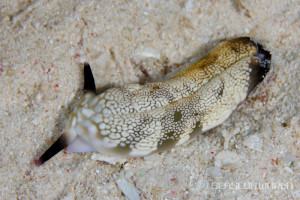
Similar Colors Nudibranchs


Academic Database
Sea slug observation data is available in international marine biodiversity databases.