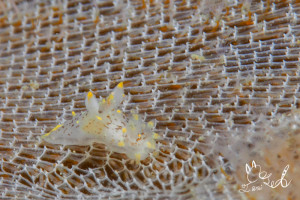
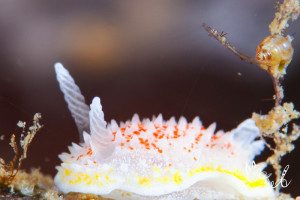
Melanochlamys ezoensis (Baba, 1957)
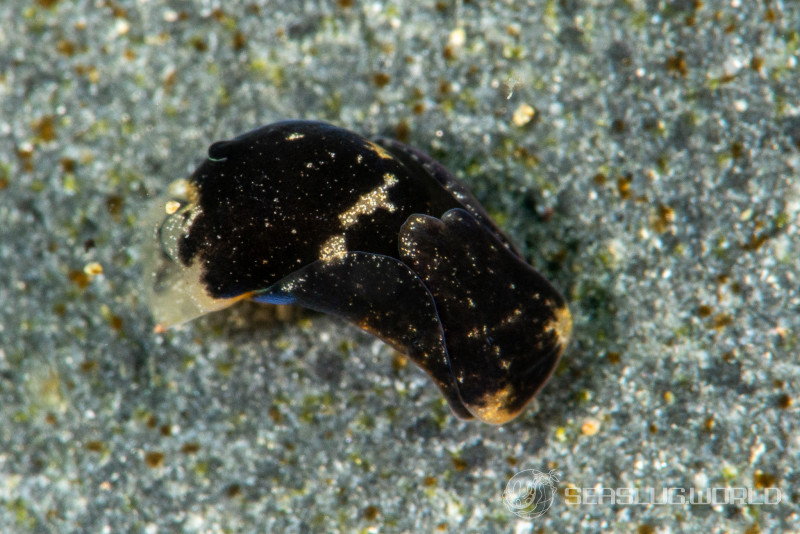
- Location
- HIsui Beach, Etchumiyazaki, Toyama, Japan
- Date
- 2020/05/28
- Length
- 2mm
- Depth
- 5.0m
- Water temperature
- 17.0℃
Description
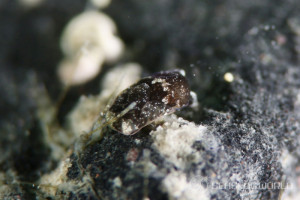
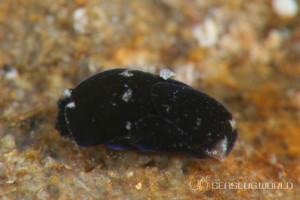
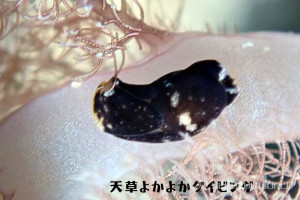
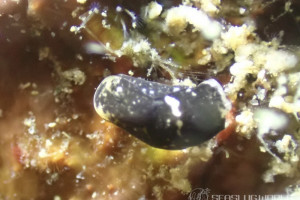
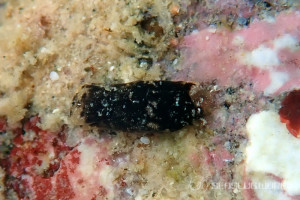
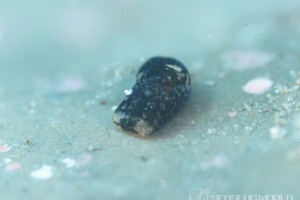
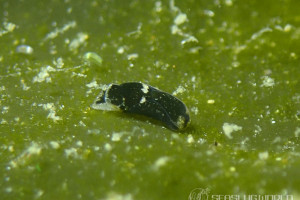
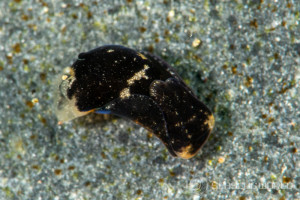
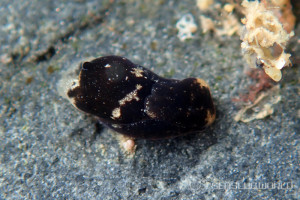
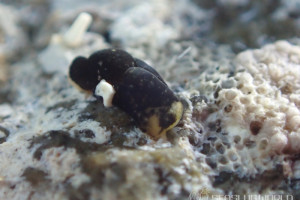
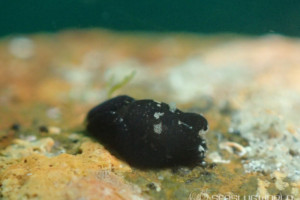
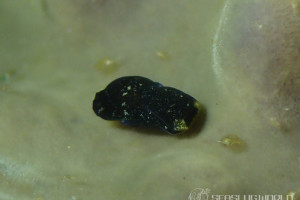
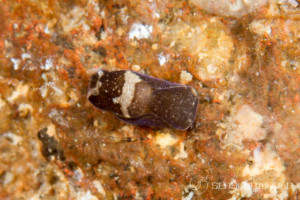
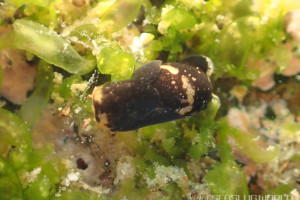
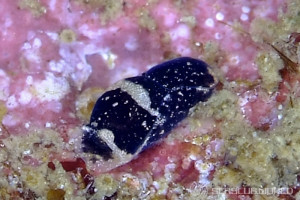
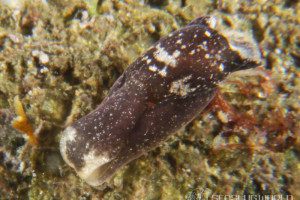
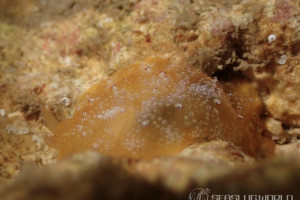
A small cephalaspid, live length 5-15 mm. Body elongate-oval; the posterior lobes of the mantle shield are subequal in size. The cephalic shield is almost rectangular and occupies more than half of body length. The visceral region elongates posteriorly into two equal short tails. General ground colour ashy yellow, but almost everywhere (except the foremost region of the head and the free posterior margin of the two shields) covered with small irregular blackish-brown speckles; the sole is similarly speckled. The penis bears a cuticularised apical spine that narrows distally to a sharp point.Distribution
Type locality: Akkeshi, Hokkaido, Japan. The species ranges through temperate to cold waters of Japan from Hokkaido to Chiba Prefecture, and is also known from Peter the Great Bay (Russian Far East). Specimens from San Francisco Bay (USA) have been identified as this species; the absence of records prior to 2001 suggests human-mediated introduction.Etymology
The specific epithet ezoensis is a toponymic adjective referring to Ezo (蝦夷), the historical name for Hokkaido, where the type locality Akkeshi is situated.Remarks
Originally placed in Aglaia; currently accepted in Melanochlamys. Once treated as a junior synonym of the northeast Pacific Melanochlamys diomedea, but morphology and three gene markers (COI, 16S, H3) confirmed specific distinctness; two further close relatives, Melanochlamys fukudai (Japan) and Melanochlamys kohi (Korea), have since been described, raising known North Pacific diversity to at least four species.References
- Ezo-kisewata (n. n.), Baba, K. 1957. A revised list of the species of Opisthobranchia from the northern part of Japan, with some additional descriptions. J. Fac. Sci., Hokkaido Univ.,ser. 6, Zool. 13(1-4):8-14.
- Cooke S., Hanson D., Hirano Y., Ornelas-Gatdula E., Gosliner T.M., Chernyshev A.Y. & Valdés A. (2014) Cryptic diversity of Melanochlamys sea slugs (Gastropoda, Aglajidae) in the North Pacific. Zoologica Scripta 43: 351-369.
A Kindle field guide by the site author
Kimoto N. (2026). Sea Slugs of Japan & the Indo-Pacific, 2nd Edition.
Kindle Edition
View on Amazon PR (Amazon Associates)Seasonality
Shooting Locations
Loading shooting locations...
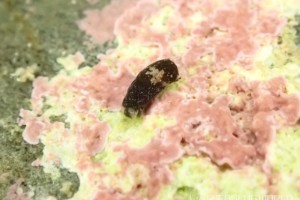
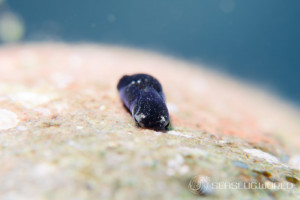
Photos of Melanochlamys ezoensis











Same Genus Nudibranchs
Similar Colors Nudibranchs

Academic Database
Sea slug observation data is available in international marine biodiversity databases.