Phyllidia goslineri Brunckhorst, 1993
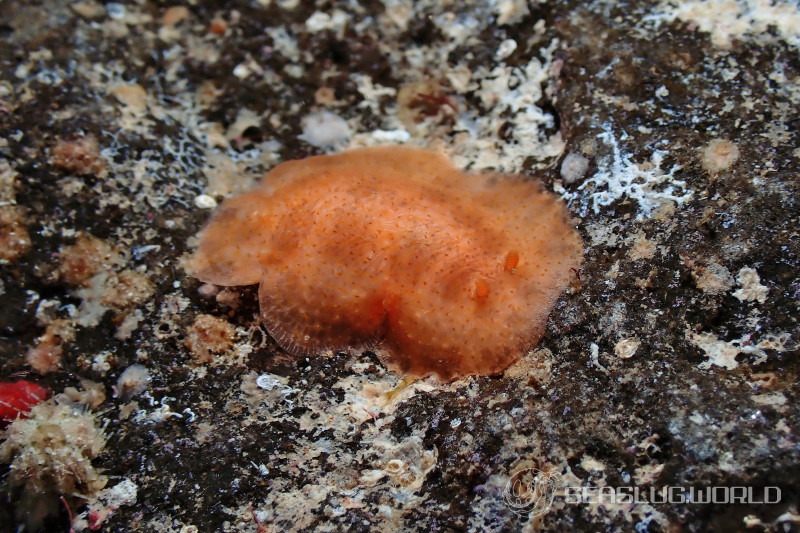
- Location
- Hachijo Island, Tokyo, Japan
- Date
- 2024/11/04
- Length
- 14mm
- Depth
- 3.0m
- Water temperature
- 25.9℃
Description
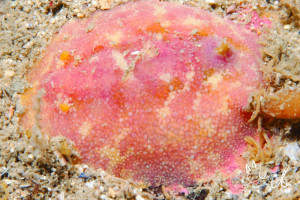
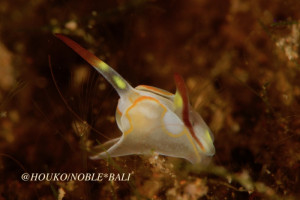
Known only from a 14 mm holotype. The dorsum is cream to pale brown with irregular tan-coloured blotches spread over the entire notum. Innumerable minute, dark brown spots are evenly distributed over the dorsum. In the live specimen the bright red digestive gland mass is visible medially through the semi-transparent notum. Notal tubercles are very small and rounded, and reflect the colour of their immediate background. The rhinophores are cream and somewhat club-shaped, bearing 16–17 broad lamellae. The ventral surfaces, foot and digitate oral tentacles are entirely cream.Distribution
Known only from a single specimen collected at Planet Rock, Madang, Papua New Guinea (12–20 m), by Dr T.M. Gosliner.Etymology
Verbatim from the original description (Brunckhorst, 1993, p.42):This species is named in honour of Dr T.M. Gosliner.
Remarks
Described as a new species in Brunckhorst, D.J. 1993 Records of the Australian Museum, Supplement 16: 1-107. The author stated: "Phyllidia goslineri has characteristic colouration consisting of a translucent cream notum with irregular brown (tan) coloured blotches and numerous minute, dark brown dots. The club shaped rhinophores, foot and oral tentacles are all cream in colour ... To my knowledge, there are no other Phyllidia species with brown colouration" (p.42). P. scottjohnsoni and Phyllidiopsis loricata share cream rhinophores but have pointed (not club-shaped) rhinophores and differ markedly in tubercle pattern.References
Featured in this book
中野理枝. (2019). 日本のウミウシ. 第二版. 文一総合出版.
文一総合出版
This species, Phyllidia goslineri, is included in the book.
View on Amazon PR (Amazon Associates)Seasonality
Shooting Locations
Loading shooting locations...
Photos of Phyllidia goslineri

Same Genus Nudibranchs
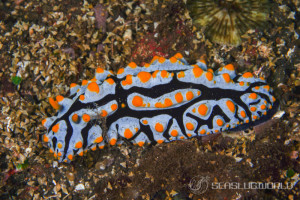
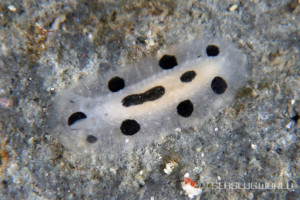
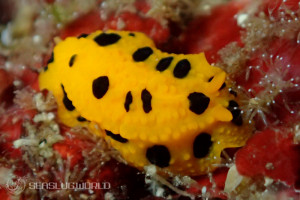
Similar Colors Nudibranchs

Academic Database
Sea slug observation data is available in international marine biodiversity databases.