Phyllodesmium iriomotense Baba, 1991
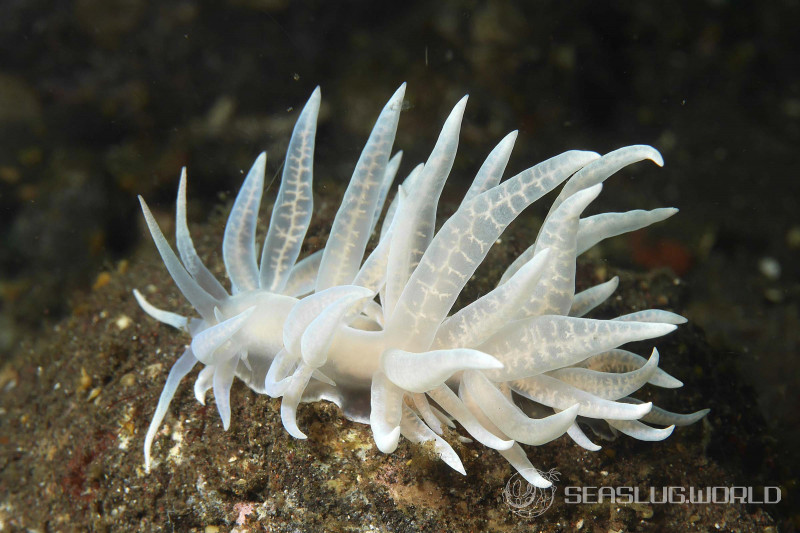
- Location
- Sidem, Tulamben, Pulau Bali, Indonesia
- Date
- 2016/11/19
- Length
- 30mm
- Depth
- 23.0m
- Water temperature
- 28.0℃
Description
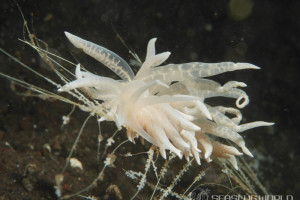
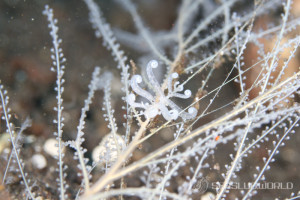
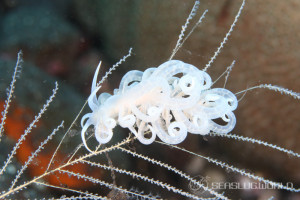
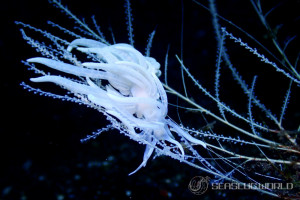
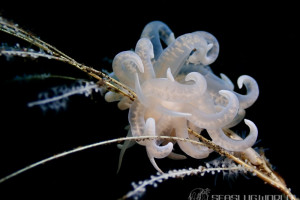
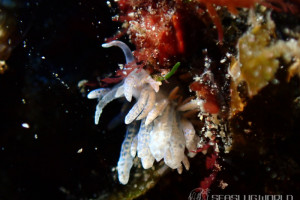
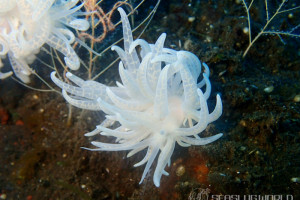
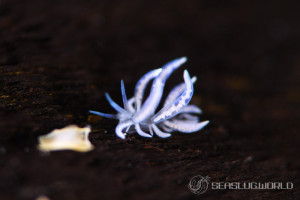
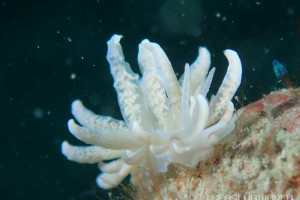
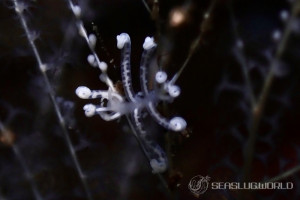
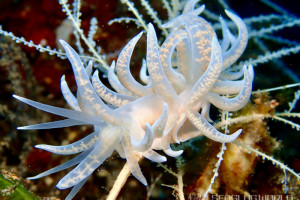
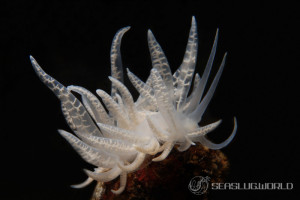
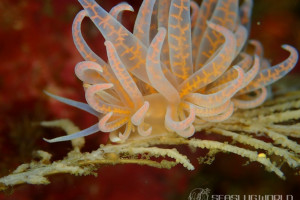
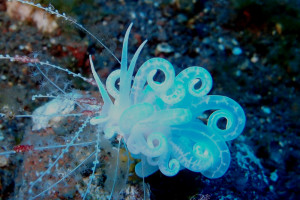
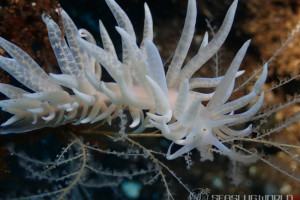
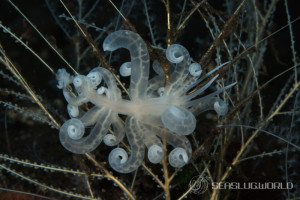
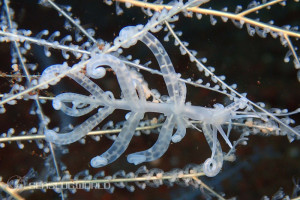
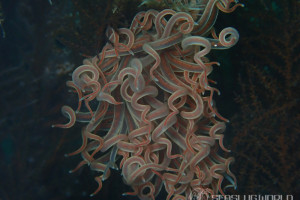
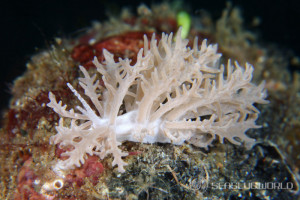
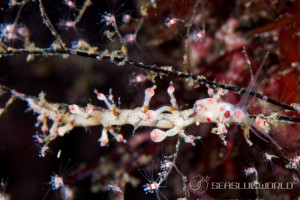
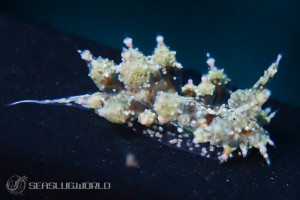
A Phyllodesmium in which the cerata are exceedingly elongate, almost straight to their tips, and entirely smooth (non-nodulose). The cerata are deciduous and flattened. In the preserved state both the oral tentacles and rhinophores are smooth. The foot corners are produced into short horns. The first and second ceratal arches on the right side of the body are each single-rowed. The anus is in the centre of the second right arch, and the nephroproct is in front of this arch. Unlike any other recorded species of the genus, the animal is translucent and entirely colourless. The colourless liver diverticula are visible through the translucent skin of the cerata. Within each ceras the narrow central canal of the liver system gives off bilateral branches regularly and at right angles to the central canal. No zooxanthellae are present in the liver system. Body length 20 mm in the preserved type.Distribution
Type locality: Funauki Bay (45 m depth), Iriomote-jima, Okinawa, southern Japan; the holotype was collected from a thread-like alcyonarian growing in mud.Etymology
The specific epithet iriomotense is a toponymic adjective ("of Iriomote") derived from the type locality, Iriomote-jima (Okinawa Pref.), with the neuter Latin locative suffix -ense agreeing with the neuter genus Phyllodesmium.Remarks
The long, almost straight and smooth cerata, together with the entirely unpigmented body lacking zooxanthellae, are the principal diagnostic features of this species within Phyllodesmium.References
A Kindle field guide by the site author
Kimoto N. (2026). Sea Slugs of Japan & the Indo-Pacific, 2nd Edition.
Kindle Edition
View on Amazon PR (Amazon Associates)Seasonality
Shooting Locations
Loading shooting locations...
Photos of Phyllodesmium iriomotense














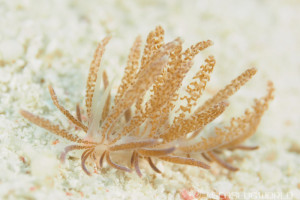

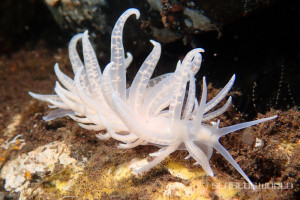

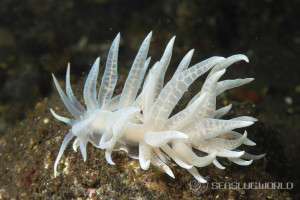

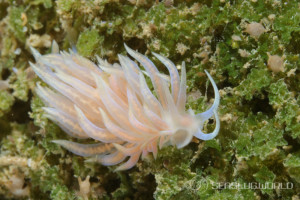

Same Genus Nudibranchs

Similar Colors Nudibranchs

Academic Database
Sea slug observation data is available in international marine biodiversity databases.