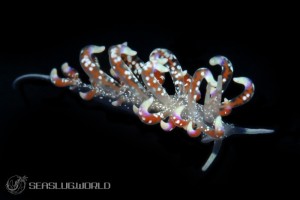
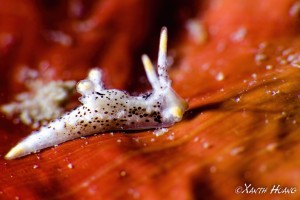
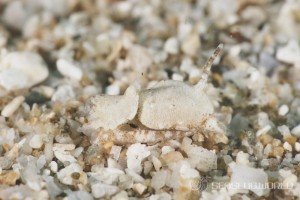
Phyllodesmium rudmani Burghardt & Gosliner, 2006
- Location
- Drop Off, Tulamben, Pulau Bali, Indonesia
- Date
- 2016/11/18
- Length
- 50mm
- Depth
- 8.0m
- Water temperature
- 28.0℃
Description
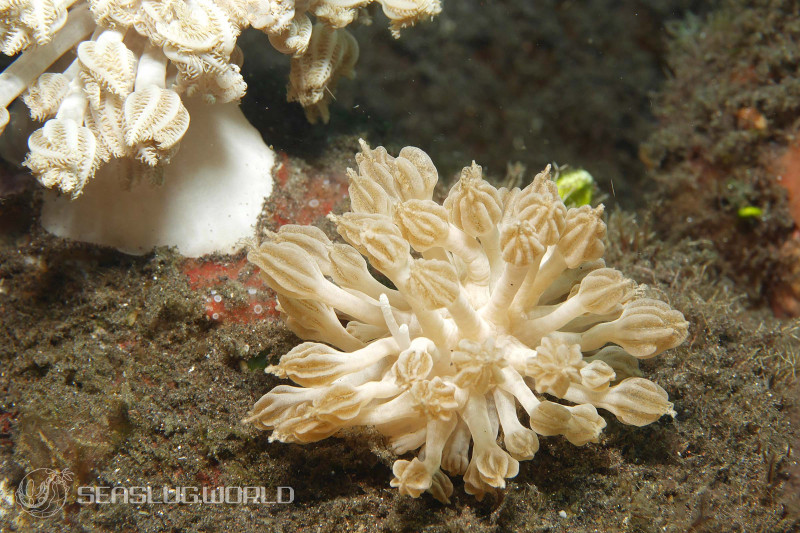
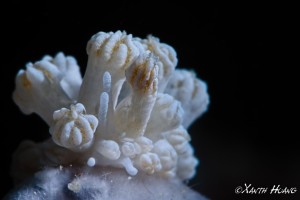
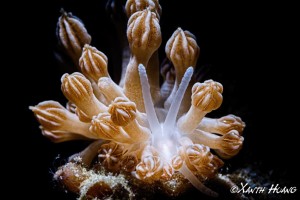
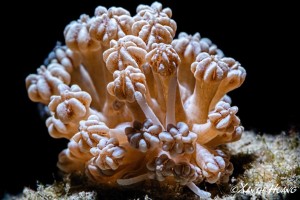
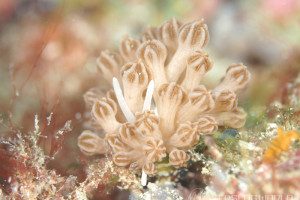
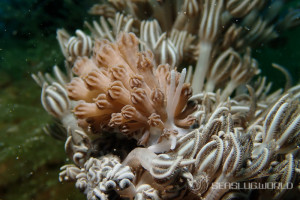
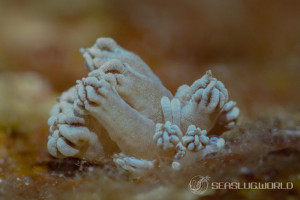
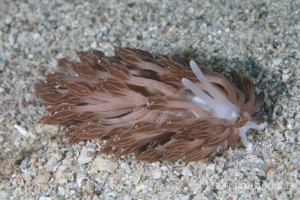
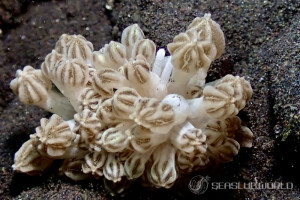
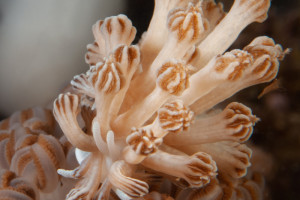
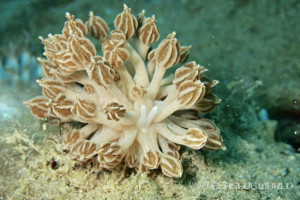
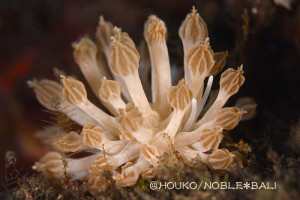
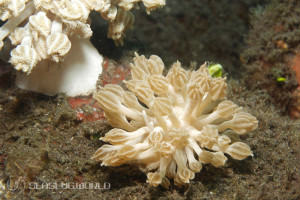
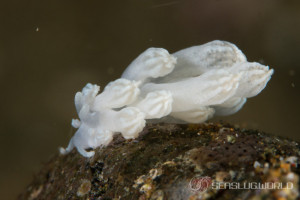
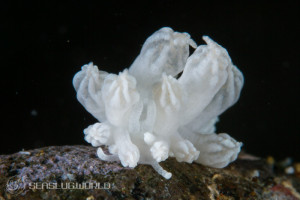
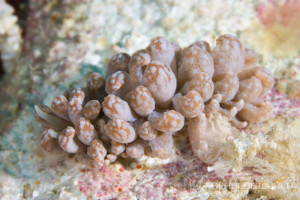
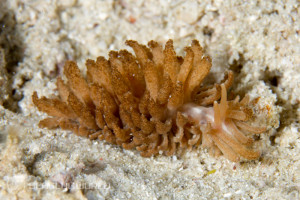
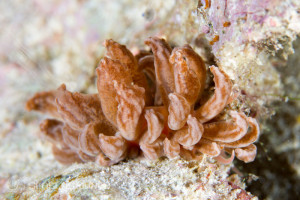
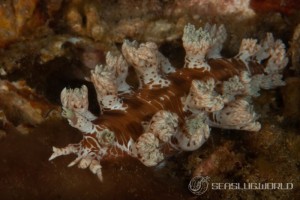
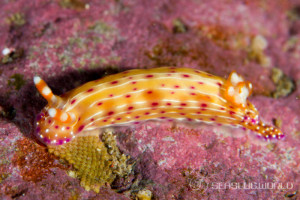
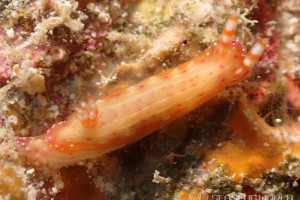
Living animals reach approximately 45 mm in length without cerata, with the body, rhinophores, oral tentacles, and foot translucent white. Forty to one hundred cerata are arranged in up to seven double clusters along each side of the body. Each ceras has a cream-coloured smooth basal part with longitudinal grooves and a slightly bulbous upper third that mimics a closed Xenia polyp in shape and colour. Up to ten cream ridges run from the basal part to the apex; between the ridges are dense aggregations of small brown dots representing zooxanthellae clusters within the digestive gland. Oral tentacles are smooth and shorter than the rhinophores; rhinophores are wrinkled but not lamellate.Distribution
Type locality: Arthur's Rock, Calumpan Peninsula, Batangas Province, Luzon, Philippines, 12 m depth (holotype CASIZ 103747, collected 22 February 1995 by Michael Miller). A paratype was collected at Pulau Talise, North Sulawesi, Indonesia, at 1 m depth on 23 July 2003 (ZSM Moll 20050285). Known only from the Philippines and northern Indonesia.Etymology
Verbatim from the original description (Burghardt & Gosliner, 2006, p.35):This species is dedicated to Dr. Bill Rudman, a great scientist and colleague who described the vast majority of Phyllodesmium species and is a pioneer in working onsolar powered" nudibranchs."
Remarks
P. rudmani lives deeply burrowed within colonies of the soft coral Xenia sp. (Xeniidae), with only the cerata protruding among the host's tentacles; each ceras mimics a single closed Xenia polyp in shape and colour, so that the entire animal blends almost perfectly into the colony. Usually only one individual is found per colony. Diving-PAM measurements have shown that the zooxanthellae housed within branched digestive gland tubules in the cerata maintain photosynthetic activity for more than three weeks under starvation, marking P. rudmani as a particularly well-developed example of a solar-powered nudibranch.References
- Phyllodesmium rudmani sp. nov., Burghardt I. & Gosliner T.M. (2006). Phyllodesmium rudmani (Mollusca: Nudibranchia: Aeolidoidea), a new solar powered species from the Indo-West Pacific with data on its symbiosis with zooxanthellae. Zootaxa. 1308: 31-47.
- Phyllodesmium rudmani, Terrence Gosliner, Ángel Valdés and David Behrens. (2015). Nudibranch and Sea Slug Identification Indo-Pacific. New World Pubns Inc.
- ラドマンミノウミウシ(新称), 中野理枝. (2018). 日本のウミウシ. 文一総合出版.
Featured in this book
Terrence Gosliner, Ángel Valdés and David Behrens. (2018). Nudibranch and Sea Slug Identification Indo-Pacific 2nd Edition. New World Pubns Inc.
New World Publications
This species, Phyllodesmium rudmani, is included in the book.
View on Amazon PR (Amazon Associates)Seasonality
Shooting Locations
Loading shooting locations...
Photos of Phyllodesmium rudmani











Same Genus Nudibranchs

Similar Colors Nudibranchs

Academic Database
Sea slug observation data is available in international marine biodiversity databases.