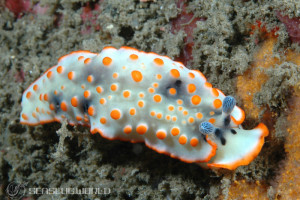
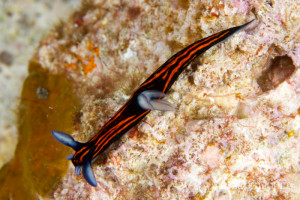
Reticulidia fungia Brunckhorst & Gosliner, 1993
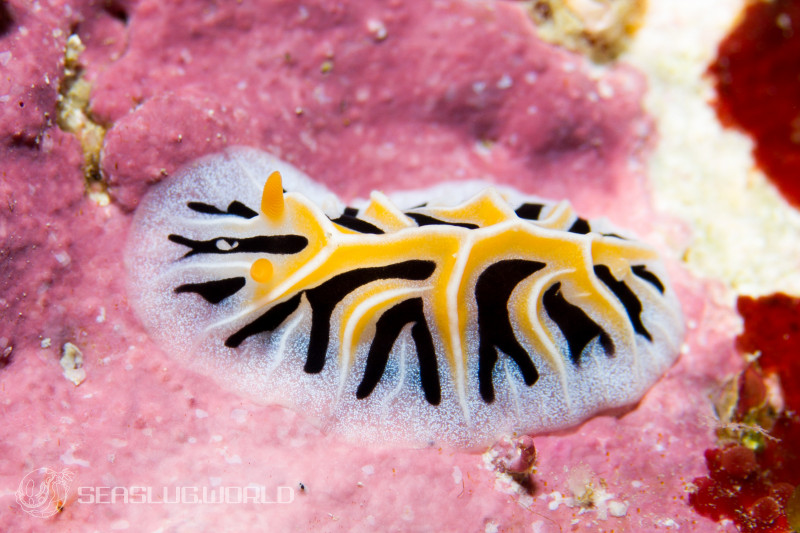
- Location
- Horse Shoes, Okinawa Island (Onna and Yomitan area), Okinawa, Japan
- Date
- 2015/12/10
- Length
- 25mm
- Depth
- 15.0m
- Water temperature
- 24.7℃
Description
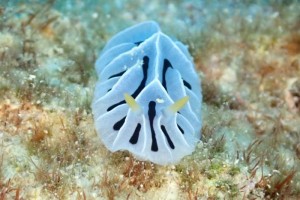
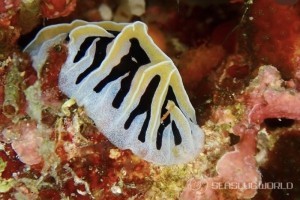
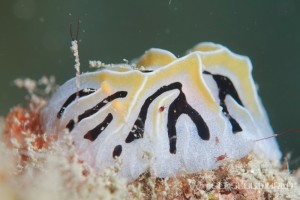
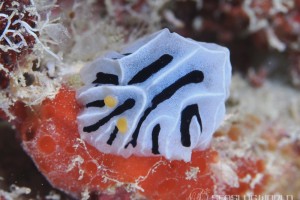
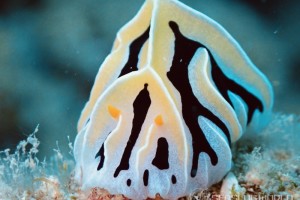
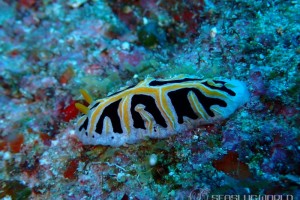
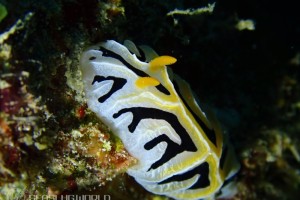
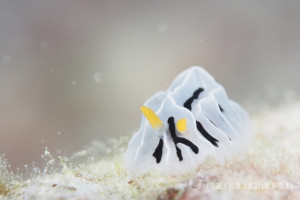
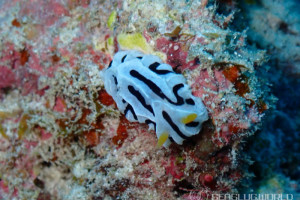
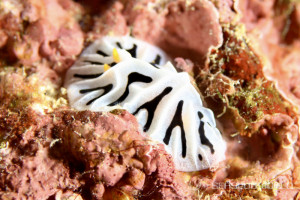
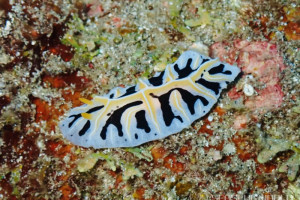
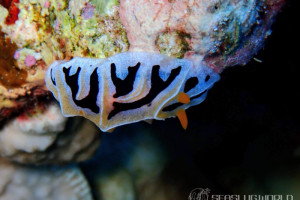
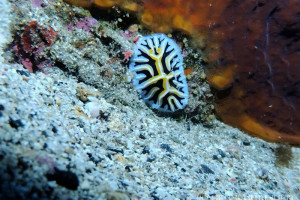
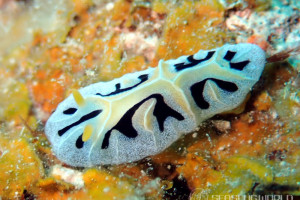
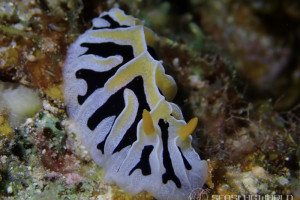
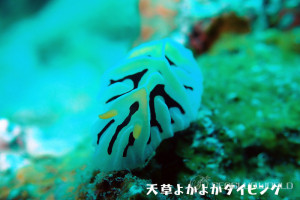
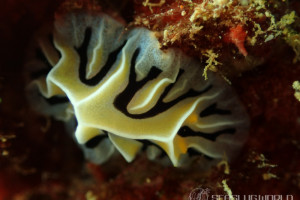
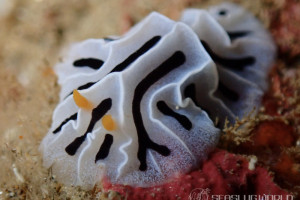
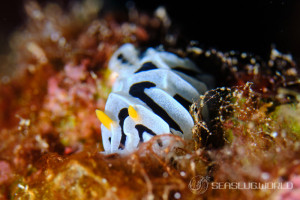
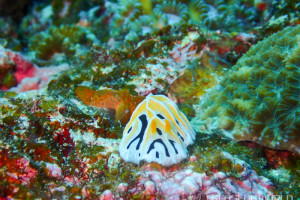
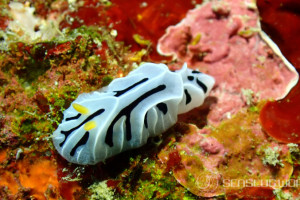
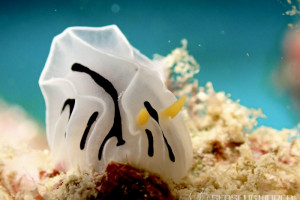
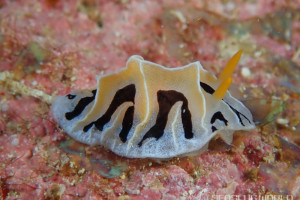
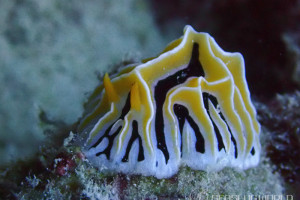
A reticuloid phyllidiid 18–42 mm long (mean 27 mm). The notum bears fewer broad-based, smooth, orange ridges, with the topmost edge and bases of the ridges bordered in white. The intervening background of the dorsum is black. A single median longitudinal ridge runs along the dorsum, from which other meandering secondary ridges arise; these do not run right to the edge of the notum. Anteriorly, the central ridge bifurcates, with each branch passing behind a rhinophore to the lateral margin. A broad blue-grey band borders the mantle margin. The rhinophores are pointed and orange with 14–18 lamellae (specimens 28–35 mm). The anus opens at the apex of a ridge. Ventrally, the foot is pale yellow with the orange digestive gland visible through it. A broad, sometimes broken, black line runs around the underside of the mantle (hyponotum) just above the gills. The oral tentacles are cylindrical and yellowish in live specimens.Distribution
Central and western Pacific Ocean, including Fiji and Micronesia, extending east to Australia and Taiwan. Also recorded from Christmas Island in the eastern Indian Ocean, sympatric with Reticulidia halgerda. Type locality: Barracuda Point, Madang, Papua New Guinea (25 m).Etymology
Verbatim from the original description (Brunckhorst, 1993, p.79-80):This species is named for the resemblance of the dorsal ridges to the septae of the solitary corals belonging to the family Fungiidae, genus Fungia.
Remarks
Described as a new species in Brunckhorst, D.J. 1993 Records of the Australian Museum, Supplement 16: 1-107 as the second species of the genus Reticulidia. The author stated in the Remarks that R. fungia is separable from R. halgerda "by having: broad based ridges which are fewer in number, the bases being finely bordered in white; a broad blue-grey mantle margin (narrow and orange in R. halgerda); paler colouration ventrally, a black line around the side of the foot just above the gills; rhinophores with 14-18 lamellae on the clavus (24-28 in R. halgerda); and penial spines which taper evenly to their apex" (p.79-80).References
A Kindle field guide by the site author
Kimoto N. (2026). Sea Slugs of Japan & the Indo-Pacific, 2nd Edition.
Kindle Edition
View on Amazon PR (Amazon Associates)Seasonality
Shooting Locations
Loading shooting locations...
Photos of Reticulidia fungia
Tag:








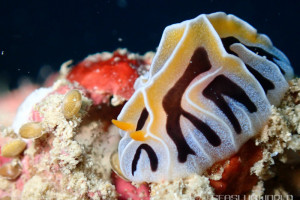

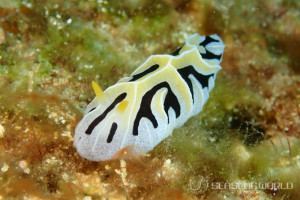
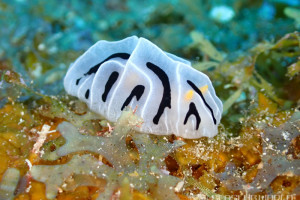

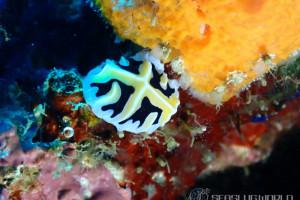














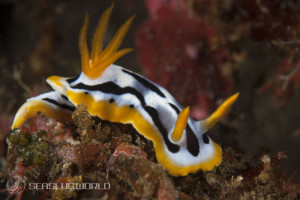
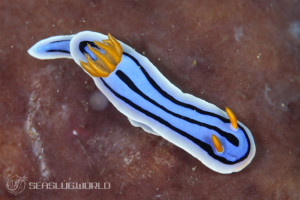
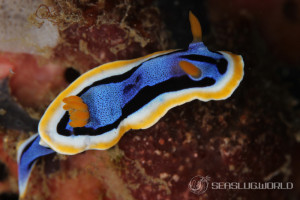
Same Genus Nudibranchs
Similar Colors Nudibranchs
Academic Database
Sea slug observation data is available in international marine biodiversity databases.