Samla takashigei Korshunova, Martynov, Bakken, Evertsen, Fletcher, Mudianta, H. Saito, Lundin, Schrödl & Picton, 2017
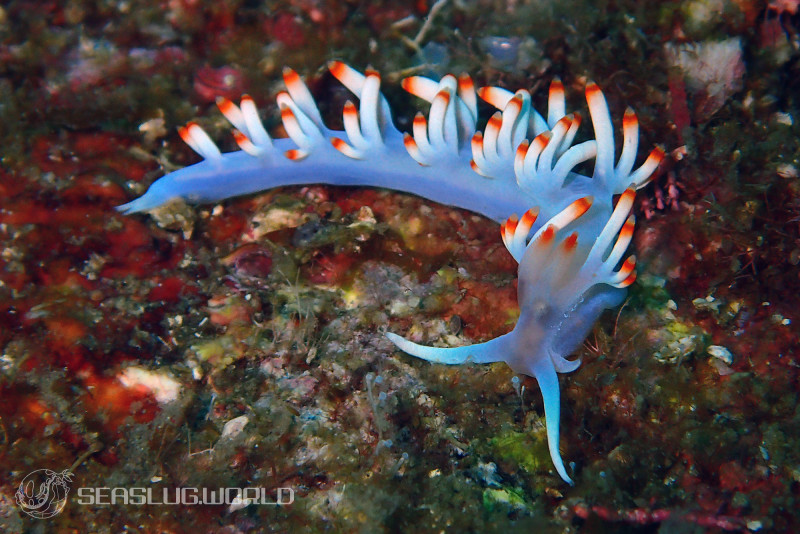
- Location
- Kanmuri Island, Kyoto, Japan
- Date
- 2020/10/03
- Length
- 25mm
- Depth
- 20.0m
- Water temperature
- 25.0℃
Description
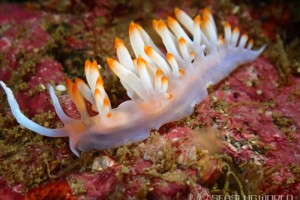
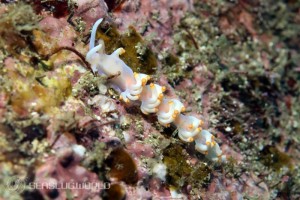
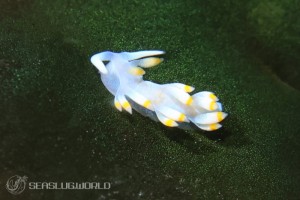
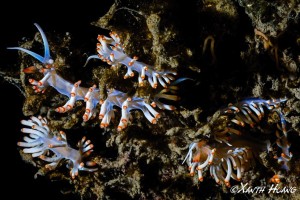
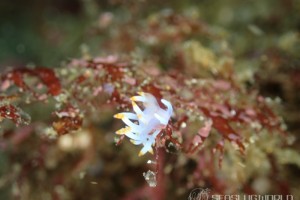
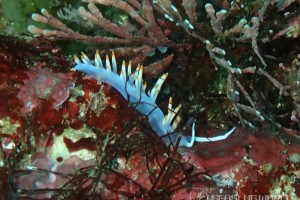
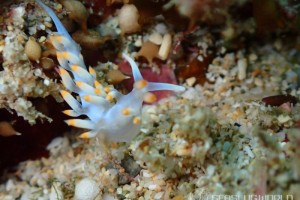
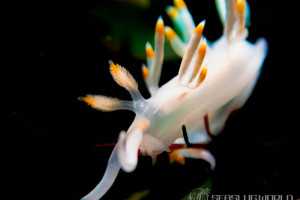
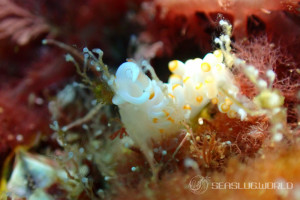
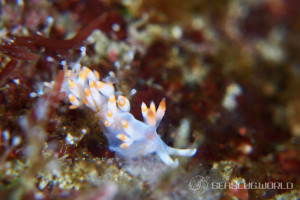
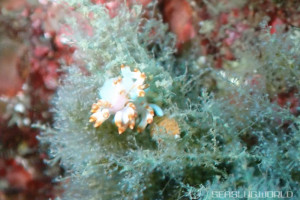
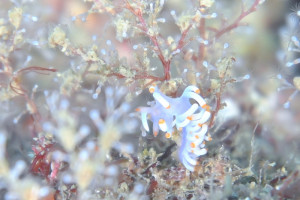
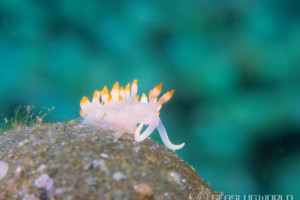
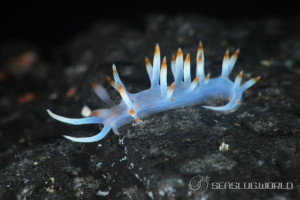
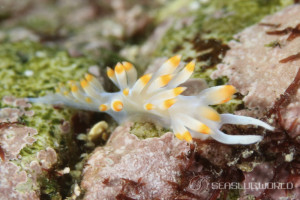
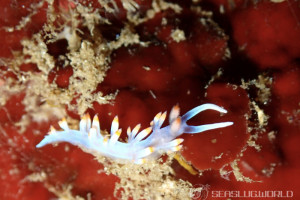
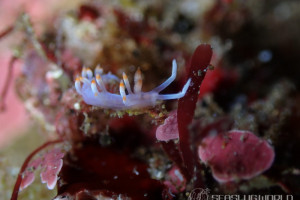
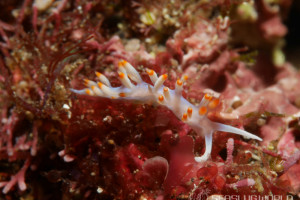
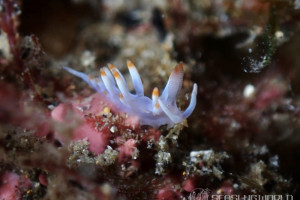
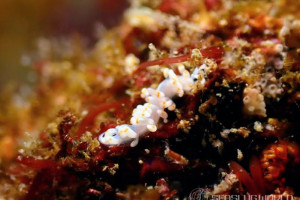
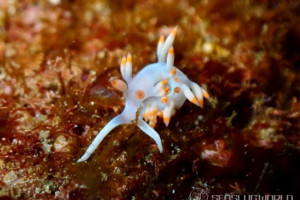
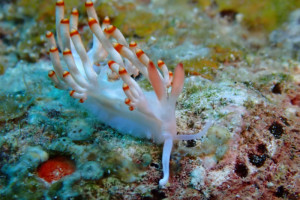
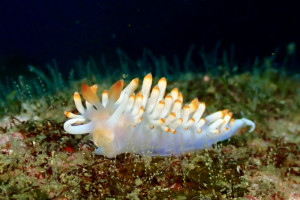
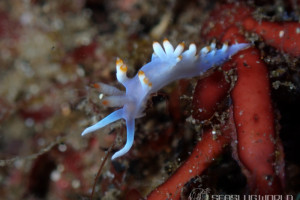
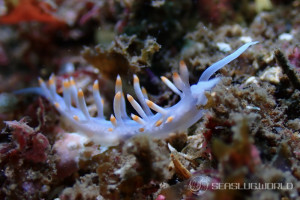
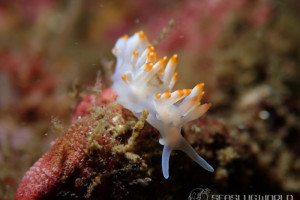
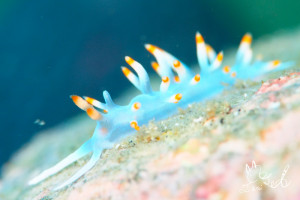
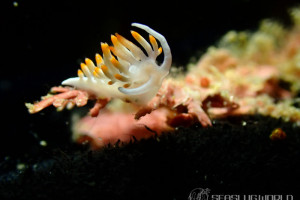
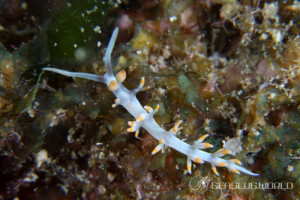
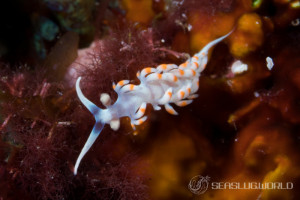
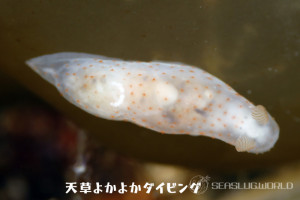
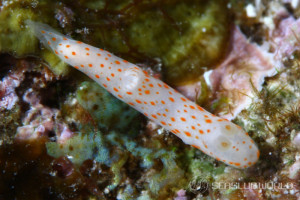
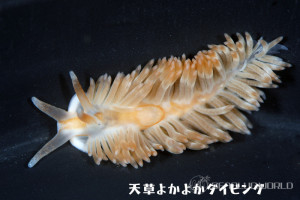
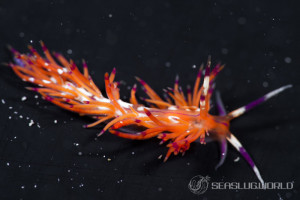
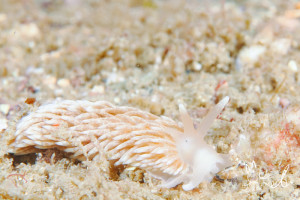
A slender medium-sized sea slug, up to 26 mm long. Background body colour is whitish with a bluish hue. The notal edge is considerably reduced, and the cerata are arranged in eight slightly elevated rows along the dorsum. Cerata are finger-shaped to fusiform with gradually pointed tips and elongate cnidosacs. The digestive gland diverticula are light brownish, while the subapical parts of the cerata are a brighter orange-brownish. Most of the ceras surface is covered with opaque white pigment, but the tips remain translucent. Oral tentacles are extremely long; the rhinophores are about six times shorter and are annulated. Anterior foot corners are long.Distribution
Type locality: Osezaki, Pacific coast of Honshu, Japan (Holotype ZMMU Op-530, 26 mm live, 10-15 m depth, collected 11 September 2016 by T.A. Korshunova & A.V. Martynov). Mainly known from the Pacific coast of Honshu.Etymology
Verbatim from the original description (Korshunova et al., 2017, p.63):Named in honour of Hiroshi Takashige (Tokyo), esteemed diver who is very fond of natural history and provided invaluable help during field collection in Osezaki, Japan.
Remarks
Described as a new species in a 2017 revision ZooKeys 717: 1-139, the major aeolidacean reassessment that also established the family Samlidae (new), to which the genus Samla belongs. The radula is triserial (formula 19 × 1.1.1, 26 mm specimen); the rachidian tooth bears 7-9 denticles, lateral teeth bear 6-8 denticles. The reproductive system is diaulic, with a long S-shaped vas deferens, a narrow penial sheath, and a small distal receptaculum seminis. The authors stated in their Remarks: "From all known species of the genus Samla, S. takashigei sp. n. differs by colour pattern and details of the radular teeth and these morphological differences are robustly supported by molecular data" (p.63).References
- サキシマミノウミウシ(新稱), 馬場菊太郎 & 濱谷巌. (1952). 紀州産後鰓類目録. 南紀生物. Supplement 1: 1-11.
- サキシマミノウミウシ Flabellina ornata, 生物學御研究所編. (1955). 相模湾産後鰓類図譜〈補遺〉. 岩波書店.
- サキシマミノウミウシ Flabellina bicolor, 益田一. (1999). 海洋生物ガイドブック. 第2刷. 東海大学出版会.
- サキシマミノウミウシ, 小野篤司. (1999). ウミウシガイドブック. TBSブリタニカ.
- サキシマミノウミウシ, 鈴木敬宇. (2000). ウミウシガイドブック〈2〉. TBSブリタニカ.
- サキシマミノウミウシ Austraeolis ornata, 奥谷喬司. (2000). 日本近海産貝類図鑑. 東海大学出版会.
- 高岡生物研究会. (2002). 日本海のウミウシ. 第2版.
- サキシマミノウミウシ, 小野篤司. (2004). 沖縄のウミウシ. ラトルズ.
- サキシマミノウミウシ, 中野理枝. (2004). 本州のウミウシ. ラトルズ.
- Flabellina bicolor, Terrence Gosliner, Ángel Valdés and David Behrens. (2015). Nudibranch and Sea Slug Identification Indo-Pacific. New World Pubns Inc.
- Samla takashigei sp. n., Korshunova T., Martynov A., Bakken T., Evertsen J., Fletcher K., Mudianta I.W., Saito H., Lundin K., Schrödl M. & Picton B. (2017). Polyphyly of the traditional family Flabellinidae affects a major group of Nudibranchia: aeolidacean taxonomic reassessment with descriptions of several new families, genera, and species (Mollusca, Gastropoda). ZooKeys. 717: 1-139. https://doi.org/10.3897/zookeys.717.21885
- オセザキミノウミウシ(新称), 中野理枝. (2018). 日本のウミウシ. 文一総合出版.
- サキシマミノウミウシ, 小野篤司 & 加藤昌一. (2020). 新版 ウミウシ. 誠文堂新光社.
Featured in this book

Terrence Gosliner, Ángel Valdés and David Behrens. (2018). Nudibranch and Sea Slug Identification Indo-Pacific 2nd Edition. New World Pubns Inc.
New World Publications
This species, Samla takashigei, is included in the book.
View on Amazon PR (Amazon Associates)Seasonality
Shooting Locations
Loading shooting locations...
Photos of Samla takashigei
Tag:




















Same Genus Nudibranchs
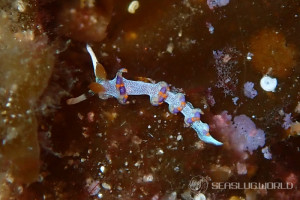

Similar Colors Nudibranchs

Academic Database
Sea slug observation data is available in international marine biodiversity databases.