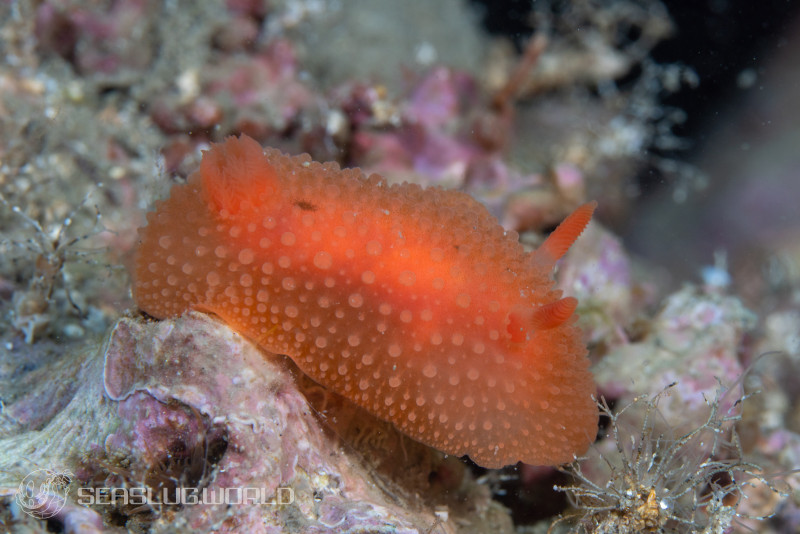
Aldisa cooperi Robilliard & Baba, 1972
- Location
- Yunokojima, Minamata, Kumamoto, Japan
- Date
- 2021/02/21
- Length
- 30mm
- Depth
- 10.0m
- Water temperature
- 14.0℃
Description
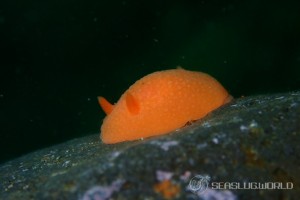
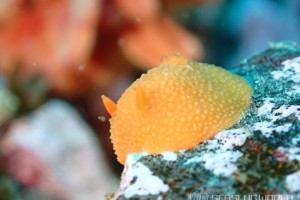
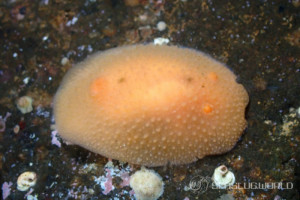
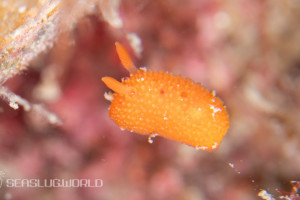
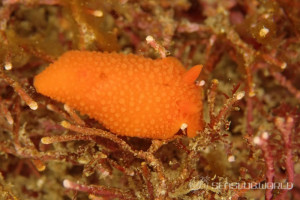
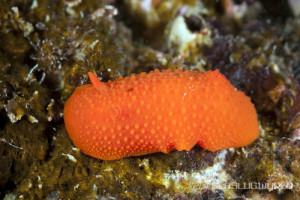
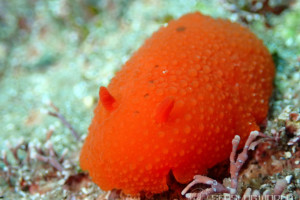
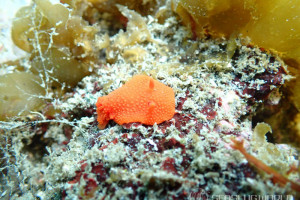
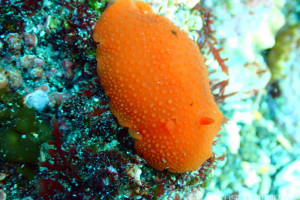
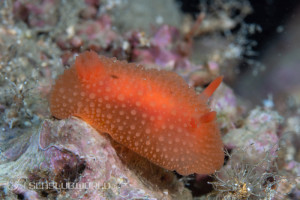
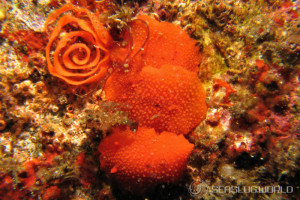
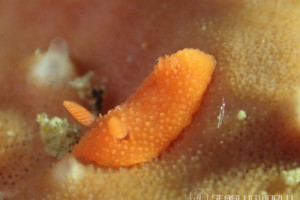
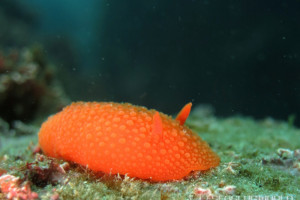
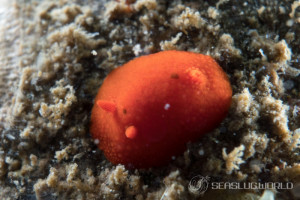
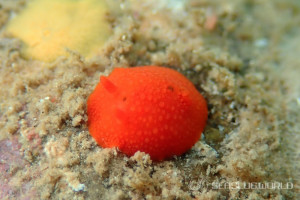
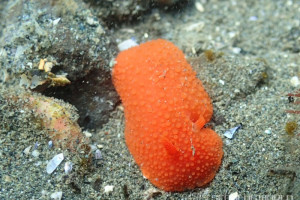
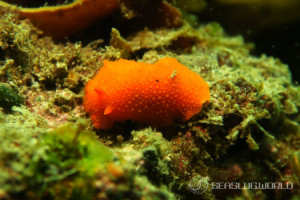
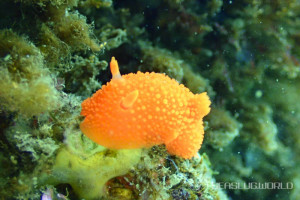
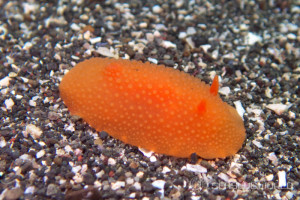
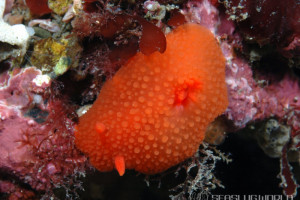
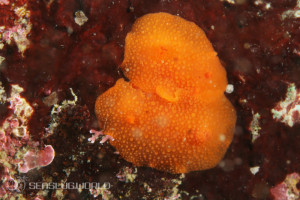
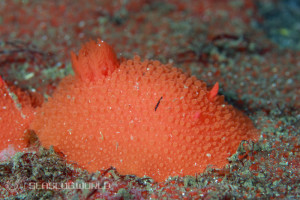
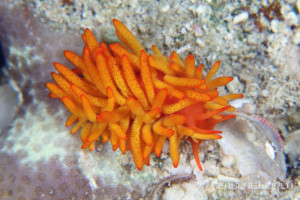
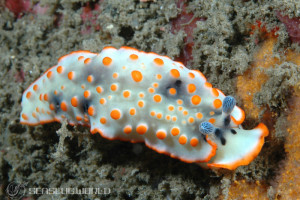
A medium-sized dorid 20-25 mm in body length. Body lemon yellow to cadmium orange, dotted with minute black points (usually less densely than in Aldisa sanguinea). Black spots in the mid-dorsal line are small and not very prominent, 6-11 in number (usually 8-9). The dorsum is densely covered with low rounded granules, giving a rough texture. Rhinophores lamellate; the circle of bipinnate gills is the same colour as the body. Oral tentacles auriform; underside pale.Distribution
Type locality: Umatilla Reef, Washington, U.S.A. North American records from Washington and Barkley Sound (British Columbia). Japanese specimens previously identified as A. sanguinea are reassigned here, extending the range to Hokkaido (Shirikishinai), Aomori (Asamushi, Mutsu Bay), Boso (Tateyama Bay), Sagami Bay, Shima (Sugashima), Osaka Bay, and Amakusa (Tomioka, Kyushu).Etymology
The specific epithet cooperi honours James Graham Cooper, the Californian naturalist who described the type species Aldisa sanguinea. The Japanese vernacular name Chishio-umiushi was originally given to Japanese specimens then identified as A. sanguinea; those specimens are now referable to this taxon.Remarks
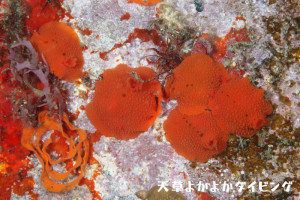
Originally proposed as a subspecies A. sanguinea cooperi and now treated as the full species Aldisa cooperi. Field observations record feeding on orange-red demosponges and the deposition of egg masses on the same sponges or on adjacent rock as tightly-wound 4-5 turn ascending spirals at both Umatilla Reef and Barkley Sound.References
- チシオウミウシ(新稱), Baba K. (1949). Opisthobranchia of Sagami Bay collected by His Majesty the Emperor of Japan (相模湾産後鰓類図譜). Iwanami Shoten, Tokyo. 4+2+194+7 pp., pls. 1-50.
- Aldisa sanguinea (Cooper) Chishio-umiushi, Baba, K. 1957. A revised list of the species of Opisthobranchia from the northern part of Japan, with some additional descriptions. J. Fac. Sci., Hokkaido Univ.,ser. 6, Zool. 13(1-4):8-14.
- Aldisa sanguinea cooperi subspec. nov., Robilliard G.A. & Baba K. (1972). Aldisa sanguinea cooperi subspec. nov. from the coast of the State of Washington, with notes on its feeding and spawning habits (Nudibranchia: Doridiae: Aldisinae). Publications of the Seto Marine Biological Laboratory. 19(6): 409-414.
- 高岡生物研究会. (2002). 日本海のウミウシ. 第2版.
A Kindle field guide by the site author
Kimoto N. (2026). Sea Slugs of Japan & the Indo-Pacific, 2nd Edition.
Kindle Edition
View on Amazon PR (Amazon Associates)Seasonality
Shooting Locations
Loading shooting locations...
Photos of Aldisa cooperi
Tag:


















Same Genus Nudibranchs
Similar Colors Nudibranchs


Academic Database
Sea slug observation data is available in international marine biodiversity databases.