Bermudella distincta (Baba, 1940)
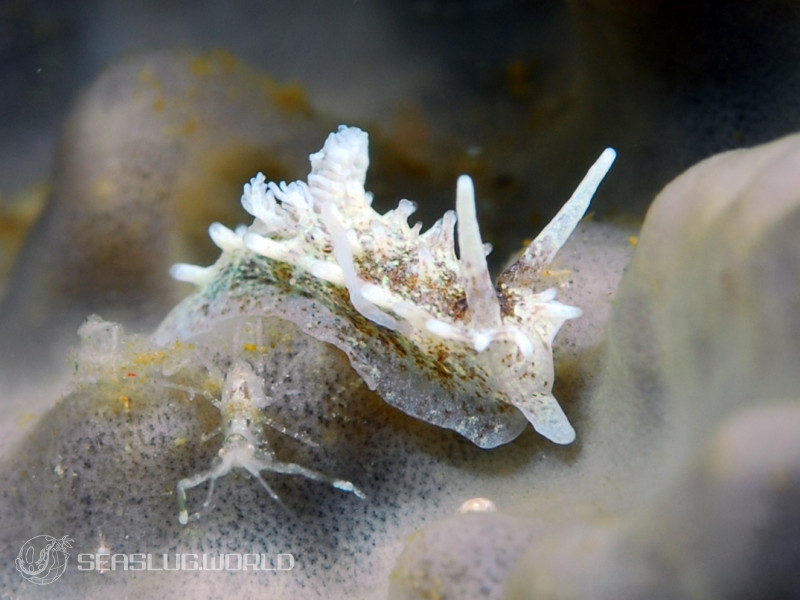
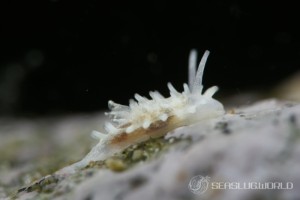
- Location
- Gontarou Rock, Hayama, Kanagawa, Japan
- Date
- 2006/08/03
- Length
- 5mm
- Depth
- 5.0m
- Water temperature
- 21.0℃
Description
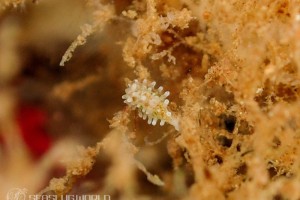
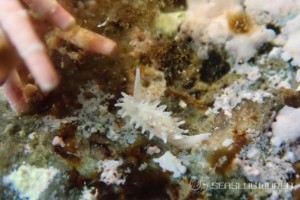
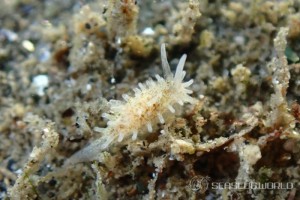
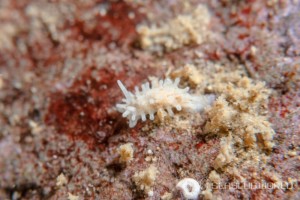
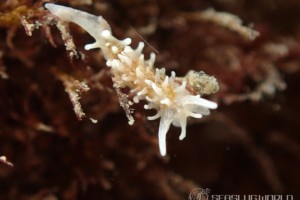
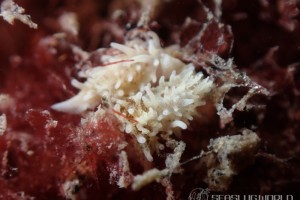
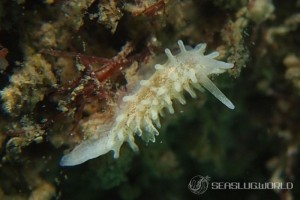
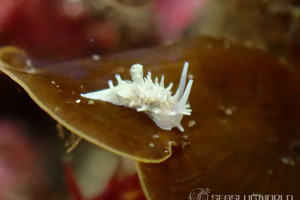
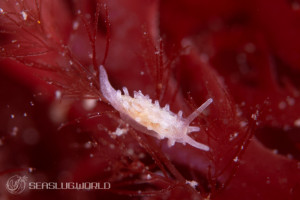
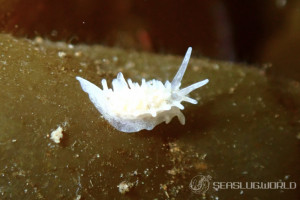
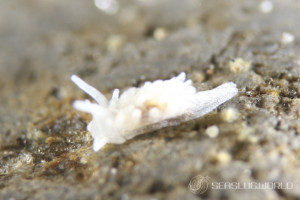
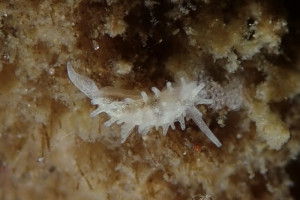
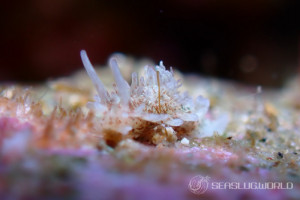
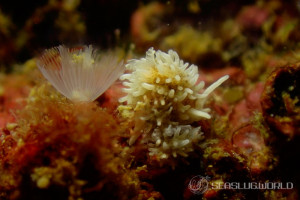
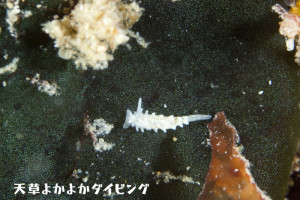
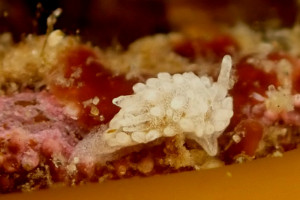
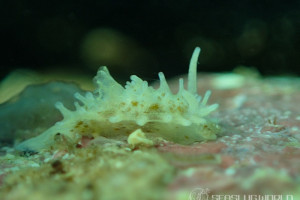
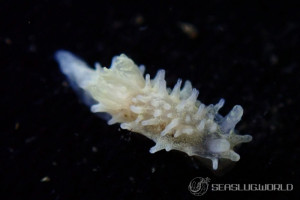
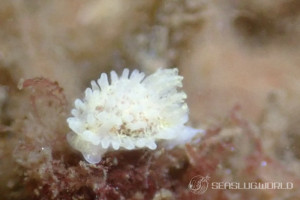
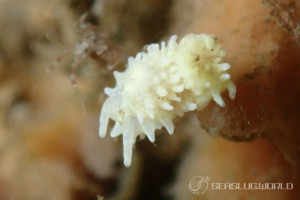
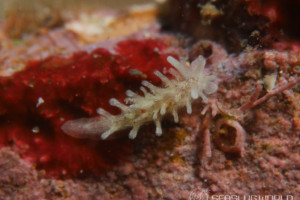
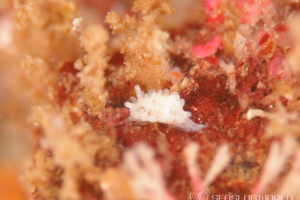
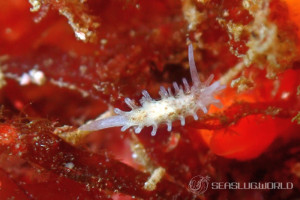
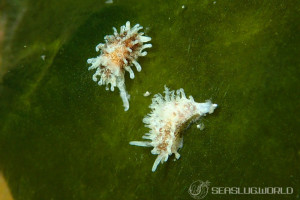
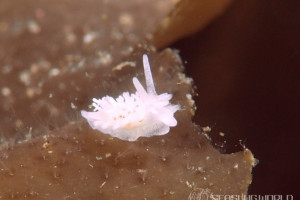
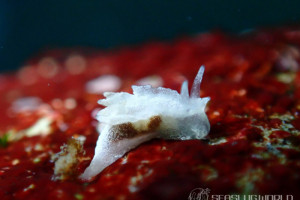
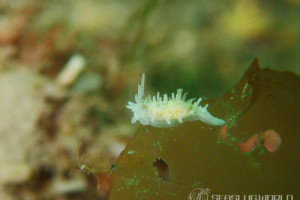
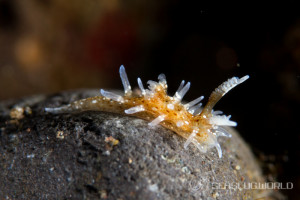
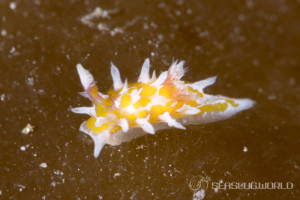
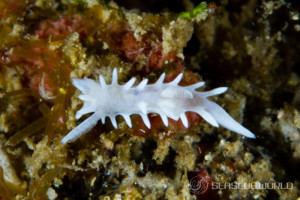
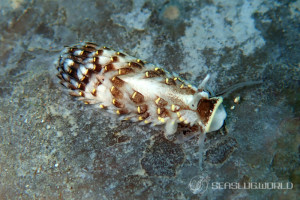
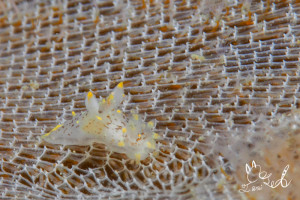
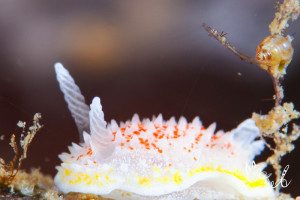
Body ground colour translucent white, with yellow and brown patches on the dorsum. The extent and arrangement of these patches vary between individuals. Fine white dots and irregular white lines are scattered over the entire body surface, and a row of white club-shaped processes runs along the mantle margin including the head region. Rhinophores are smooth and elongate, coloured as the body ground with fine white dots. The branchial leaves likewise share the body ground colour speckled with white dots. Reaches 10 mm in body length.Distribution
Type locality: Asamushi, Mutsu Bay, Aomori Prefecture, northern Japan. the 1957 study added a record from Tannowa in Osaka Bay. Known from around the Japanese coast.Etymology
From the Latin distinctus (distinct, clearly marked), feminine form, in reference to the conspicuous yellow and brown markings on the dorsum of the type specimens.Remarks
Described by Kikutaro Baba in 1940 as Okenia distincta, with the Japanese vernacular name "Mutsu-ibaraumiushi" given in the 1957 study after Mutsu Bay, the type locality. Long retained in Okenia, the species was transferred to Bermudella Odhner, 1941 following the molecular phylogenetic study by Paz-Sedano et al. 2024, which resurrected the previously synonymised genus.References
- Okenia distincta n.sp., Baba K. (1940). Some additions to the nudibranch fauna of the northern part of Japan. Bulletin of the Biogeographical Society of Japan. 10(6): 103-?.
- Okenia (Okenia) distincta Baba Mutsu-ibaraumiushi (n. n.), Baba, K. 1957. A revised list of the species of Opisthobranchia from the northern part of Japan, with some additional descriptions. J. Fac. Sci., Hokkaido Univ.,ser. 6, Zool. 13(1-4):8-14.
- Marcus E. (1964). Additions to the nudibranch fauna of the east Pacific and the Gulf of California. Transactions of the San Diego Society of Natural History. 13: 377-396. https://doi.org/10.5962/bhl.part.9602
- マダライバラウミウシ(新称), 鈴木敬宇. (2000). ウミウシガイドブック〈2〉. TBSブリタニカ.
- 高岡生物研究会. (2002). 日本海のウミウシ. 第2版.
- Bermudella distincta (Baba, 1940) comb. nov., Paz-Sedano S., Moles J., Smirnoff D., Gosliner T.M. & Pola M. (2024). A combined phylogenetic strategy illuminates the evolution of Goniodorididae nudibranchs (Mollusca, Gastropoda, Heterobranchia). Molecular Phylogenetics and Evolution. 192: 107990. https://doi.org/10.1016/j.ympev.2023.107990
A Kindle field guide by the site author
Kimoto N. (2026). Sea Slugs of Japan & the Indo-Pacific, 2nd Edition.
Kindle Edition
View on Amazon PR (Amazon Associates)Seasonality
Shooting Locations
Loading shooting locations...
Photos of Bermudella distincta
Tag:






















Same Genus Nudibranchs
Similar Colors Nudibranchs

Academic Database
Sea slug observation data is available in international marine biodiversity databases.