Dermatobranchus albopunctulatus Baba, 1976
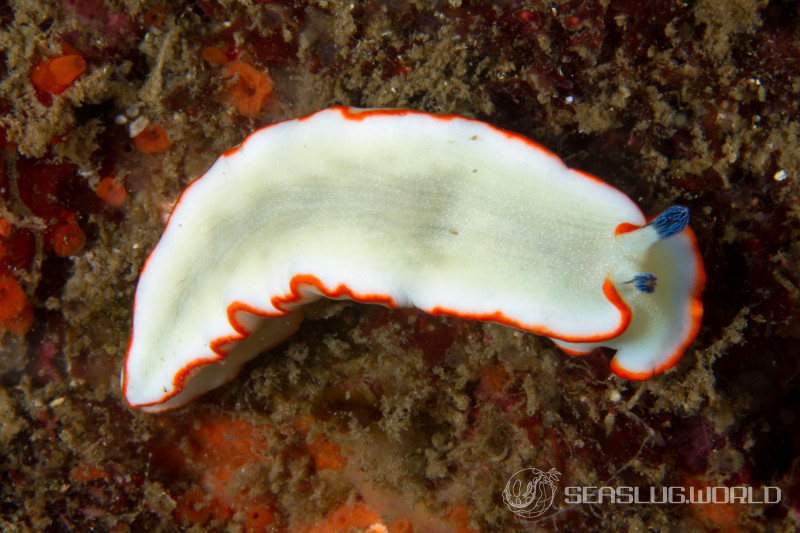
- Location
- Futou beach, Tago, Futou, Dougashima, Shizuoka, Japan
- Date
- 2013/06/10
- Length
- ??mm
- Depth
- 3.0m
- Water temperature
- ??℃
Description
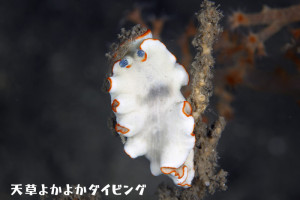
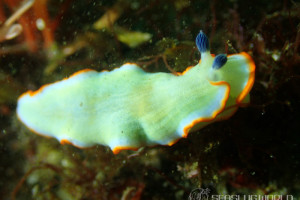
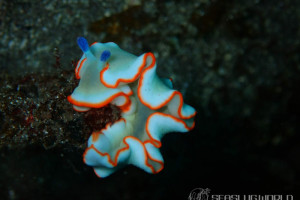
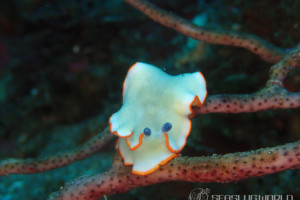
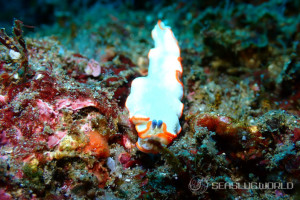
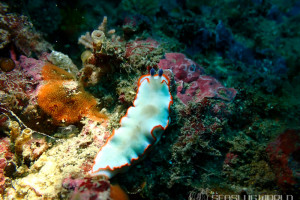
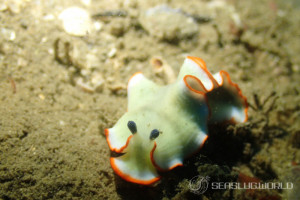
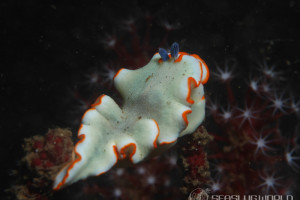
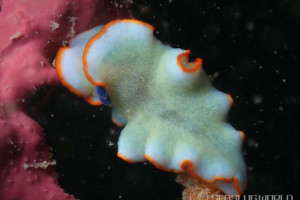
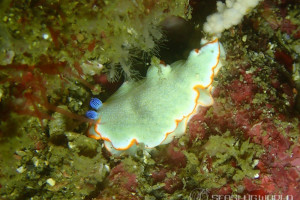
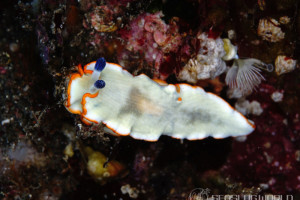
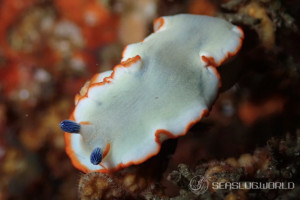
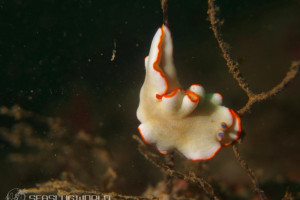
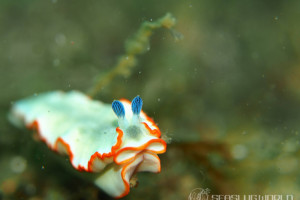
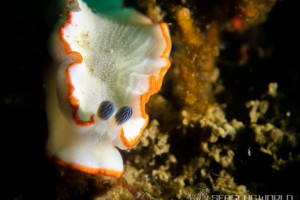
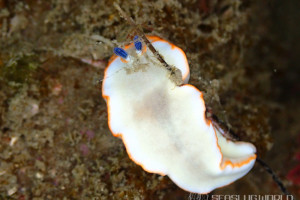
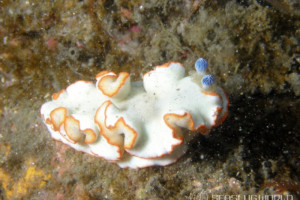
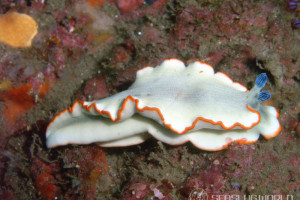
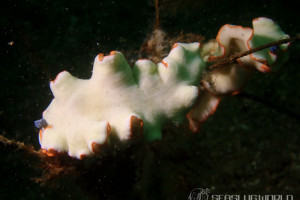
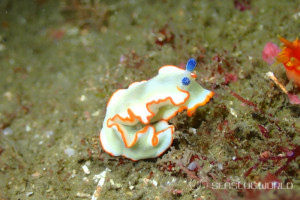
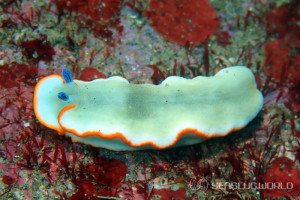
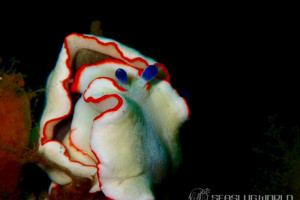
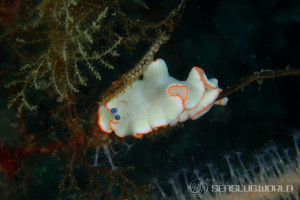
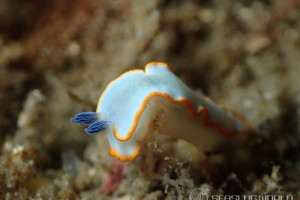
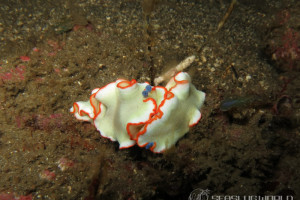
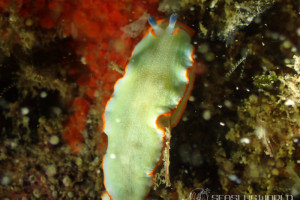
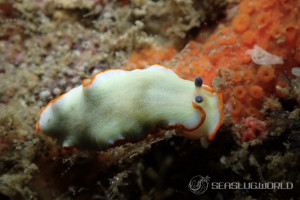
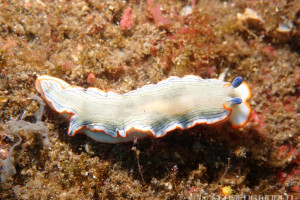
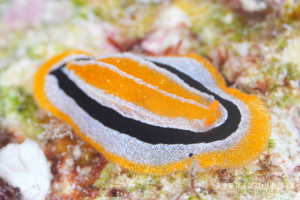
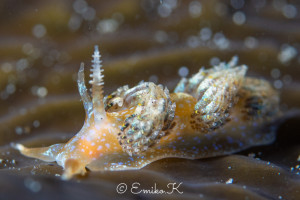
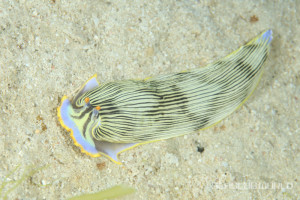
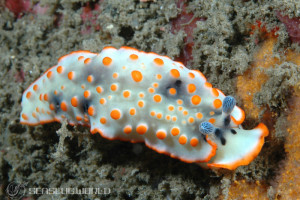
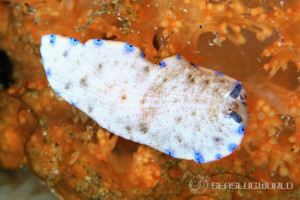
A small to medium-sized Arminidae, body length 10-60 mm. The mantle appears smooth to the naked eye but bears 30-35 fine longitudinal ridges visible under a lens. Ground colour above and below yellowish white, sometimes with dark shading on the median back, sole, and sides. The longitudinal ridges themselves are yellowish white. Diagnostic feature: the grooves between the ridges are densely covered with opaque white fine dots, and similar dots occur on the upper surface of the head veil. Rhinophores bluish black above, white below. The head veil, mantle, and foot are each bordered by a narrow orange line. The jaw plate has no masticatory process (subgenus Pleuroleura).Distribution
Type locality: Uchiura coast near Awashima, Suruga Bay, Japan. Type-series localities also at Tomioka, Amakusa. The species occurs along the Pacific coast of central and southern Japan in association with gorgonian (octocoral) colonies at 15-30 m depth.Etymology
The specific epithet albopunctulatus is a Latin compound of albus ("white") and punctulatus ("finely dotted"), meaning "finely white-dotted", in reference to the opaque white dots in the grooves and on the head veil.Remarks
Originally described in the subgenus Pleuroleura, as Dermatobranchus (Pleuroleura) albopunctulatus. Most closely related to Dermatobranchus sagamianus in the strikingly projecting median cusp of the central tooth, but distinguished by the combination of very numerous fine longitudinal ridges and opaque white dots in the grooves between ridges and on the head veil.References
A Kindle field guide by the site author
Kimoto N. (2026). Sea Slugs of Japan & the Indo-Pacific, 2nd Edition.
Kindle Edition
View on Amazon PR (Amazon Associates)Seasonality
Shooting Locations
Loading shooting locations...
Photos of Dermatobranchus albopunctulatus
Tag:






















Same Genus Nudibranchs
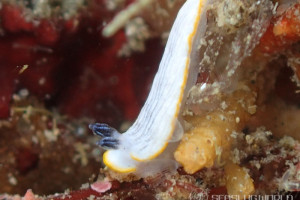
Dermatobranchus sp. 6
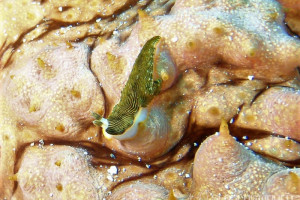
Dermatobranchus sp. 5

Dermatobranchus dendronephthyphagus
Dermatobranchus albineus
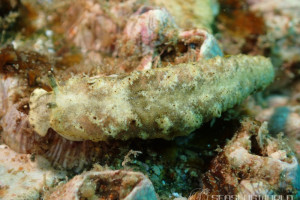
Dermatobranchus phyllodes
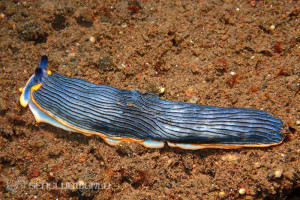
Dermatobranchus sp. 4
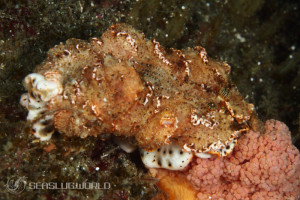
Dermatobranchus sp. 3
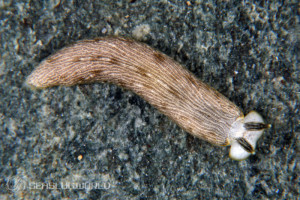
Dermatobranchus diagonalis
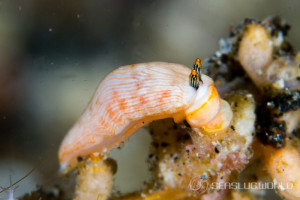
Dermatobranchus spp.
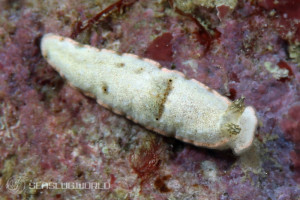
Dermatobranchus rodmani
Dermatobranchus tuberculatus
Dermatobranchus striatus
Similar Colors Nudibranchs
Academic Database
Sea slug observation data is available in international marine biodiversity databases.