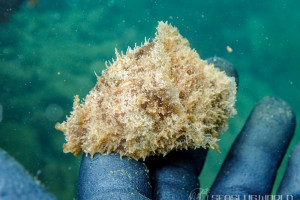
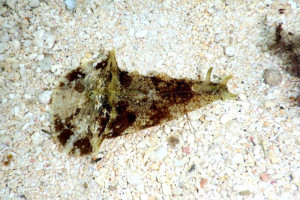
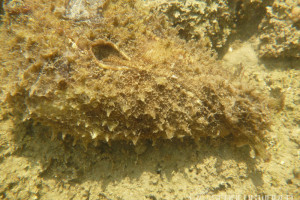
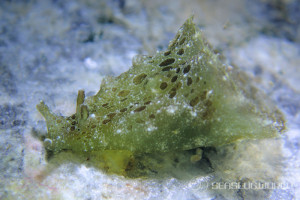
Dolabella auricularia ([Lightfoot], 1786)
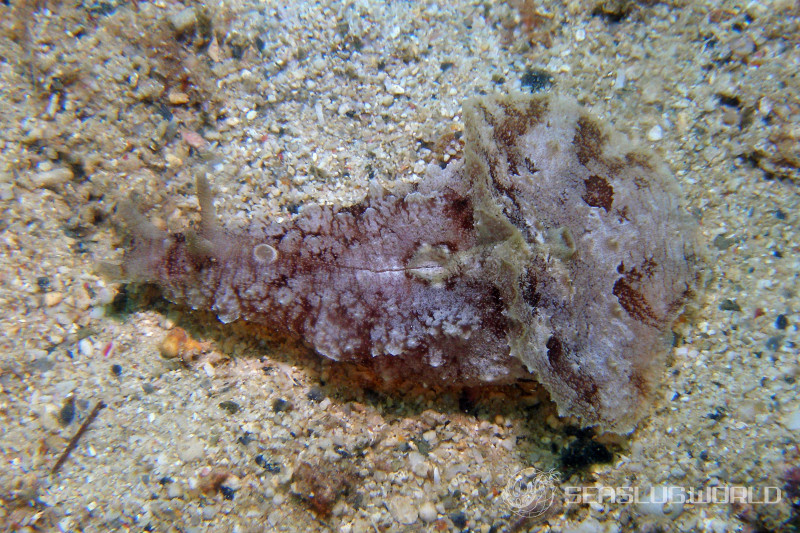
- Location
- Tengan(Kombu), Okinawa Island (East coast), Okinawa, Japan
- Date
- 2010/08/01
- Length
- 100mm
- Depth
- 5.0m
- Water temperature
- 30.0℃
Description
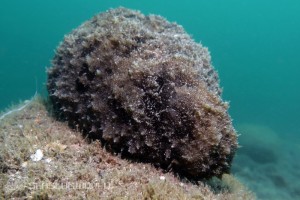
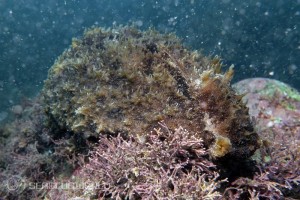
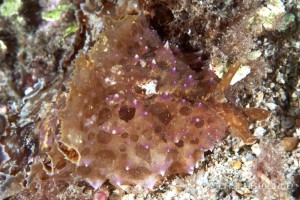
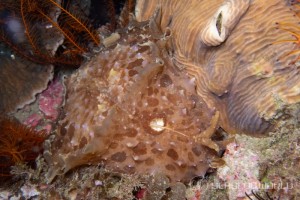
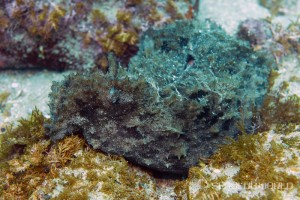
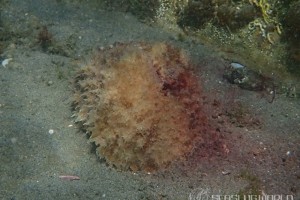
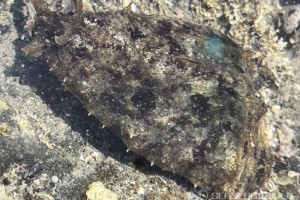
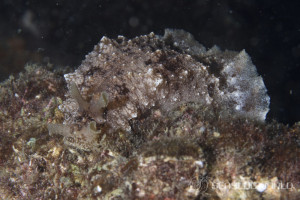
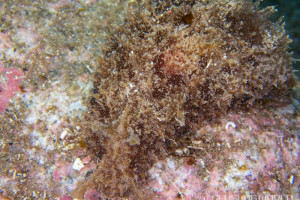
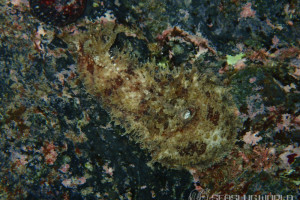
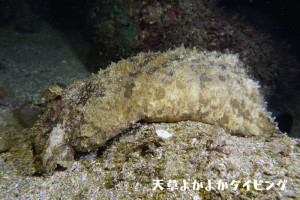
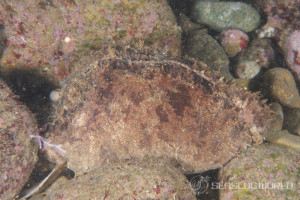
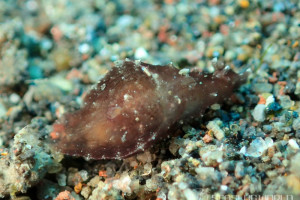
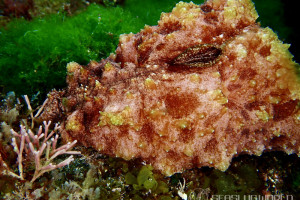
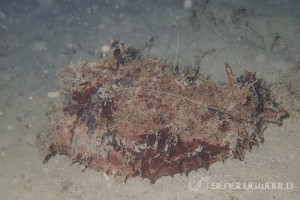
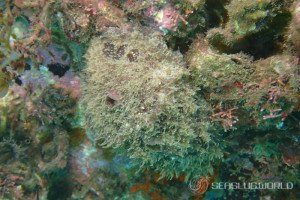
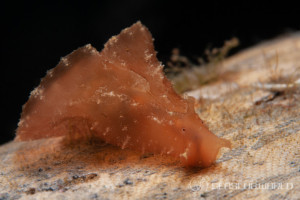
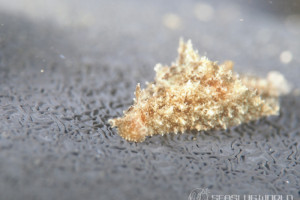
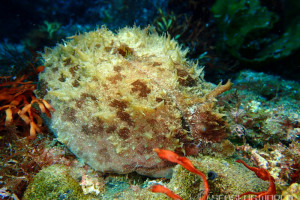
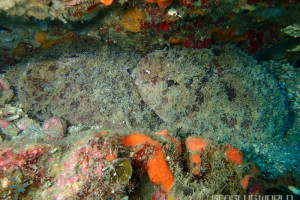
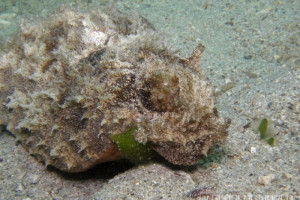
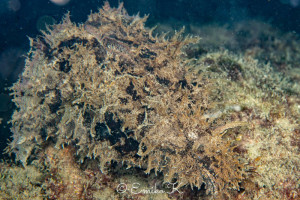
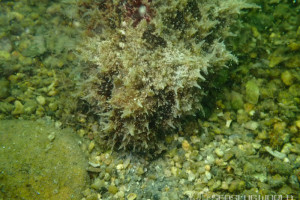
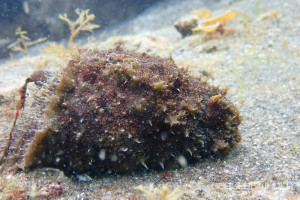
A large aplysiid reaching about 500 mm in length. Body firm and fleshy, smaller anteriorly and broadening posteriorly into a flat disc-shaped posterior surface bearing the central exhalant aperture. Body colour highly variable, ranging from brown and greyish brown through olive green; the surface is sprinkled with small whitish tubercles. Active by night, with conspicuous nocturnal movement reported by night divers; secretes purple ink when disturbed.Distribution
Indo-Pacific, with records extending into the eastern Pacific. Records include South Africa, the Red Sea, Japan, Hawaii, the Galápagos and Mexico. The historical type material was reported in the Portland Catalogue 1786 as "from Amboyna" (Ambon, Indonesia), citing Rumphius' D'Amboinsche Rariteitkamer plate 40 fig. N.Etymology
The specific epithet auricularia is the Latin for "ear-shaped" (from auricula, "little ear"), in reference to the broadly flared posterior end of the body.Remarks
Originally described as Patella Auricularia in lot 3260 of the [Lightfoot] (1786) Catalogue of the Portland Museum — an anonymous auction catalogue compiled by the Rev. John Lightfoot from Daniel Solander's manuscript notes. ICZN attributes authorship to Lightfoot 1786 with the year in brackets to indicate inferred authorship. Subsequently transferred to Dolabella Lamarck, 1801.References
- Patella Auricularia, [Lightfoot J.] (1786). A Catalogue of the Portland Museum, lately the Property of the Duchess Dowager of Portland, deceased: which will be sold by auction, by Mr. Skinner and Co. London. viii + 194 pp. (Anonymously published auction catalogue; authorship attributed by ICZN convention to Rev. John Lightfoot)
- タツナミガイ, Baba K. (1949). Opisthobranchia of Sagami Bay collected by His Majesty the Emperor of Japan (相模湾産後鰓類図譜). Iwanami Shoten, Tokyo. 4+2+194+7 pp., pls. 1-50.
- 高岡生物研究会. (2002). 日本海のウミウシ. 第2版.
A Kindle field guide by the site author
Kimoto N. (2026). Sea Slugs of Japan & the Indo-Pacific, 2nd Edition.
Kindle Edition
View on Amazon PR (Amazon Associates)Seasonality
Shooting Locations
Loading shooting locations...
Photos of Dolabella auricularia
Tag:





















Similar Colors Nudibranchs
Academic Database
Sea slug observation data is available in international marine biodiversity databases.