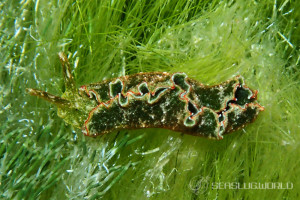
Elysia nealae Ostergaard, 1955
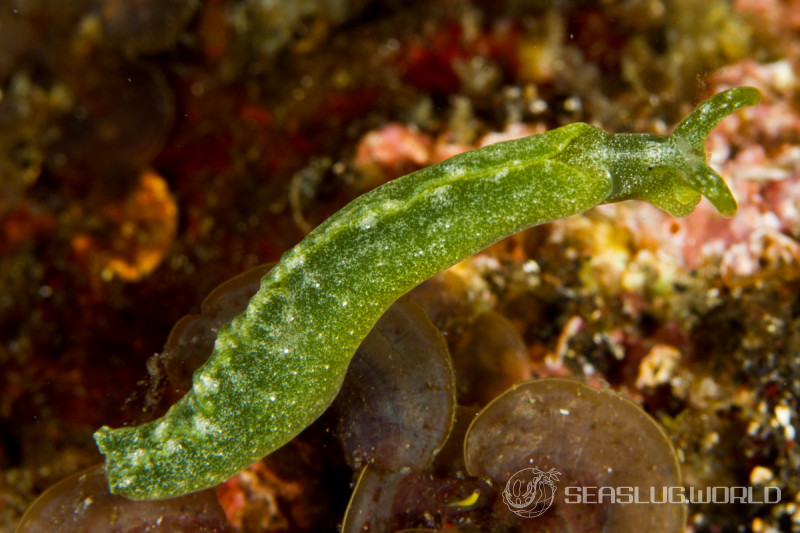
- Location
- Sokodo(Sanmata), Hachijo Island, Tokyo, Japan
- Date
- 2017/04/19
- Length
- 40mm
- Depth
- 8.0m
- Water temperature
- 14.7℃
Description
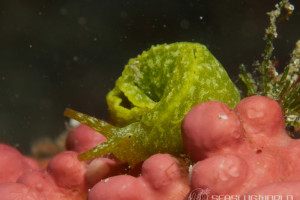
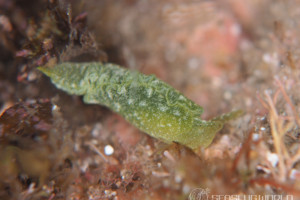
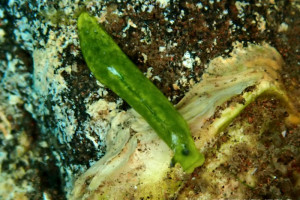
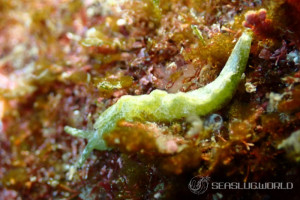
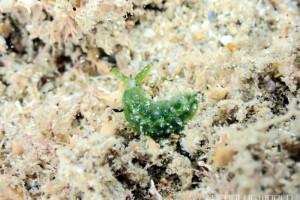
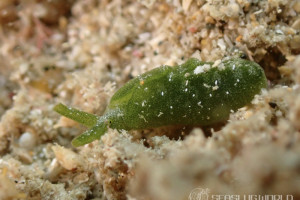
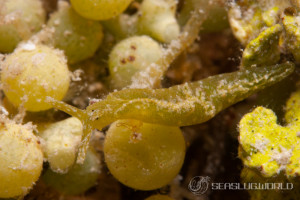
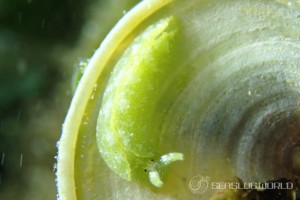
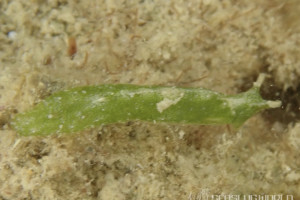
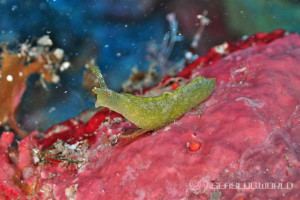
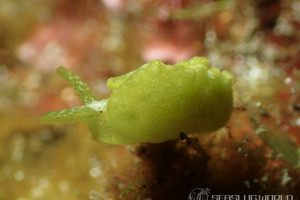
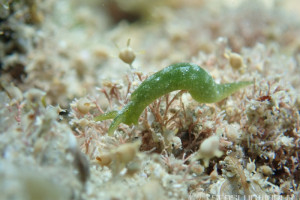
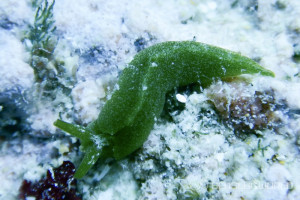
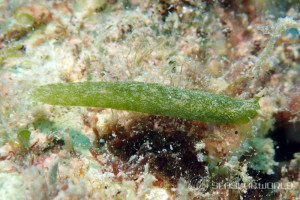
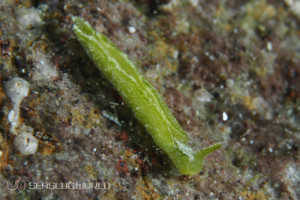
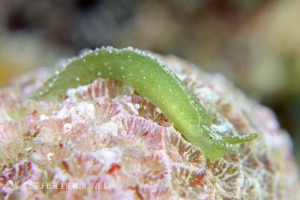
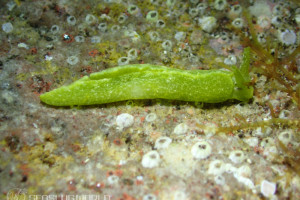
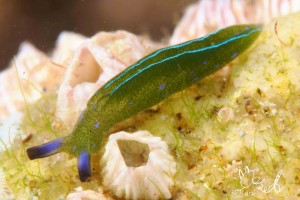
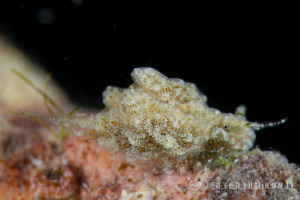
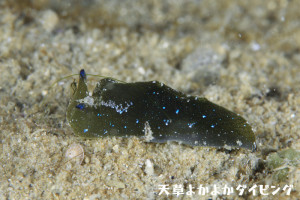
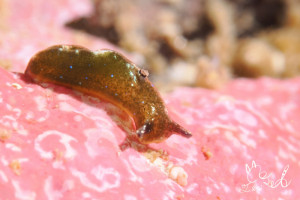
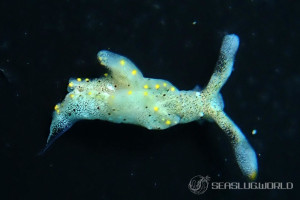
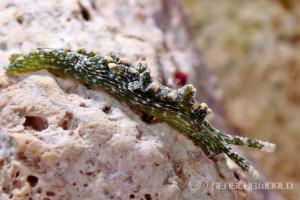
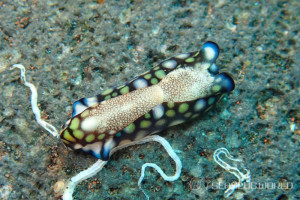
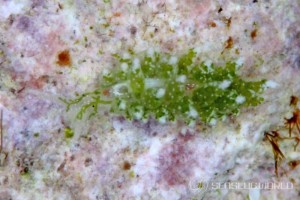
A slender sacoglossan reaching about 33 mm in length and 4 mm in width. Body slender and elongate, tapering posteriorly. Parapodial lobes intensely folded, the medially-directed folds meeting dorsally. Rhinophores slender, straight, tapering toward the extremities and directed antero-laterally. Eyes prominent, set at the postero-lateral bases of the rhinophores, each surrounded by a small white area. Foot slightly bilobed with a shallow median anterior notch, tapering posteriorly to an obtuse point. Body pale to bright green throughout, with small white specks and fine concentrated masses of green algal cells especially conspicuous on the parapodial lobes; margins of the parapodial lobes and the posterior tip greenish yellow. Feeds by suctorial grazing on green algae and retains chloroplasts in its tissues.Distribution
Central Pacific. Type locality: Waikiki (near the Hawaii Marine Laboratory), Oahu, Hawaii, on seaweeds (24 November 1923, leg. Marie C. Neal; holotype USNM 574930). Also recorded from Japan (including the Ryukyu Islands), Guam, and Palmyra Atoll.Etymology
The specific epithet nealae honours Marie Catherine Neal (1889-1965), the Hawaiian botanist who collected the type specimen on seaweeds at Waikiki.Remarks
Distinguished from the sympatric Elysia degeneri by long, smooth, tapering rhinophores (those of E. degeneri are short, knobbed, and non-tapering) and by uniformly green parapodial lobes (those of E. degeneri are bordered medially with bright orange).References
- Elysia nealae, Ostergaard J.M. (1955). Some opisthobranchiate Mollusca from Hawaii. Pacific Science, 9(2): 110-136.
- Elysia sp. 6, 中野理枝. (2004). 本州のウミウシ. ラトルズ.
- アマミミドリガイ(新称), 中野理枝, 今川郁 & 今本淳. (2015). 南西諸島で記録された嚢舌類の報告. Kuroshio Biosphere. 11: 41-60.
- アマミミドリガイ, 中野理枝. (2018). 日本のウミウシ. 文一総合出版.
- エリシア・ニールアエ, 小野篤司 & 加藤昌一. (2020). 新版 ウミウシ. 誠文堂新光社.
- ワカバミドリガイ(新称), 西田和記. (2024). ウミウシの生態観察図鑑. 誠文堂新光社.
Featured in this book
西田和記. (2024). ウミウシの生態観察図鑑. 誠文堂新光社.
誠文堂新光社
This species, Elysia nealae, is included in the book.
View on Amazon PR (Amazon Associates)Seasonality
Shooting Locations
Loading shooting locations...
Photos of Elysia nealae
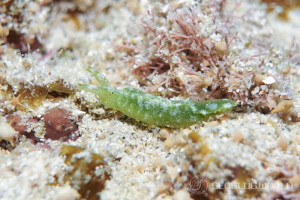

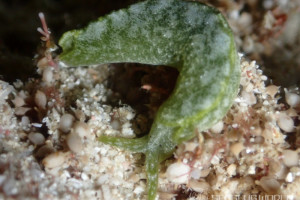
















Same Genus Nudibranchs
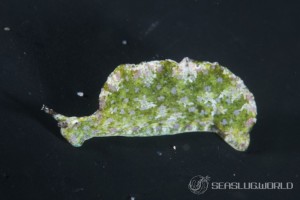
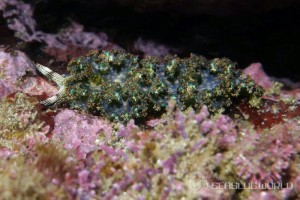
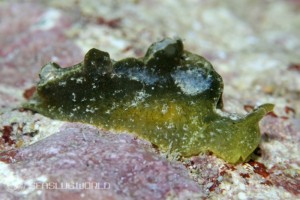
Similar Colors Nudibranchs

Academic Database
Sea slug observation data is available in international marine biodiversity databases.