Ercolania boodleae (Baba, 1938)
Description
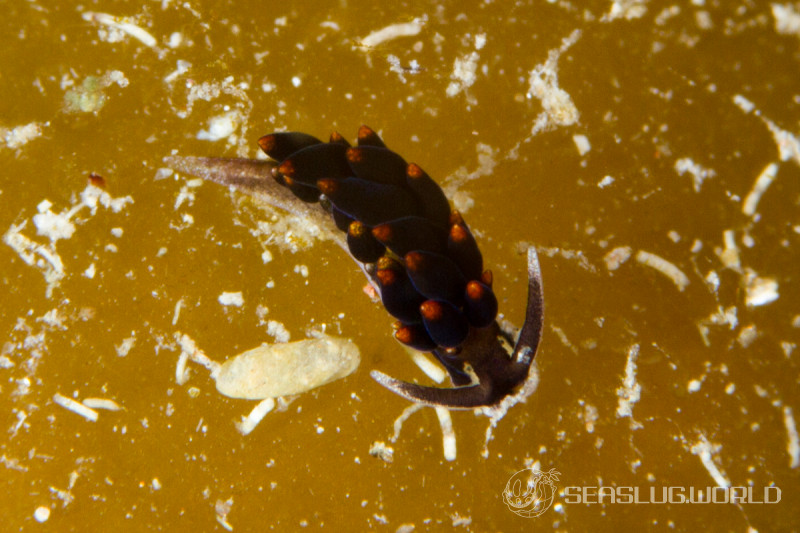
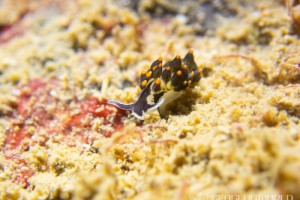
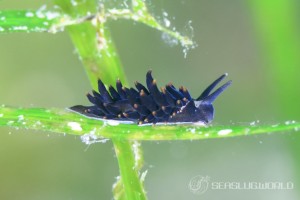
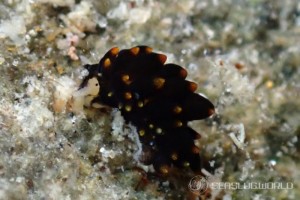
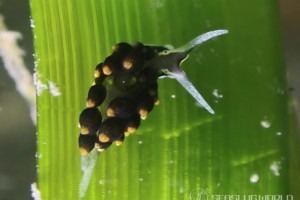
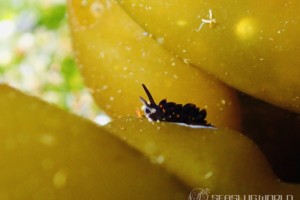
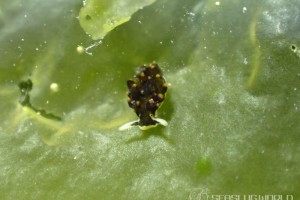
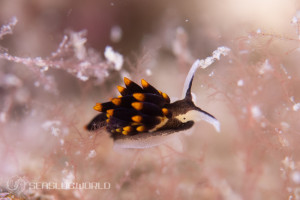
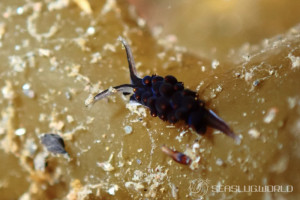
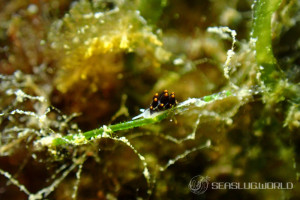
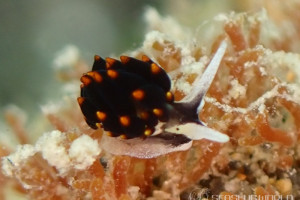
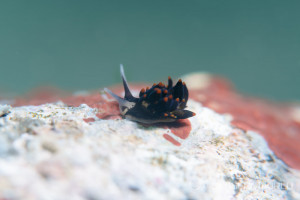
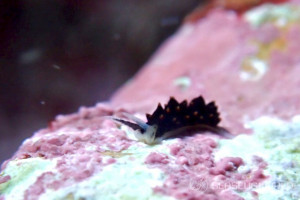
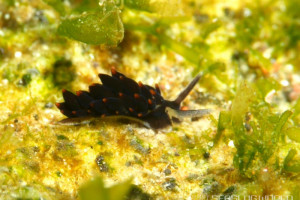
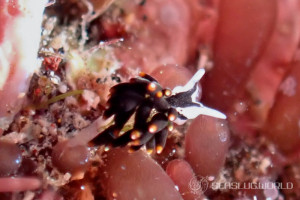
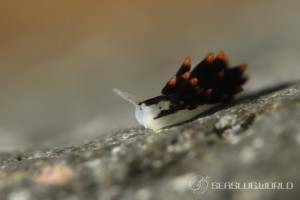
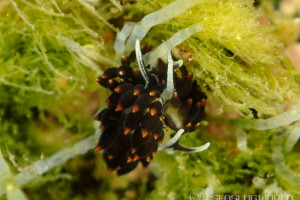
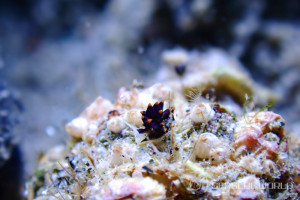
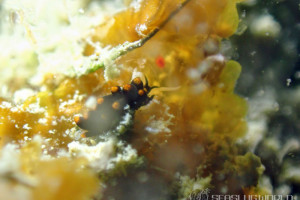
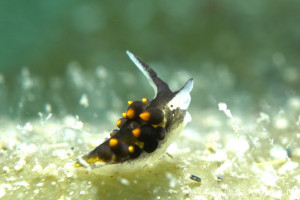
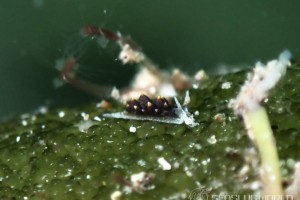
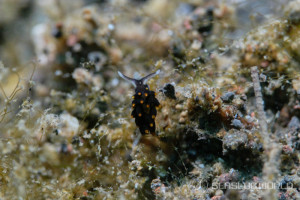
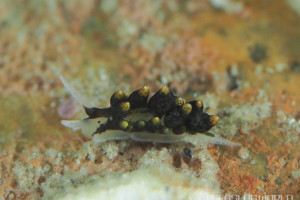
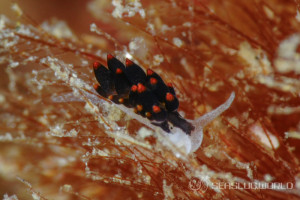
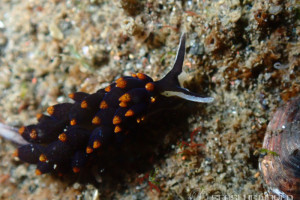
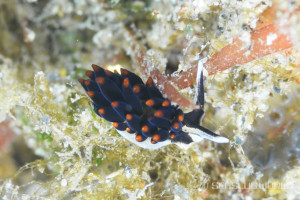
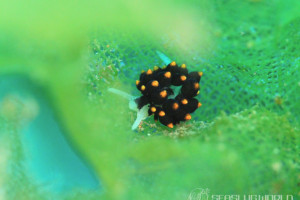
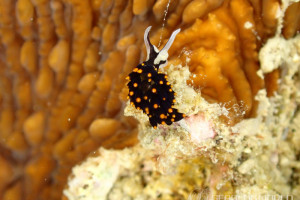
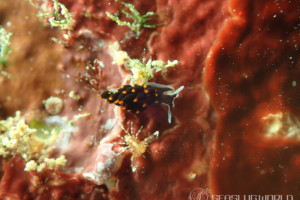
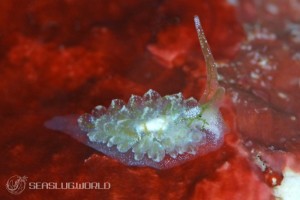
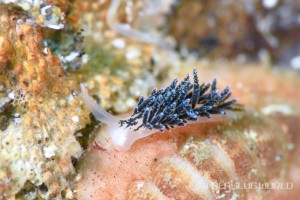
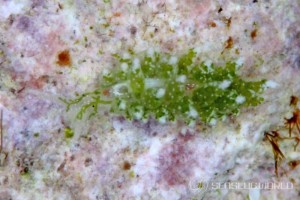
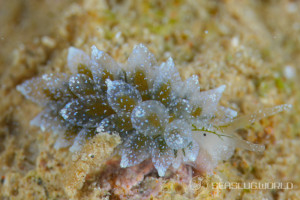
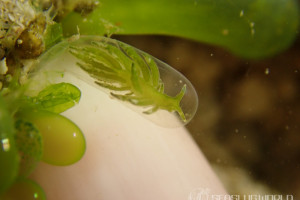
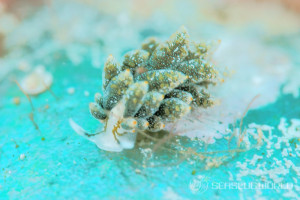
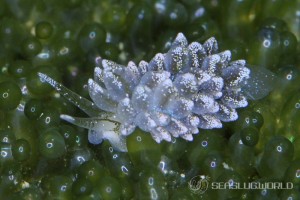
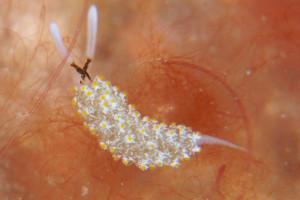
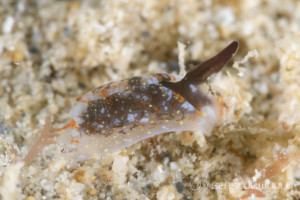
A small sacoglossan, body length 4-5 mm. Body slender and aeolidiform with a smooth surface. Head large, slightly sinuous in front. Rhinophores long and slender, without an external groove. Cerata long-fusiform when extended and nearly conical when contracted; deciduous, arranged on each side in 7-8 closely-set oblique rows, with about 1-3 cerata per row. The outer cerata are short and the innermost the largest. The anus lies in the posterior region of the pericardial prominence, just to the right of the midline; the nephroproct closely behind it. The genital opening is on the right side immediately below the first ceratal row. The foot is large, as broad as the body, with an anterior edge that is simple and abruptly rounded at the corners. General body colour black, with the foot brim, anterior edge of the head, eye region and sole lighter greyish. Ceratal tips are always brown.Distribution
Type locality: Seto, Kii, Japan (very common on the green alga Boodlea coacta).Etymology
The specific epithet boodleae is the Latin genitive of the green-algal genus Boodlea; it is not a personal patronym but refers to the host alga on which the species was found in abundance.Remarks
Originally placed in subgenus Stiliger (Stiliger), and subsequently transferred to Ercolania. Ercolania emarginata, described from Hong Kong, is treated as a junior subjective synonym. The Japanese name "Arimo-umiushi" derives from "Arimo", the vernacular for the host alga Boodlea.References
- Stiliger boodleae, Baba K. (1938). Opisthobranchia Of Kii, Middle Japan. Journal of the Faculty of Agriculture, Kyushu University. 6(1): 1-19. https://doi.org/10.5109/22587
- アリモウミウシ(新稱), Baba K. (1949). Opisthobranchia of Sagami Bay collected by His Majesty the Emperor of Japan (相模湾産後鰓類図譜). Iwanami Shoten, Tokyo. 4+2+194+7 pp., pls. 1-50.
- Stiliger (Stiliger) boodleae BABA, 1938. Arimo-umiushi., Baba K. (1959). THE FAMILY STILIGERIDAE FROM JAPAN (OPISTHOBRANCHIA-SACOGLOSSA). Publications of the Seto Marine Biological Laboratory. 7(3): 327-334. https://doi.org/10.5134/174635
- アリモウミウシ, 高岡高等学校生物研究会(編). (1964). 富山湾産後鰓類図譜.
- 高岡生物研究会. (2002). 日本海のウミウシ. 第2版.
- Trowbridge C.D., Hirano Y.M., Hirano Y.J., Nishida K. & Sudo K. (2011). North-west Pacific sacoglossan guild associated with filamentous green algae (Family Cladophoraceae and Family Boodleaceae). Marine Biodiversity Records. 4: e67. https://doi.org/10.1017/S1755267211000170
A Kindle field guide by the site author
Kimoto N. (2026). Sea Slugs of Japan & the Indo-Pacific, 2nd Edition.
Kindle Edition
View on Amazon PR (Amazon Associates)Seasonality
Shooting Locations
Loading shooting locations...
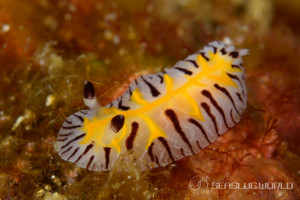
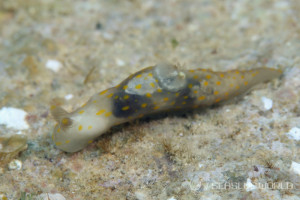
Photos of Ercolania boodleae
Tag:
























Same Genus Nudibranchs

Similar Colors Nudibranchs
Academic Database
Sea slug observation data is available in international marine biodiversity databases.