Glossodoris buko S. B. Matsuda & Gosliner, 2018
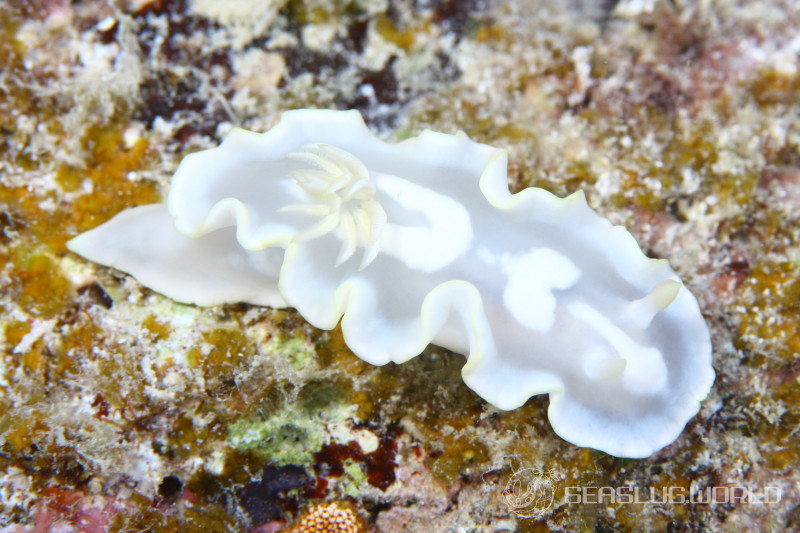
- Location
- Horse Shoes, Okinawa Island (Onna and Yomitan area), Okinawa, Japan
- Date
- 2011/05/31
- Length
- 40mm
- Depth
- 15.0m
- Water temperature
- 26.0℃
Description
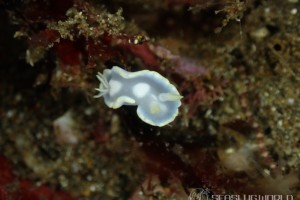
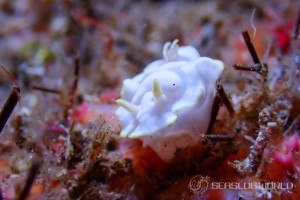
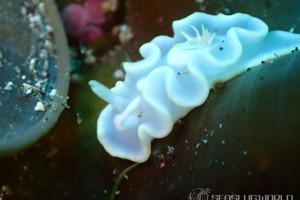
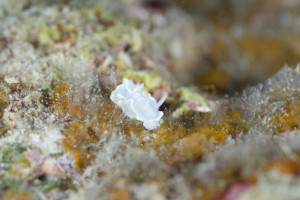
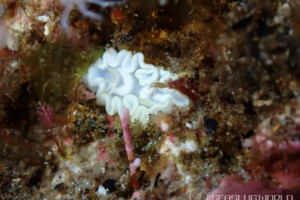
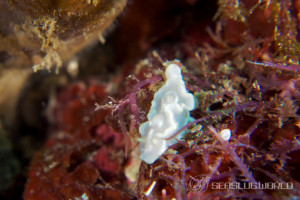
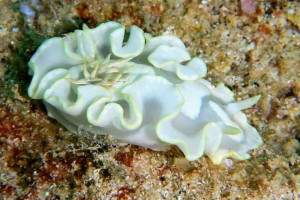
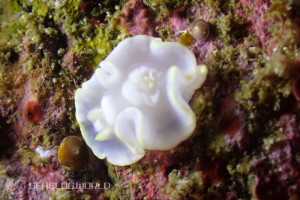
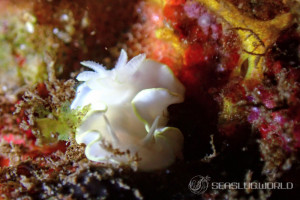
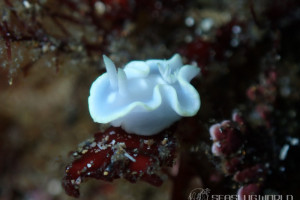
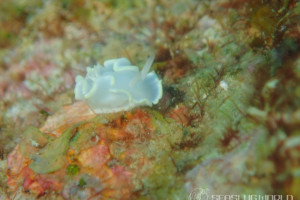
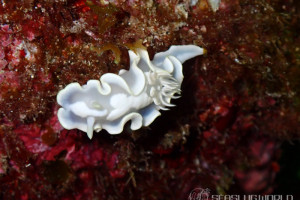
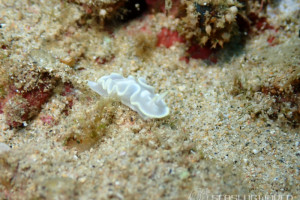
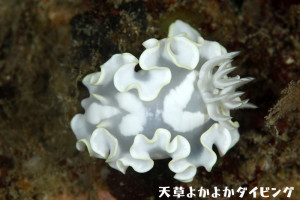
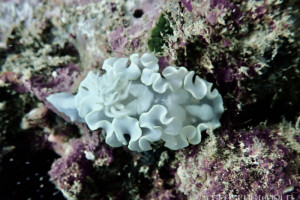
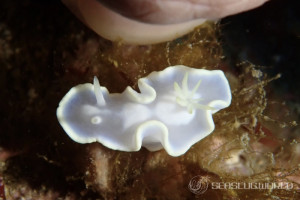
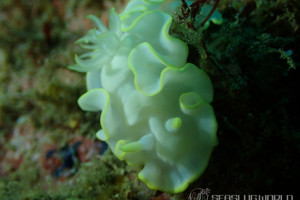
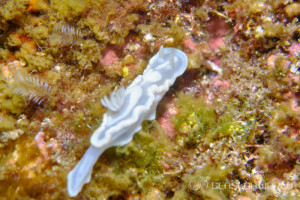
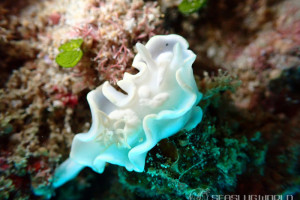
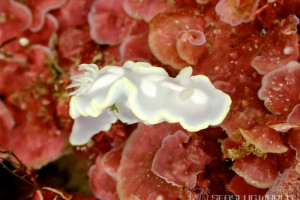
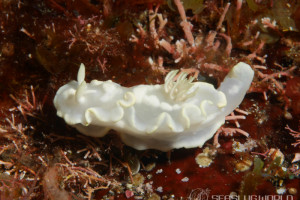
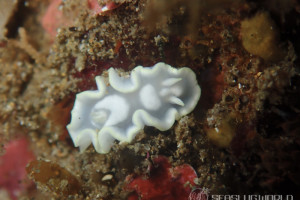
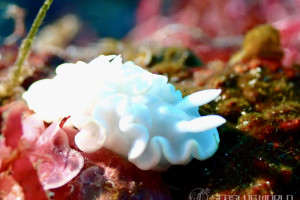
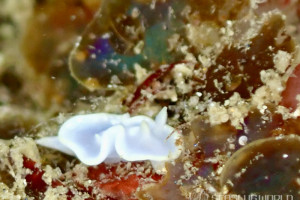
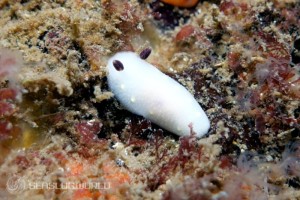
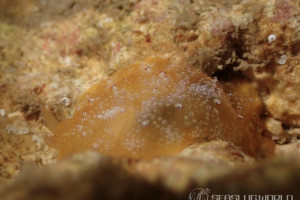
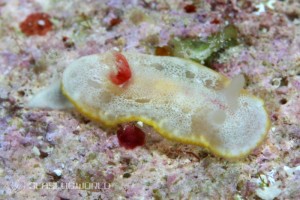
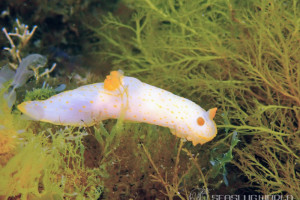
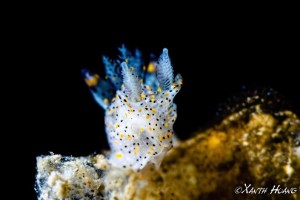
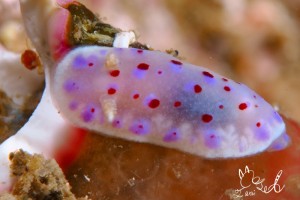
A small chromodorid nudibranch reaching about 14 mm in length with an elongate, translucent white body. An opaque white band runs along the mantle edge, starting anteriorly, narrowing between the rhinophores, widening again between the major mantle folds in the middle, and ending in a circle around the gills. In most specimens the band is continuous, but a break may be present just behind the rhinophores. A second white opaque band runs along the foot. The mantle edge bears small semi-permanent undulations with one prominent pair of folds at midbody. The rhinophores have 11–12 lamellae with white bases and yellow tips. The gill consists of a posteriorly opening semicircle of approximately 5–8 unipinnate branches, white with yellow tips. A fine yellow line borders the mantle margin.Glossodoris buko closely resembles Glossodoris pallida (Rüppell & Leuckart, 1830) externally, but is readily distinguished internally. G. buko has a short, squat radular ribbon with a strongly reduced quasi-rectangular rachidian tooth and broad lateral teeth. A conspicuous glandular sheath of densely packed opaque white glands surrounds the oral tube on the ventral surface of the buccal mass, a structure entirely absent in G. pallida.
Distribution
Philippines, Papua New Guinea, and Australia. Type locality: Bilbil Island, Madang Province, Papua New Guinea.Etymology
The specific epithet buko is the Tagalog (Filipino) word for "young coconut," referring to the resemblance of the cream-colored body of this species to the flesh of a young coconut from the Philippines, where the species occurs.Remarks
Long confused with Glossodoris pallida, this species was separated based on the a 2017 molecular phylogeny, which recovered western Pacific specimens as a distinct lineage from Red Sea and East African populations. G. pallida is now restricted to the Red Sea and the East African coast, while western Pacific records previously assigned to G. pallida refer to G. buko.References
- シロタエイロウミウシ, 益田一. (1999). 海洋生物ガイドブック. 第2刷. 東海大学出版会.
- シロタエイロウミウシ, 小野篤司. (1999). ウミウシガイドブック. TBSブリタニカ.
- シロタエイロウミウシ, 鈴木敬宇. (2000). ウミウシガイドブック〈2〉. TBSブリタニカ.
- シロタエイロウミウシ, 殿塚孝昌. (2003). ウミウシガイドブック〈3〉. TBSブリタニカ.
- シロタエイロウミウシ, 小野篤司. (2004). 沖縄のウミウシ. ラトルズ.
- シロタエイロウミウシ, 中野理枝. (2004). 本州のウミウシ. ラトルズ.
- シロタエイロウミウシ, 小野篤司 & 加藤昌一. (2009). ウミウシ. 誠文堂新光社.
- Glossodoris pallida, Terrence Gosliner, Ángel Valdés and David Behrens. (2015). Nudibranch and Sea Slug Identification Indo-Pacific. New World Pubns Inc.
- Glossodoris buko sp. nov., MATSUDA S.B. & GOSLINER T.M. (2018). Glossing over cryptic species: Descriptions of four new species of Glossodoris and three new species of Doriprismatica (Nudibranchia: Chromodorididae). Zootaxa. 4444(5). https://doi.org/10.11646/zootaxa.4444.5.1
Featured in this book
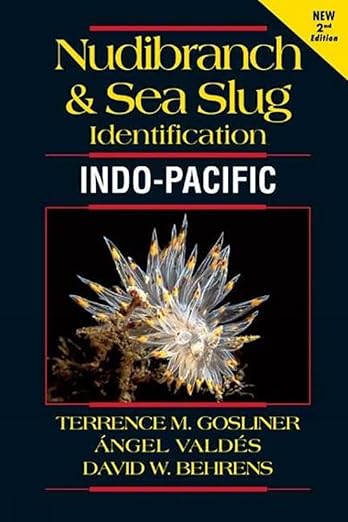
Terrence Gosliner, Ángel Valdés and David Behrens. (2018). Nudibranch and Sea Slug Identification Indo-Pacific 2nd Edition. New World Pubns Inc.
New World Publications
This species, Glossodoris buko, is included in the book.
View on Amazon PR (Amazon Associates)Seasonality
Shooting Locations
Loading shooting locations...
Photos of Glossodoris buko
Tag:












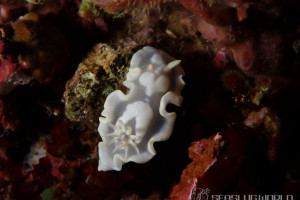

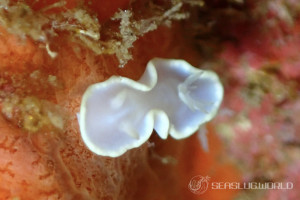

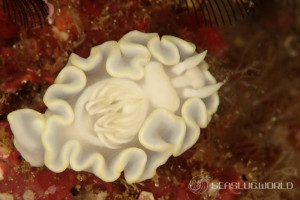

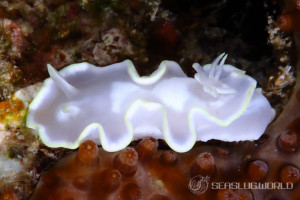










Same Genus Nudibranchs


Similar Colors Nudibranchs
Academic Database
Sea slug observation data is available in international marine biodiversity databases.