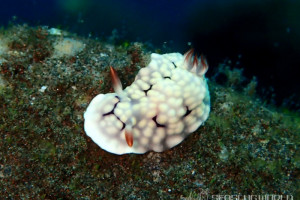
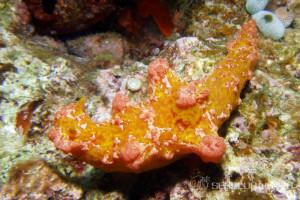
Goniobranchus decorus (Pease, 1860)
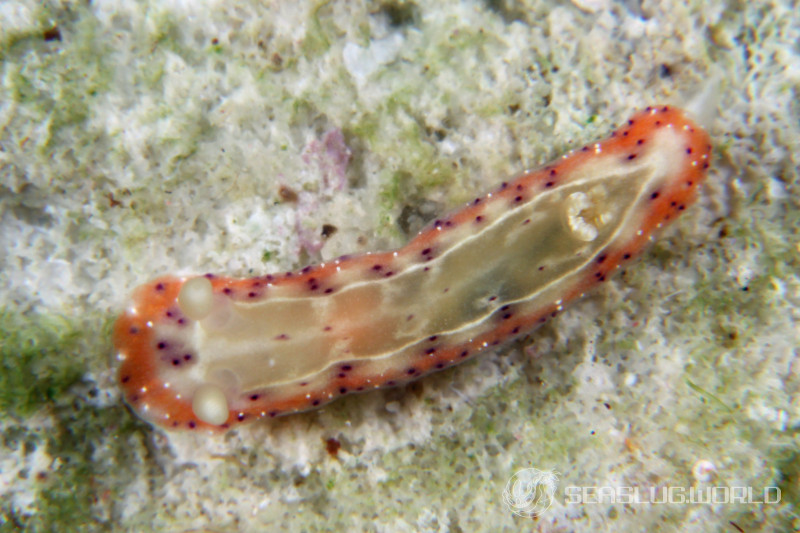
- Location
- Cape Maeda, Okinawa Island (Onna and Yomitan area), Okinawa, Japan
- Date
- 2015/06/04
- Length
- 10mm
- Depth
- 5.0m
- Water temperature
- 24.0℃
Description
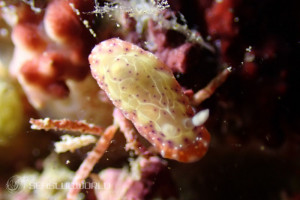
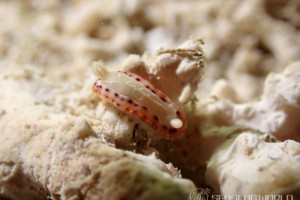
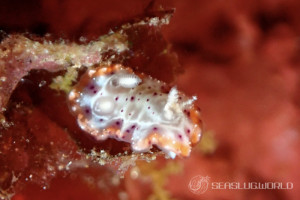
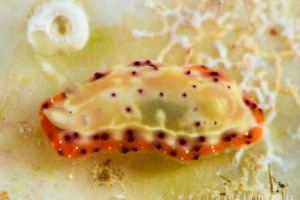
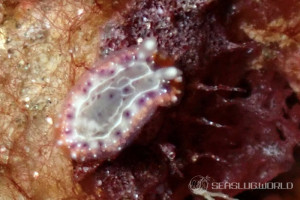
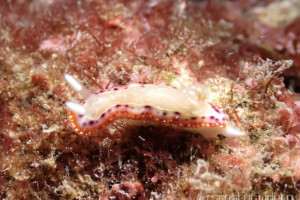
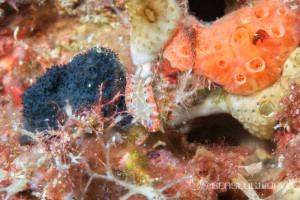
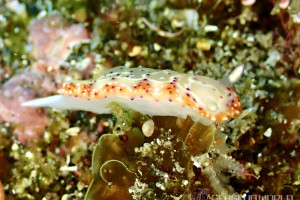
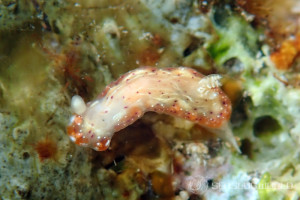
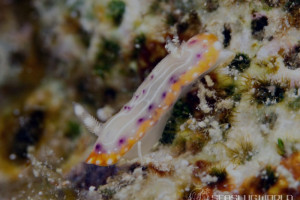
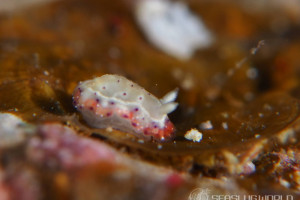
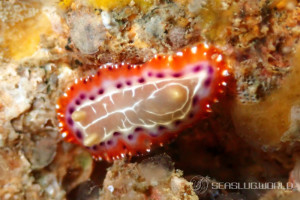
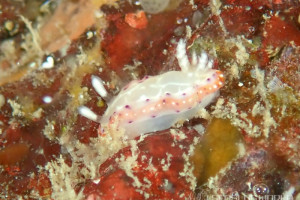
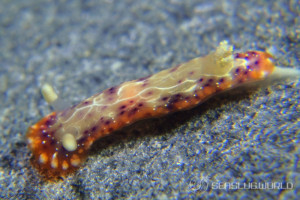
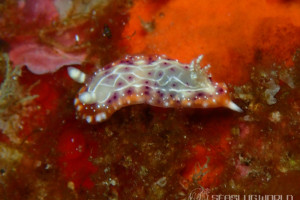
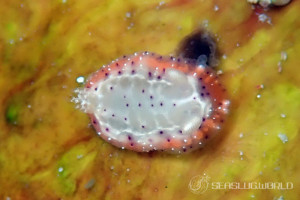
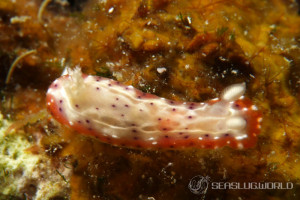
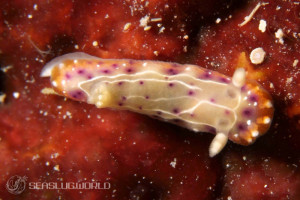
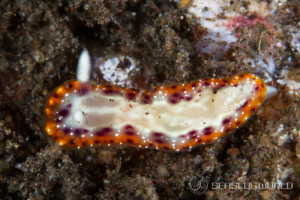
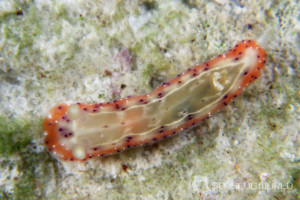
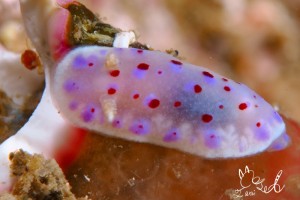
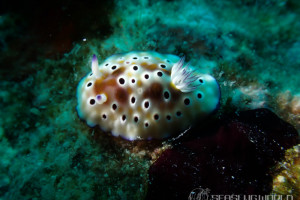
A medium-sized dorid reaching about 30 mm in body length. The body is oblong, smooth and soft, convexly rounded above. The mantle is rounded in front and acutely rounded behind, with thin and simple margins not concealing the foot posteriorly. The gill comprises seven small, nearly erect, pinnate plumes that decrease in height posteriorly, surrounding the vent and retractile into a common cavity. The rhinophores are elongate-ovate, with obliquely lamellate clubs on peduncles as long as the lamellate portion, retractile into simple cavities. The oral tentacles are small and conical. The foot is narrow, rounded in front, tapering behind to an acuminately rounded tip projecting far beyond the end of the mantle. In life the dorsum is pale straw-coloured, with a medial whitish longitudinal stripe that bifurcates posteriorly and is dotted with purple. The mantle margin is bordered with white and dotted with purple; an intramarginal light red band runs inside the white border, contiguous with a yellow band that is also dotted with purple. Gill and rhinophores are pale; the underside of the mantle has the same colour as the dorsum but much paler. Pease's type was about 1 inch 2 lines (≈ 30 mm) long, found on sea-weed; Pease described the species as "very magnificent" and noted that the outline when crawling resembles a Goniodoris.Distribution
Central Pacific. Type locality: Sandwich Islands (Hawaiian Islands), based on Pease's observations of Hawaiian specimens. Subsequently recorded from the Hawaiian Islands, Johnston Atoll, the Marshall Islands and the Midway Islands.Etymology
The specific epithet decorus is the Latin adjective meaning "becoming, elegant, adorned", in reference to the elaborate marginal colour pattern. Pease did not state an etymology, but the meaning is consistent with his description of the species as "very magnificent".Remarks
Originally placed by Pease in Doris. Later transferred to Goniobranchus; the parentheses in the author citation reflect this generic transfer. The Japanese name "ニヨリセトイロウミウシ" ("nearly Seto colour-slug") refers to the resemblance to Goniobranchus setoensis (Seto colour-slug).References
- Doris decora Pease n. sp., Pease W.H. (1860). Descriptions of new species of Mollusca from the Sandwich Islands. Part I. Proceedings of the Zoological Society of London. 28: 18-36.
- Glossodoris decora (Pease), Allan J.K. (1947). Nudibranchia from the Clarence River Heads, north coast, New South Wales. Records of the Australian Museum, 21(8): 433-463, pls. xli-xliii and map. https://doi.org/10.3853/j.0067-1975.21.1947.561
- Goniobranchus decorus, Johnson R.F. & Gosliner T.M. (2012). Traditional taxonomic groupings mask evolutionary history: a molecular phylogeny and new classification of the chromodorid nudibranchs. PLoS ONE 7(4): e33479.
- Goniobranchus decorus, Terrence Gosliner, Ángel Valdés and David Behrens. (2015). Nudibranch and Sea Slug Identification Indo-Pacific. New World Pubns Inc.
- ニヨリセトイロウミウシ(新称), 中野理枝. (2018). 日本のウミウシ. 文一総合出版.
Featured in this book
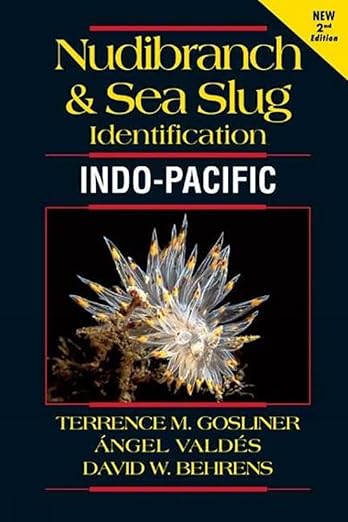
Terrence Gosliner, Ángel Valdés and David Behrens. (2018). Nudibranch and Sea Slug Identification Indo-Pacific 2nd Edition. New World Pubns Inc.
New World Publications
This species, Goniobranchus decorus, is included in the book.
View on Amazon PR (Amazon Associates)Seasonality
Shooting Locations
Loading shooting locations...
Photos of Goniobranchus decorus

















Same Genus Nudibranchs
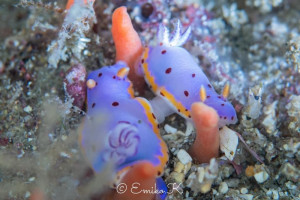

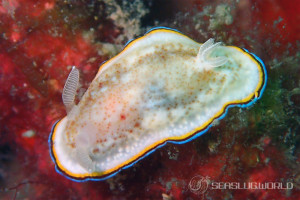
Similar Colors Nudibranchs
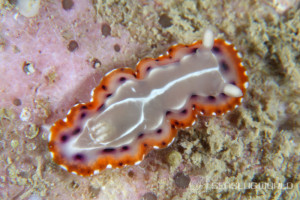
Academic Database
Sea slug observation data is available in international marine biodiversity databases.