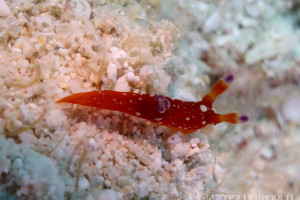
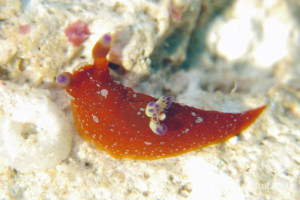
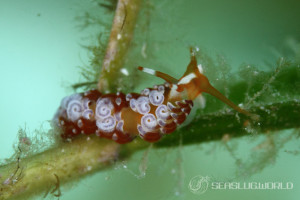
Martadoris limaciformis (Eliot, 1908)
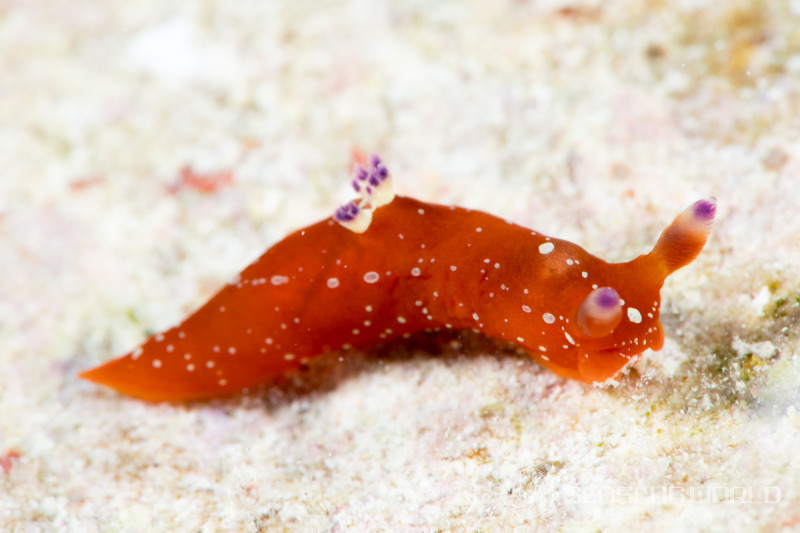
- Location
- Taketomi South, Ishigaki and Yaeyama, Okinawa, Japan
- Date
- 2018/12/11
- Length
- 20mm
- Depth
- 4.0m
- Water temperature
- 26.0℃
Description
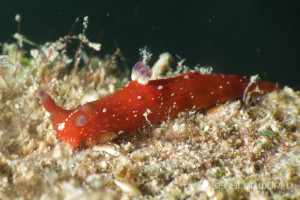
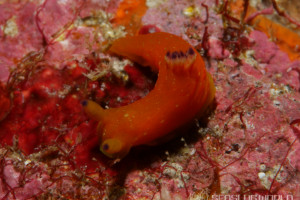
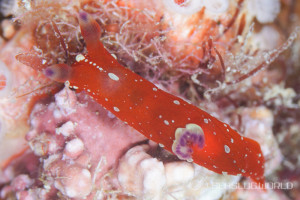
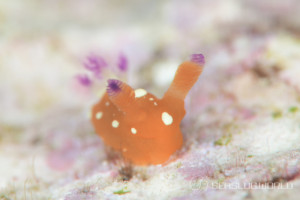
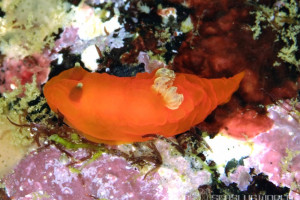
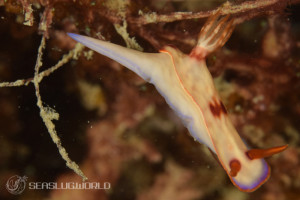
Body ground colour deep saffron-red, with the back and sides flecked with yellowish white spots in some individuals and almost plain in others. Rhinophores saffron-red, often bearing a subapical purple spot. Gills 3 to 5, bipinnate, with tips always tipped purple. Oral tentacles lobiform. Length 18 to 20 mm in the original description, reportedly reaching 50 mm.Distribution
Widely distributed from the Red Sea (type locality) across the Indian Ocean and western to central Pacific. In Japan recorded from central Honshu southward.Etymology
The specific epithet limaciformis comes from Latin Limax (the terrestrial slug genus) and -formis (shaped), meaning slug-shaped, in reference to the elongate, slug-like body habit relative to other species formerly placed in Nembrotha.Remarks
Originally described by Eliot 1908 from Red Sea material as Nembrotha limaciformis. The species was later transferred to Tambja, and then placed in the new genus Martadoris erected by Willan & Chang 2017. The Japanese vernacular name Nishiki-ryugu-umiushi was proposed by a 1960 study when he first reported Japanese specimens from Seto, Kii.References
- Nishiki-ryugu-umiushi (n. n.), Baba K. (1960). THE GENERA GYMNODORIS AND NEMBROTHA FROM JAPAN (NUDIBRANCHIA-POLYCERIDAE). Publications of the Seto Marine Biological Laboratory. 8(1): 71-74. https://doi.org/10.5134/174700
- ニシキリュウグウウミウシ, 小野篤司. (1999). ウミウシガイドブック. TBSブリタニカ.
- ニシキリュウグウウミウシ, 小野篤司. (2004). 沖縄のウミウシ. ラトルズ.
- ニシキリュウグウウミウシ, 中野理枝. (2004). 本州のウミウシ. ラトルズ.
- Tambja limaciformis, Terrence Gosliner, Ángel Valdés and David Behrens. (2015). Nudibranch and Sea Slug Identification Indo-Pacific. New World Pubns Inc.
- Willan R.C. & Chang Y.-W. [Yen-Wei]. (2017). Description of three new species of Tambja (Gastropoda, Nudibranchia, Polyceridae) from the western Pacific Ocean reveals morphological characters with taxonomic and phylogenetic significance for traditional Polyceridae and related 'phaneorobranch' nudibranchs. Basteria. 81(1-3): 1-23.
Featured in this book
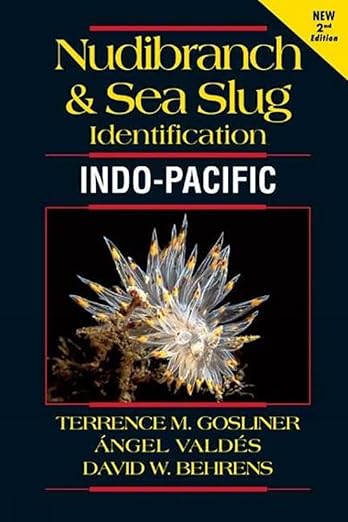
Terrence Gosliner, Ángel Valdés and David Behrens. (2018). Nudibranch and Sea Slug Identification Indo-Pacific 2nd Edition. New World Pubns Inc.
New World Publications
This species, Martadoris limaciformis, is included in the book.
View on Amazon PR (Amazon Associates)Seasonality
Shooting Locations
Loading shooting locations...
Photos of Martadoris limaciformis





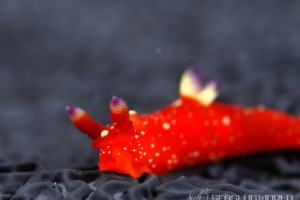

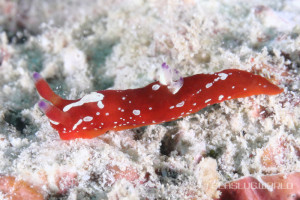

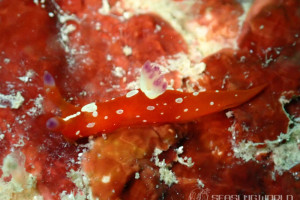

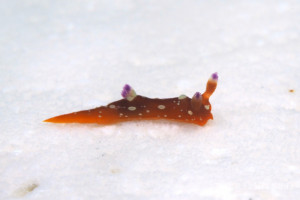

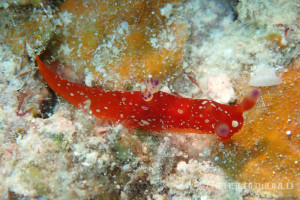

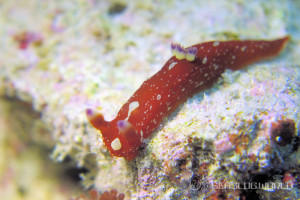

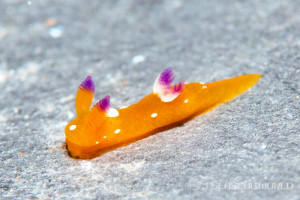
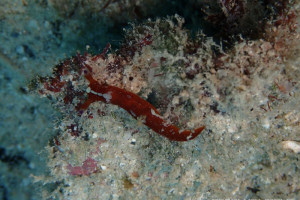

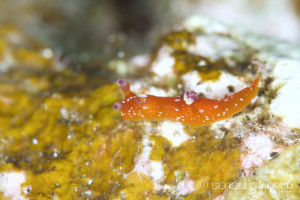

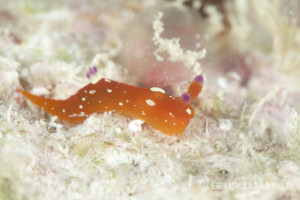
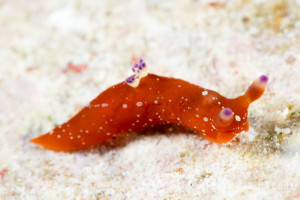

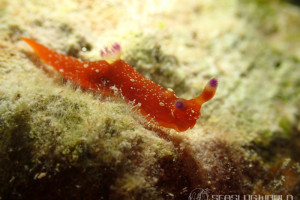



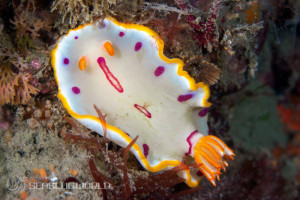
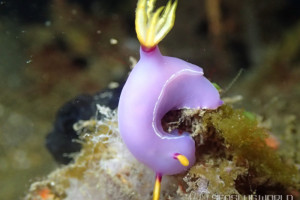
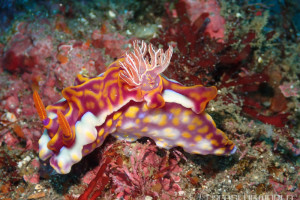
Same Genus Nudibranchs
Similar Colors Nudibranchs

Academic Database
Sea slug observation data is available in international marine biodiversity databases.