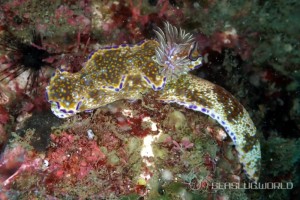
Nembrotha livingstonei J. K. Allan, 1933
- Location
- Romblon Island, Philippines
- Date
- 2018/03/08
- Length
- 40mm
- Depth
- 10.0m
- Water temperature
- 27.0℃
Description
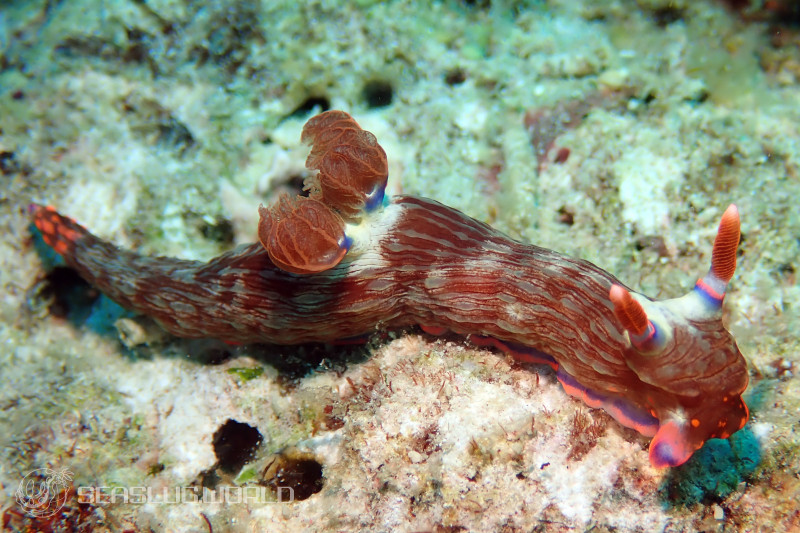
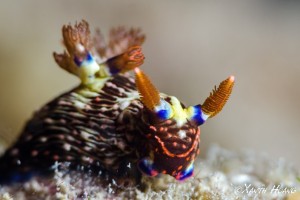
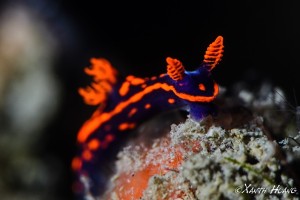
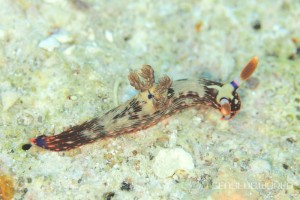
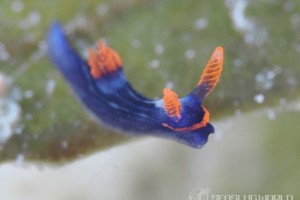
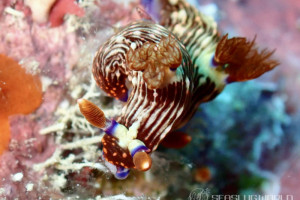
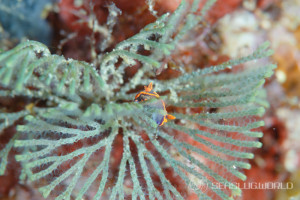
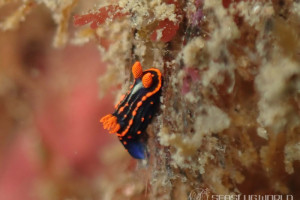
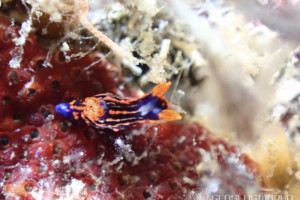
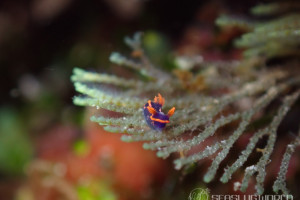
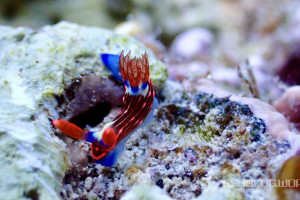
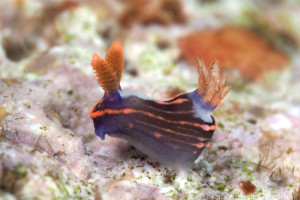
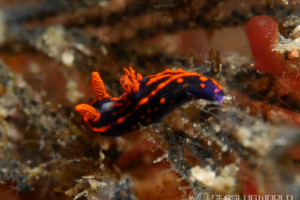
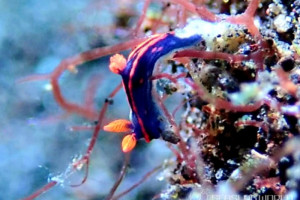
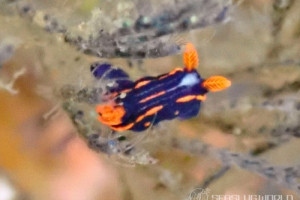
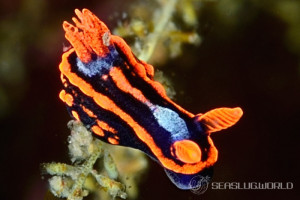
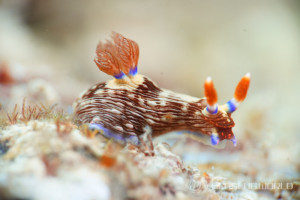
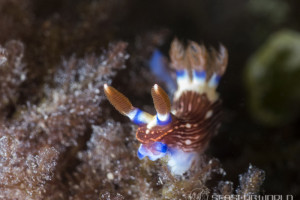
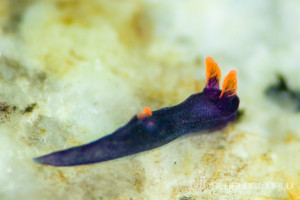
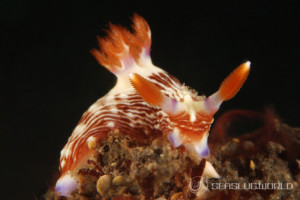
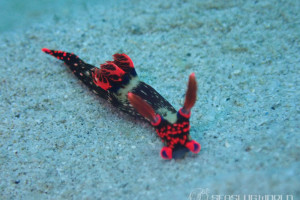
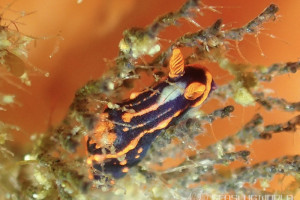
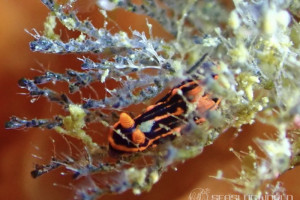
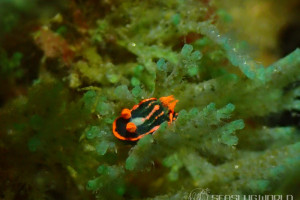
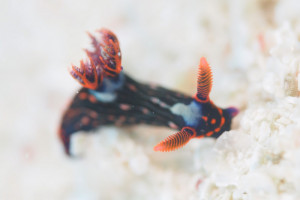
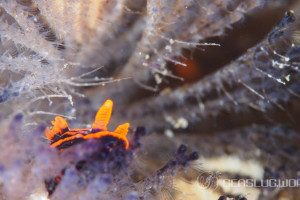
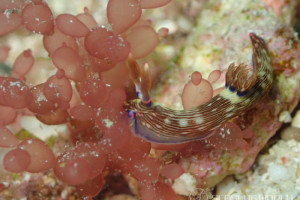
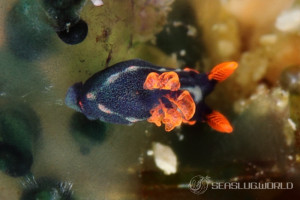
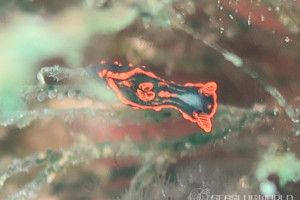
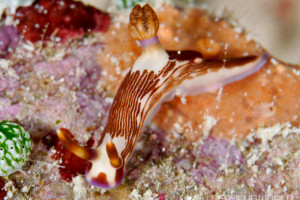
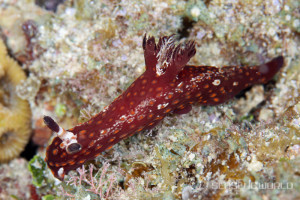
A medium-sized polycerid reaching up to 55 mm in living adults (Pola, Cervera & Gosliner, 2008). Body elongated, limaciform, with the dorsal surface raised centrally and a pointed tail posteriorly. Dorsal surface bears irregular spots and longitudinal wrinkles; raised red spots present in some individuals. The most diagnostic external feature is a conspicuous white cross-shaped (star-shaped) mark between the rhinophores. Background coloration highly variable: yellowish-white, reddish-brown, or dark greenish, typically with brown to greenish longitudinal lines. Rhinophores and gills brown to reddish-brown; rhinophoral sheaths and oral tentacles bright orange. Four strong gills arranged in a semicircle around the anus.Distribution
Indo-West Pacific. Type locality: Broome, Western Australia (Allan, 1933). Subsequently confirmed from the Philippines (Malapascua and Cebu islands) and Japan (Kerama Islands, Okinawa) by Pola, Cervera & Gosliner 2008.Etymology
The specific epithet livingstonei honours Mr. A. A. Livingstone, who collected the type specimen at Broome, Western Australia, and recorded the colours of the living animal. Allan 1933 does not state the dedication explicitly, but the genitive form of the collector's name makes the derivation clear.Remarks
Described by J. K. Allan 1933 from external coloration of a single preserved specimen. Pola, Cervera & Gosliner 2008 provided the first anatomical description and confirmed the distinctness of the species. The cross-shaped pale mark between the rhinophores distinguishes Nembrotha livingstonei from the similar N. nigerrima, with which it can be confused due to overlapping colour patterns.References
- Nembrotha livingstonei n.sp., Allan, J. K. (1933). Opisthobranchs from Australia. Records of the Australian Museum 18(9): 443–450.
- クロスジリュウグウウミウシ, 小野篤司. (1999). ウミウシガイドブック. TBSブリタニカ.
- ネムブロータ・リビングストンイ, 小野篤司. (2004). 沖縄のウミウシ. ラトルズ.
- Pola M., Cervera J.L. & Gosliner T.M. (2008). Revision of the Indo-Pacific genus Nembrotha (Nudibranchia: Dorididae: Polyceridae), with a description of two new species. Scientia Marina. 72(1): 145-183. https://doi.org/10.3989/scimar.2008.72n1145
- Nembrotha livingstonei, Terrence Gosliner, Ángel Valdés and David Behrens. (2015). Nudibranch and Sea Slug Identification Indo-Pacific. New World Pubns Inc.
- トウモンリュウグウウミウシ(新称), 中野理枝. (2018). 日本のウミウシ. 文一総合出版.
- Tibiriçá Y., Pola M. & Cervera J.L. (2019). Two new species of the genus Aldisa Bergh, 1878 (Gastropoda, Heterobranchia, Nudibranchia) from southern Mozambique. Marine Biodiversity. 49(1): 43-56. https://doi.org/10.1007/s12526-017-0752-x
Featured in this book
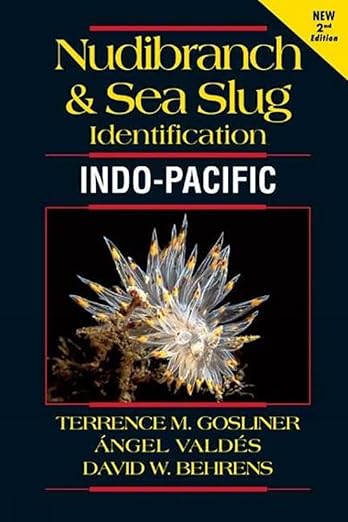
Terrence Gosliner, Ángel Valdés and David Behrens. (2018). Nudibranch and Sea Slug Identification Indo-Pacific 2nd Edition. New World Pubns Inc.
New World Publications
This species, Nembrotha livingstonei, is included in the book.
View on Amazon PR (Amazon Associates)Seasonality
Shooting Locations
Loading shooting locations...
Photos of Nembrotha livingstonei
Tag:























Same Genus Nudibranchs
Similar Colors Nudibranchs
Academic Database
Sea slug observation data is available in international marine biodiversity databases.