Notarchus indicus Schweigger, 1820
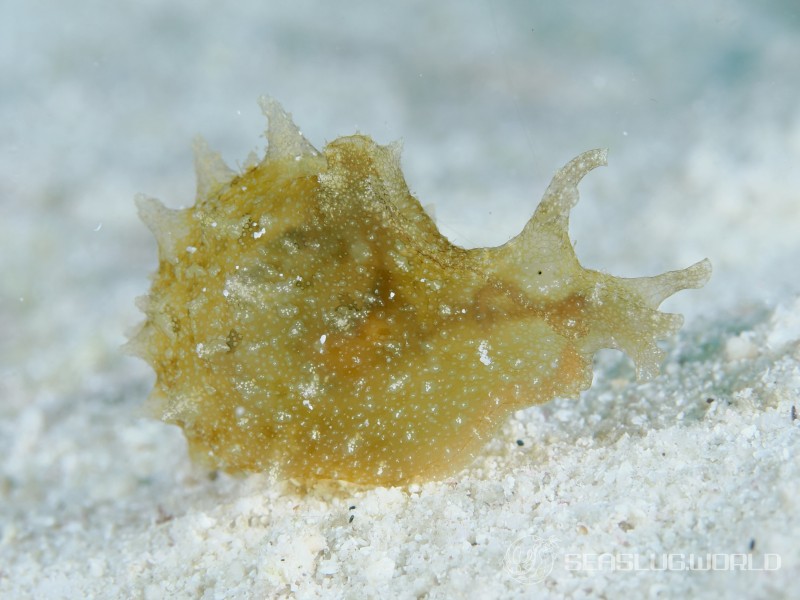
- Location
- Sakyudensetsu, Miyakojima, Okinawa, Japan
- Date
- 2025/10/14
- Length
- 10mm
- Depth
- 13.0m
- Water temperature
- 25.0℃
Description
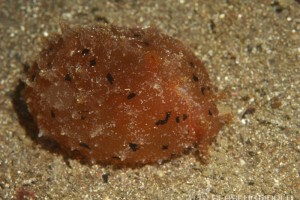
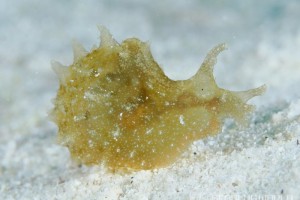
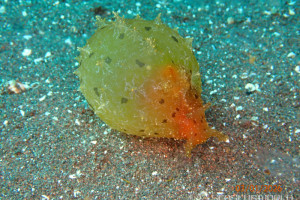
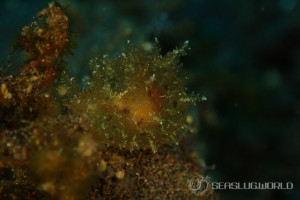
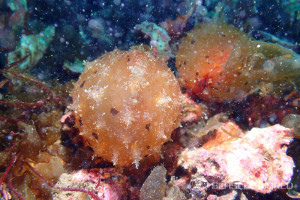
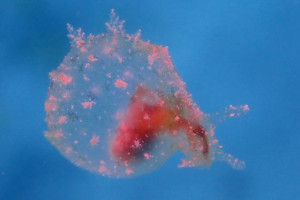
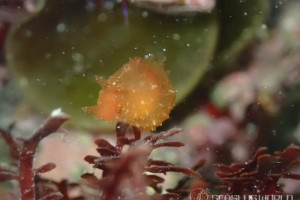
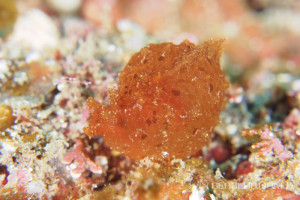
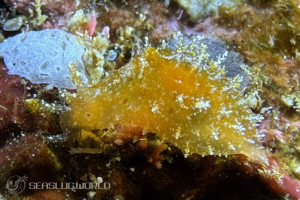
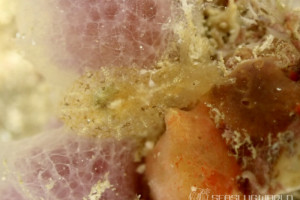
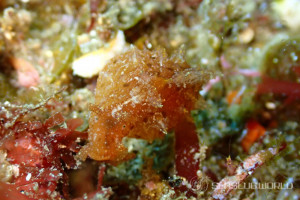
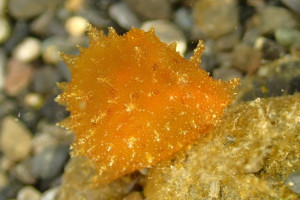
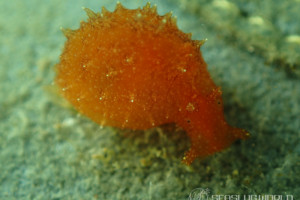
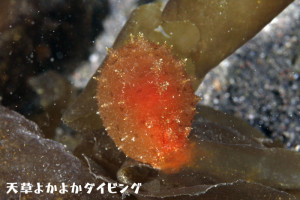
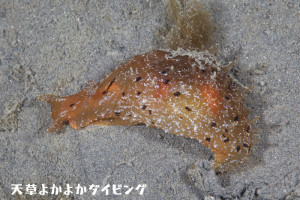
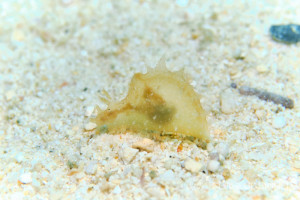
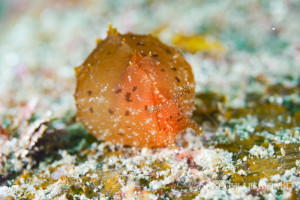
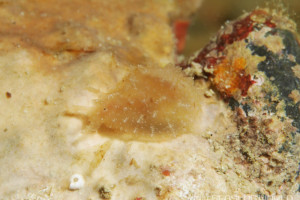
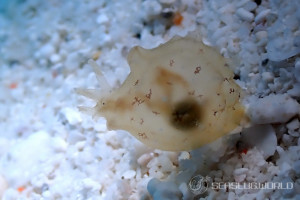
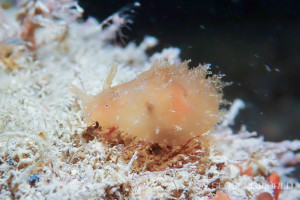
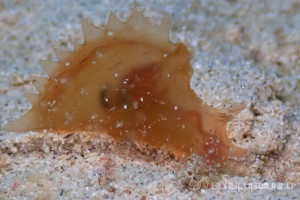
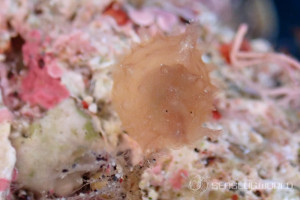
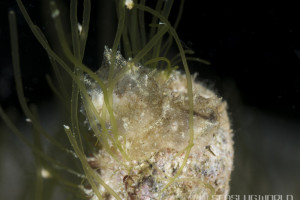
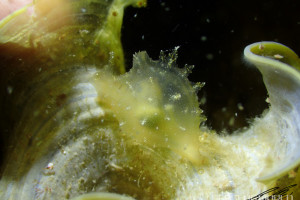
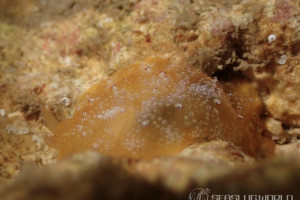
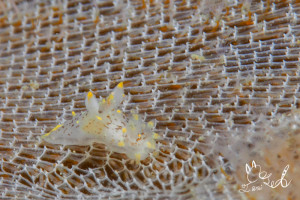
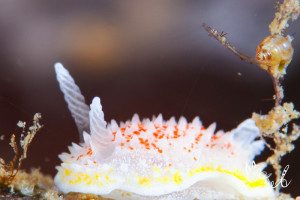
The shell is completely lost and the parapodia are fully fused, giving the body a rounded, balloon-like form. The mantle bears scattered conical to arborescent papillae, and the ground colour ranges from translucent white through yellowish brown to dark brown, often marked with small white or dark blotches. Adults reach about 35 mm in length. When disturbed, the animal sucks seawater into the parapodial cavity and jets it out backwards, tumbling through a series of backward somersaults — a distinctive escape-swimming behaviour.Distribution
Widely distributed in shallow waters across the Indo-West Pacific. The species has also invaded the eastern Mediterranean as a Lessepsian migrant through the Suez Canal. In Japan it is recorded from central Honshū southwards.Etymology
The specific epithet indicus is Latin for "Indian", reflecting the Indian Ocean as the principal source of the type material.Remarks
Feeds principally on green algae of the genus Caulerpa. It is distinguished from its only congener, Notarchus punctatus, on anatomical characters. Several names that have been applied to the species — Aplysia gelatinosa Rang, 1828, Notarchus cuvieri Blainville, 1824, Notarchus ceylonicus Farran, 1905, Notarchus globulus Pruvot-Fol, 1933, and Notarchus petaurista Iredale, 1929 — are now treated as junior synonyms.References
- Notarchus indicus n.sp., Schweigger A.F. (1820). Handbuch der Naturgeschichte der skelettlosen ungegliederten Thiere. Leipzig: Im Verlag der Dyk'schen Buchhandlung. 1-776.
- Notarchus (Notarchus) indicus armatus, Baba K. (1938). Opisthobranchia Of Kii, Middle Japan. Journal of the Faculty of Agriculture, Kyushu University. 6(1): 1-19. https://doi.org/10.5109/22587
- フウセンウミウシ, Baba K. (1949). Opisthobranchia of Sagami Bay collected by His Majesty the Emperor of Japan (相模湾産後鰓類図譜). Iwanami Shoten, Tokyo. 4+2+194+7 pp., pls. 1-50.
- フウセンウミウシ, 高岡高等学校生物研究会(編). (1964). 富山湾産後鰓類図譜.
- フウセンウミウシ, 小野篤司. (1999). ウミウシガイドブック. TBSブリタニカ.
- フウセンウミウシ, 鈴木敬宇. (2000). ウミウシガイドブック〈2〉. TBSブリタニカ.
- 高岡生物研究会. (2002). 日本海のウミウシ. 第2版.
- Aplysia属の一種, 殿塚孝昌. (2003). ウミウシガイドブック〈3〉. TBSブリタニカ.
- フウセンウミウシ, 小野篤司. (2004). 沖縄のウミウシ. ラトルズ.
- フウセンウミウシ, 中野理枝. (2004). 本州のウミウシ. ラトルズ.
- フウセンアメフラシ Notarchus punctatus, 奥谷喬司. (2015). 日本近海産貝類図鑑. 第二版. 東海大学出版部.
- Notarchus indicus, Terrence Gosliner, Ángel Valdés and David Behrens. (2018). Nudibranch and Sea Slug Identification Indo-Pacific 2nd Edition. New World Pubns Inc.
Featured in this book

Terrence Gosliner, Ángel Valdés and David Behrens. (2018). Nudibranch and Sea Slug Identification Indo-Pacific 2nd Edition. New World Pubns Inc.
New World Publications
This species, Notarchus indicus, is included in the book.
View on Amazon PR (Amazon Associates)Seasonality
Shooting Locations
Loading shooting locations...
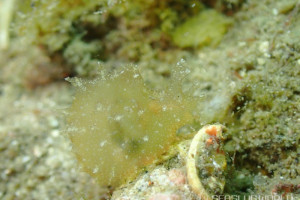
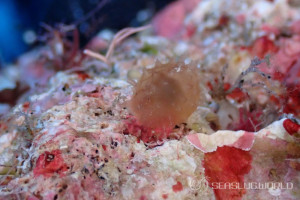
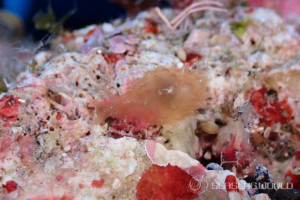
Photos of Notarchus indicus
Tag:






















Similar Colors Nudibranchs

Academic Database
Sea slug observation data is available in international marine biodiversity databases.