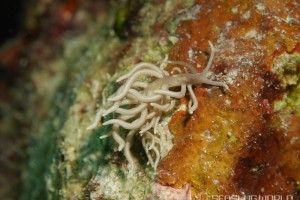
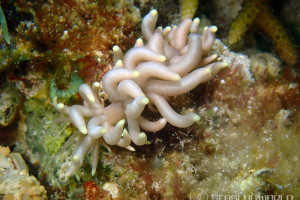
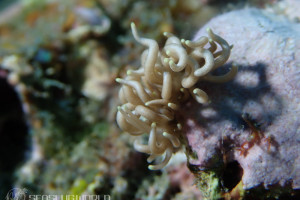
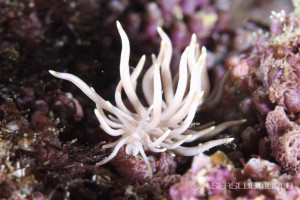
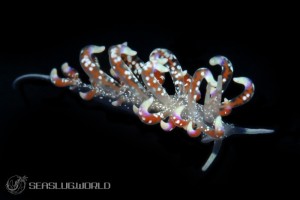
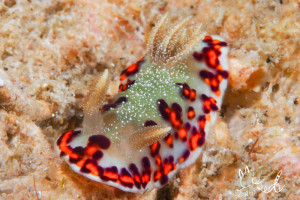
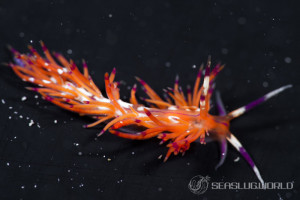
Phyllodesmium briareum (Bergh, 1896)
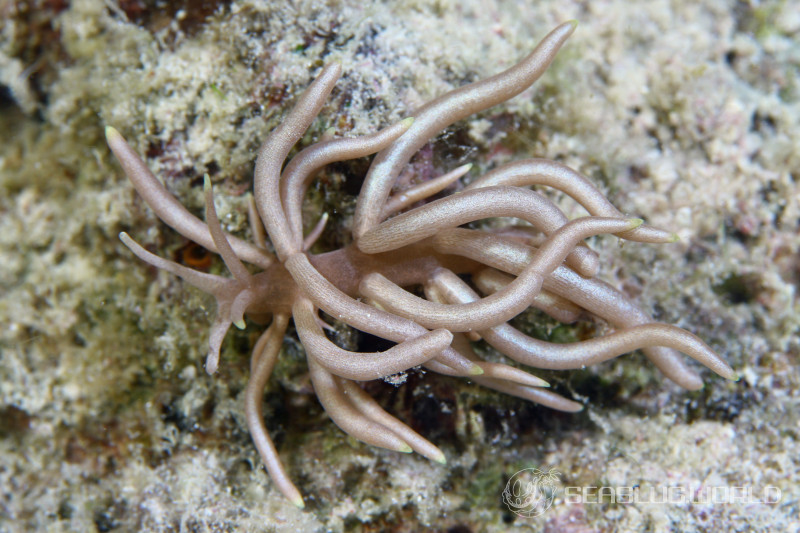
- Location
- Paradise 1, Mabul, Borneo, Malaysia
- Date
- 2011/10/09
- Length
- 20mm
- Depth
- 6.0m
- Water temperature
- 28.0℃
Description
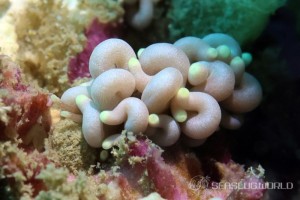
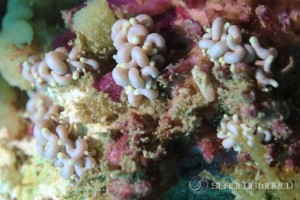
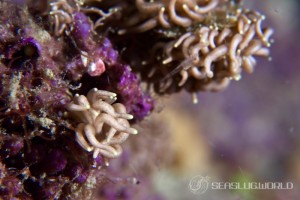
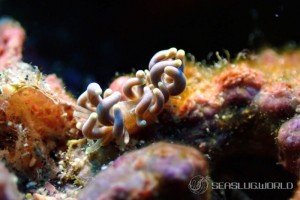
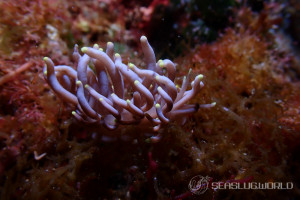
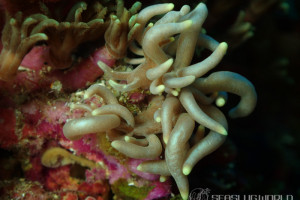
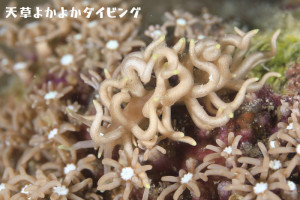
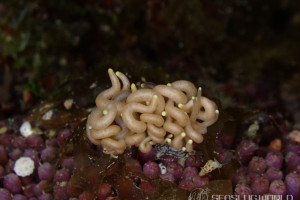
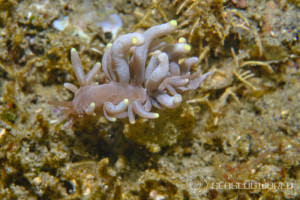
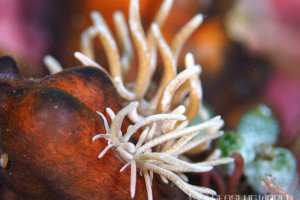
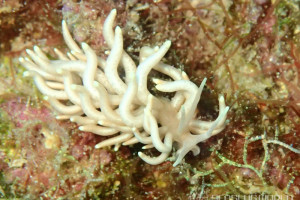
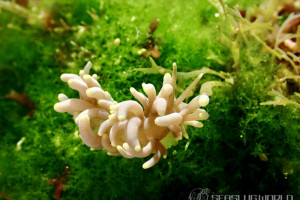
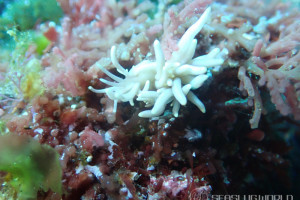
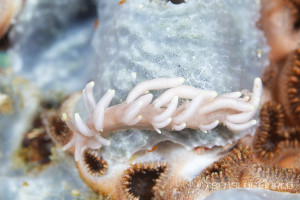
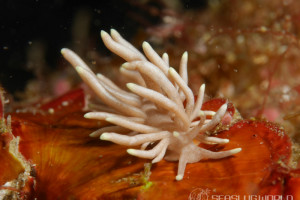
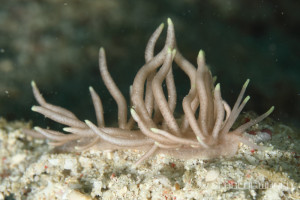
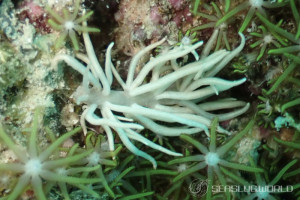
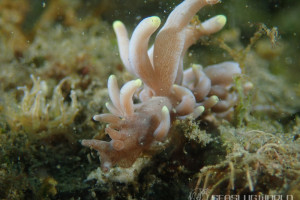
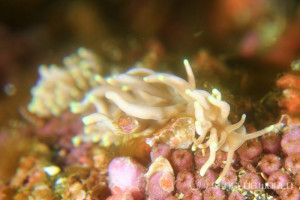
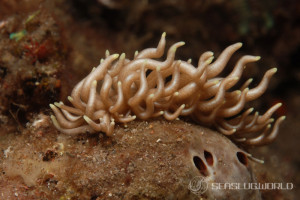
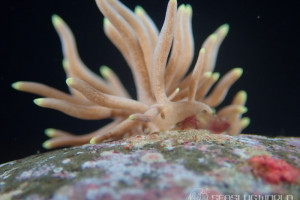
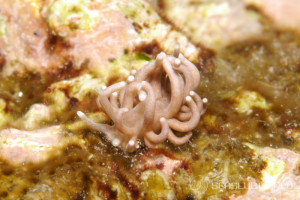
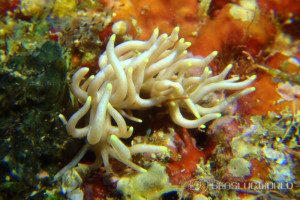
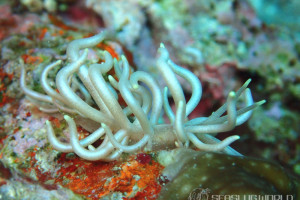
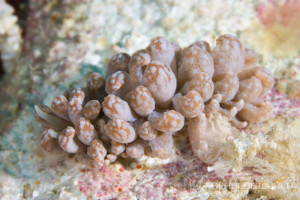
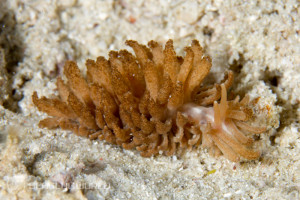
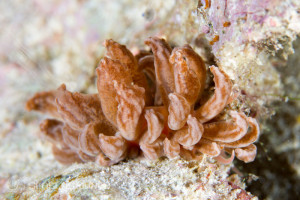
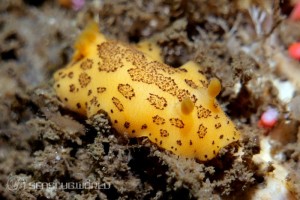
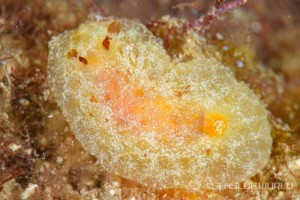
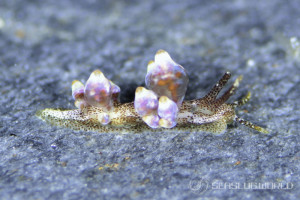
A medium-sized aeolid; living animals 13-20 mm in length. Ground colour ranges from light brown to olive-brown, with the dorsum scattered with darker spots. The areas around the rhinophores, the nuchal region and the anterior foot margin are paler and unspotted. The oral tentacles are markedly longer than the rhinophores; both are simple and cylindrical. The cerata are arranged in four groups along each side of the dorsum, with the anterior two groups close to each other. Each ceras is slender, straight, and club-shaped with a swollen apex; the surface is smooth. The anterior head margin is broad, with two triangular lateral expansions. As in other members of the genus, cnidosacs are absent — a key character of Phyllodesmium.Distribution
Type locality: vicinity of Ambon Island, Indonesia (Mer des Indes, Amboine). Widely distributed across the tropical to subtropical Indo-West Pacific. The species is associated with shallow-reef colonies of the soft (octocoral) genus Briareum, on or close to which it is typically found.Etymology
The specific epithet briareus derives from Briareus (Briareos) of Greek mythology, one of the Hekatoncheires — the hundred-handed giants. The name alludes to the many cerata that adorn the dorsum, likening the slug to the many-armed giant. The genus Briareum Blainville, 1830 (its prey octocoral) is itself named after the same mythological figure, so the species name coincidentally matches the host genus.Remarks
Originally described by Bergh as Ennoia briareus, in a new genus, based on a single specimen collected during the Malay Archipelago expedition of Maurice Bedot and Camille Pictet 1890. The genus name Ennoia refers to the Gnostic concept of "Divine Thought" — Bergh footnoted Flaubert's "La tentation de Saint-Antoine" (1895 edition) as the source. Ennoia was subsequently treated as a synonym of Phyllodesmium Ehrenberg, 1831, establishing the current combination; the parentheses in the author citation reflect this generic transfer. Like other members of Phyllodesmium, the species lacks cnidosacs and instead practises kleptoplasty: it sequesters zooxanthellae from its octocoral prey within its cerata, becoming one of the well-known "solar-powered" aeolid nudibranchs.References
- Ennoia briareus Bgh. n. sp., Bergh R. (1896). Eolidiens d'Amboine (Voyage de MM. M. Bedot et C. Pictet dans l'Archipel Malais). Revue Suisse de Zoologie. 4: 385-394, Planche XVI.
- Phyllodesmium briareum, Rudman W.B. (1981). The anatomy and biology of alcyonarian-feeding aeolid opisthobranch molluscs and their development of symbiosis with zooxanthellae. Zoological Journal of the Linnean Society. 72(3): 219-262. https://doi.org/10.1111/j.1096-3642.1981.tb01571.x
- フィロデスミウム・ブリアレウム, 殿塚孝昌. (2003). ウミウシガイドブック〈3〉. TBSブリタニカ.
- センジュミノウミウシ(新称), 小野篤司. (2004). 沖縄のウミウシ. ラトルズ.
A Kindle field guide by the site author
Kimoto N. (2026). Sea Slugs of Japan & the Indo-Pacific, 2nd Edition.
Kindle Edition
View on Amazon PR (Amazon Associates)Seasonality
Shooting Locations
Loading shooting locations...
Photos of Phyllodesmium briareum
Tag:

























Same Genus Nudibranchs

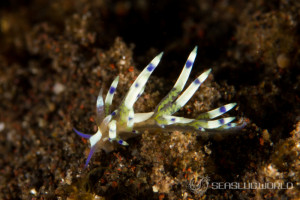
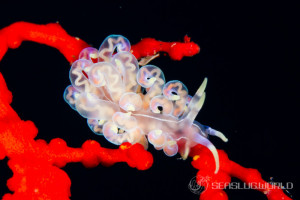
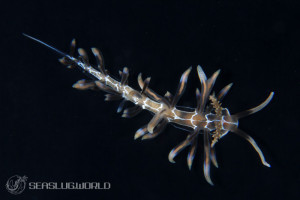
Similar Colors Nudibranchs
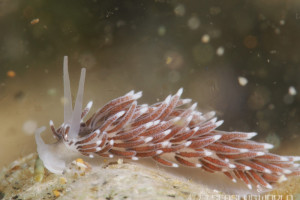

Academic Database
Sea slug observation data is available in international marine biodiversity databases.